
Last priced: April 2026. Bowl prices are for the standard signature ramen at each chain, taken in central Tokyo. Regional pricing varies by ¥50-150. Set meals (ramen + side + drink) generally add ¥350-500 to the bowl price.
The cheapest ramen in Japan isn’t sold by any of the chains foreigners have heard of. Ichiran’s standard bowl is ¥1,180 in Tokyo. The neighbourhood ramen shop most Japanese people actually eat at sells a comparable bowl for ¥780. Below is the chain-by-chain pricing for both — the famous chains tourists queue for, and the cheaper ones locals quietly prefer.
In This Article
- The chain pricing, cheapest first
- Hidakaya: the chain locals actually queue for at lunch (¥440)
- Kourakuen: the tonkotsu-for-the-price-of-shoyu trick (¥560)
- Tenkaippin: the love-it-or-hate-it middle option (¥850)
- Ringer Hut: champon as the budget alternative (¥780)
- Ippudo: the polished chain price tag (¥1,050)
- Ichiran: the experience tax (¥1,180)
- The independent shops you walk past every day
- The verdict
- What to read next
The chain pricing, cheapest first
| Chain | Standard bowl (Tokyo) | Style | Tourist-friendly? |
|---|---|---|---|
| Hidakaya | ¥440 | Light shoyu, basic toppings | Yes (no English menu but it’s intuitive) |
| Kourakuen | ¥560 | Tonkotsu/shoyu, generous portions | Yes (illustrated ticket machines) |
| Sugakiya | ¥440 | Nagoya-style tonkotsu-shoyu | Yes (mostly Aichi/Nagoya area) |
| Tenkaippin | ¥850 | Thick “kotteri” tonkotsu, polarising | Yes (illustrated menu) |
| Ringer Hut | ¥780 | Nagasaki champon (vegetable noodles) | Yes (English menu) |
| Marugame Seimen | ¥440 | Udon technically, but counts | Yes (cafeteria-style) |
| Ippudo | ¥1,050 | Hakata tonkotsu, polished | Very (English menu, tourist-trained staff) |
| Ichiran | ¥1,180 | Hakata tonkotsu, single-seat booths | Very (English ordering sheet) |
| Afuri | ¥1,250 | Yuzu shio, light and citrus | Yes (ticket machine, some English) |
Hidakaya: the chain locals actually queue for at lunch (¥440)
You’ve probably never heard of it. Hidakaya is everywhere in greater Tokyo and almost nowhere else, with about 450 locations concentrated in the Kanto region. The standard ramen is ¥440, the gyoza set adds ¥350, beer is ¥300. A lunch where you walk out completely full costs ¥800.
The catch: the bowl is genuinely basic. Light shoyu broth, a slice of pork, some menma, an egg if you order the upgrade. It’s not destination ramen. But for ¥440 it’s better than any chain ramen anywhere else in the world for twice the price.
How to eat there as a tourist: walk in, sit at the counter, point at the picture menu. The “ramen” item is the cheapest thing on the menu. They’ll bring it. Eat it. Pay at the till on the way out.
Kourakuen: the tonkotsu-for-the-price-of-shoyu trick (¥560)
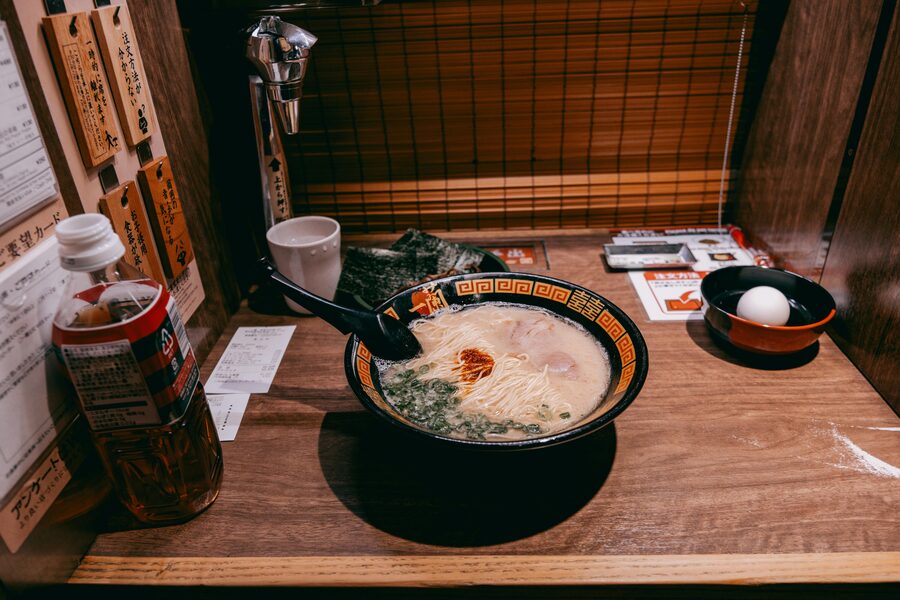
Kourakuen is the second-cheapest tonkotsu-style ramen chain in Japan. Tonkotsu is the rich pork-bone broth that Ichiran and Ippudo charge ¥1,050+ for. Kourakuen’s version isn’t quite as polished but it’s recognisably the same style at half the price. About 500 locations across Japan, mostly suburban; less common in central Tokyo than Hidakaya but you’ll find them.
The set meal trick: Kourakuen’s lunch sets (ramen + half-portion fried rice + gyoza) regularly run ¥780-¥850. That’s a full meal for the price of one Ippudo bowl.
Tenkaippin: the love-it-or-hate-it middle option (¥850)
.jpg)
Tenkaippin (or “Tenichi” to its fans) sells the thickest tonkotsu broth of any chain — so thick the soup coats the chopsticks like a sauce. Originated in Kyoto, now nationwide. ¥850 for the standard “kotteri” bowl, ¥800 for the lighter “assari” version.
You will either love this ramen or hate it after one spoonful. It’s the divider chain. Worth trying once, especially if you’re in Kyoto where the original branch still operates. If you order it and discover you hate the heaviness, the assari version is essentially a different chain — fine, light, comparable to Kourakuen.
Ringer Hut: champon as the budget alternative (¥780)
Champon is Nagasaki-style noodle soup with vegetables, seafood and pork in a milky broth — technically not ramen but always lumped together with it. Ringer Hut sells the canonical chain version. ¥780 for a standard bowl, generous on the vegetables (about 250g of cabbage and beansprouts per bowl, which is more vegetable than most chain ramen will ever see). Vegan-friendly version available — rare for a Japanese noodle chain.
Ippudo: the polished chain price tag (¥1,050)
Ippudo is what the tourist-curated lists usually recommend, and they’re not wrong — the ramen is excellent, the staff are tourist-trained, the menu is in English at every Tokyo branch. The Akamaru tonkotsu at ¥1,150 is the headline order. The Shiromaru classic at ¥1,050 is the cheaper sibling and arguably better.
For ¥1,050 you’re paying ¥600 more than Kourakuen. The bowl is meaningfully better — richer broth, better noodles, better chashu pork — but not three-times-better in proportion to the price. Ippudo wins on consistency: every Ippudo bowl, in every country, tastes the same. That’s worth something on a first Japan trip when you don’t know which neighbourhood places are good.
Ichiran: the experience tax (¥1,180)
Ichiran is famous for the single-seat booths — small wooden cubicles where you order via paper form and never speak to a human. Tourists love it. Locals think it’s overpriced. Both are right.
The bowl itself is good — comparable to Ippudo, maybe slightly less complex. The booth experience is genuinely interesting and worth one visit. Just don’t book a tour to it; queue at any branch in central Tokyo (Shinjuku, Shibuya, Shinjuku-Sanchome) and you’ll be sitting in 15-30 minutes off-peak.
The ¥1,180 standard bowl is the entry. The “kaedama” (extra noodles) add-on is ¥190 and turns one bowl into a meal-and-a-half. Adding a soft-boiled egg adds ¥130 and improves the bowl noticeably.
The independent shops you walk past every day
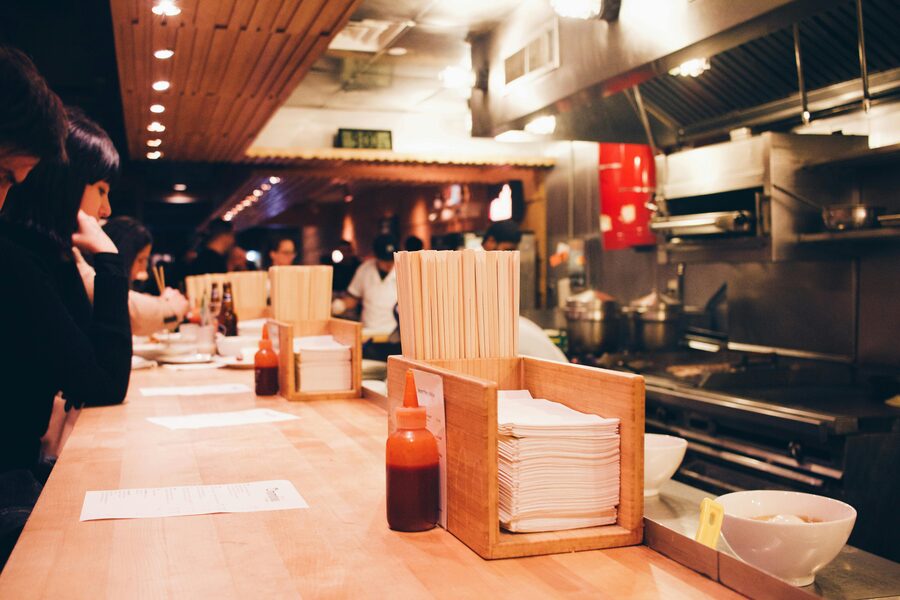
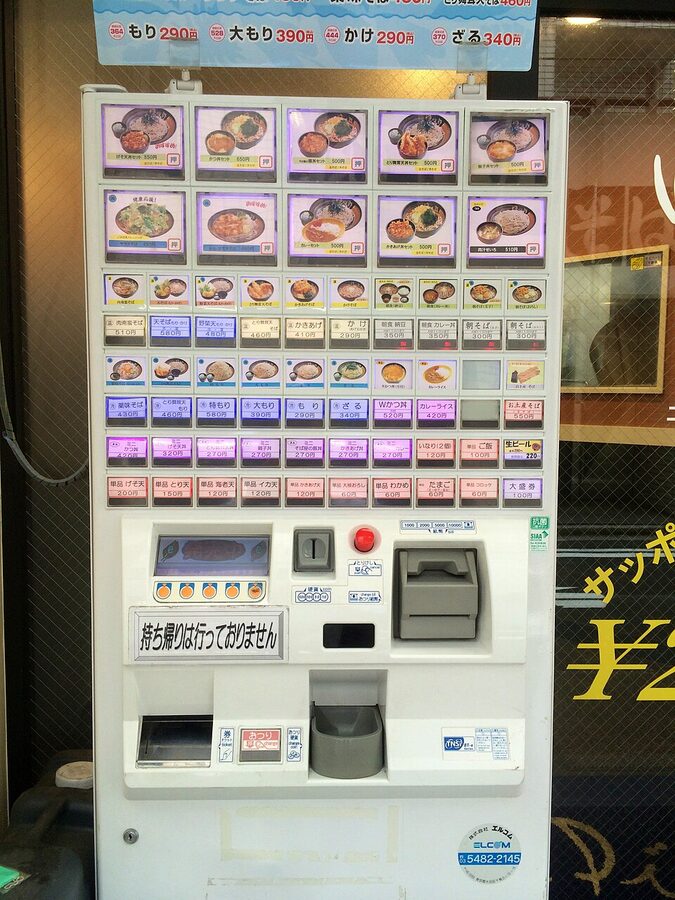
The cheapest good ramen in Japan isn’t in any chain. It’s the ¥780-¥980 bowl at the unmarked counter ramen shop near your hotel. These are everywhere. You can spot them because:
- The shop has a ticket vending machine outside the door
- The menu is photos with prices, no English
- There are 6-12 counter seats and no tables
- The lunchtime queue is mostly office workers in shirts
How to eat at one as a tourist: buy a ticket from the machine (the top-left button is almost always the standard ramen — about ¥780-¥900). Sit at the counter. Hand the ticket to the chef. Eat. Walk out. No need to pay again at the end; the ticket was the payment.
If you can read katakana for the basics (ラーメン = ramen), you’re set. If not, the photos work and the staff are accustomed to non-Japanese-speaking customers.
The verdict
Cheapest passable ramen anywhere: Hidakaya at ¥440. Won’t change your life; will fill you up.
Cheapest good ramen in chains: Kourakuen tonkotsu at ¥560, especially as part of the lunch set. Genuinely surprising for the price.
Cheapest tourist-recommended chain bowl: Ippudo Shiromaru at ¥1,050. Fine, polished, predictable. Better-value than Ichiran for the same flavour family.
Cheapest “best ramen” you’ll have on the trip: the unmarked counter shop near your hotel at ¥780-¥900. Trust the office-worker queue at lunchtime.
What to read next
If you’re trying to keep the food budget low across a longer Japan trip, the Don Quijote and convenience-store finds page (coming soon) will be the matching companion. For getting between ramen shops, the cheapest way from the airport into Tokyo is where you start; for sleeping near the lunchtime ramen action, see cheapest hotels in Shinjuku (Hidakaya and Ippudo both have multiple branches within 5 minutes of Shinjuku station). And if you’re heading out of Tokyo for the day, cheapest day trips from Tokyo covers the comparison-style breakdowns for Mt Fuji, Hakone, Kamakura and Nikko.