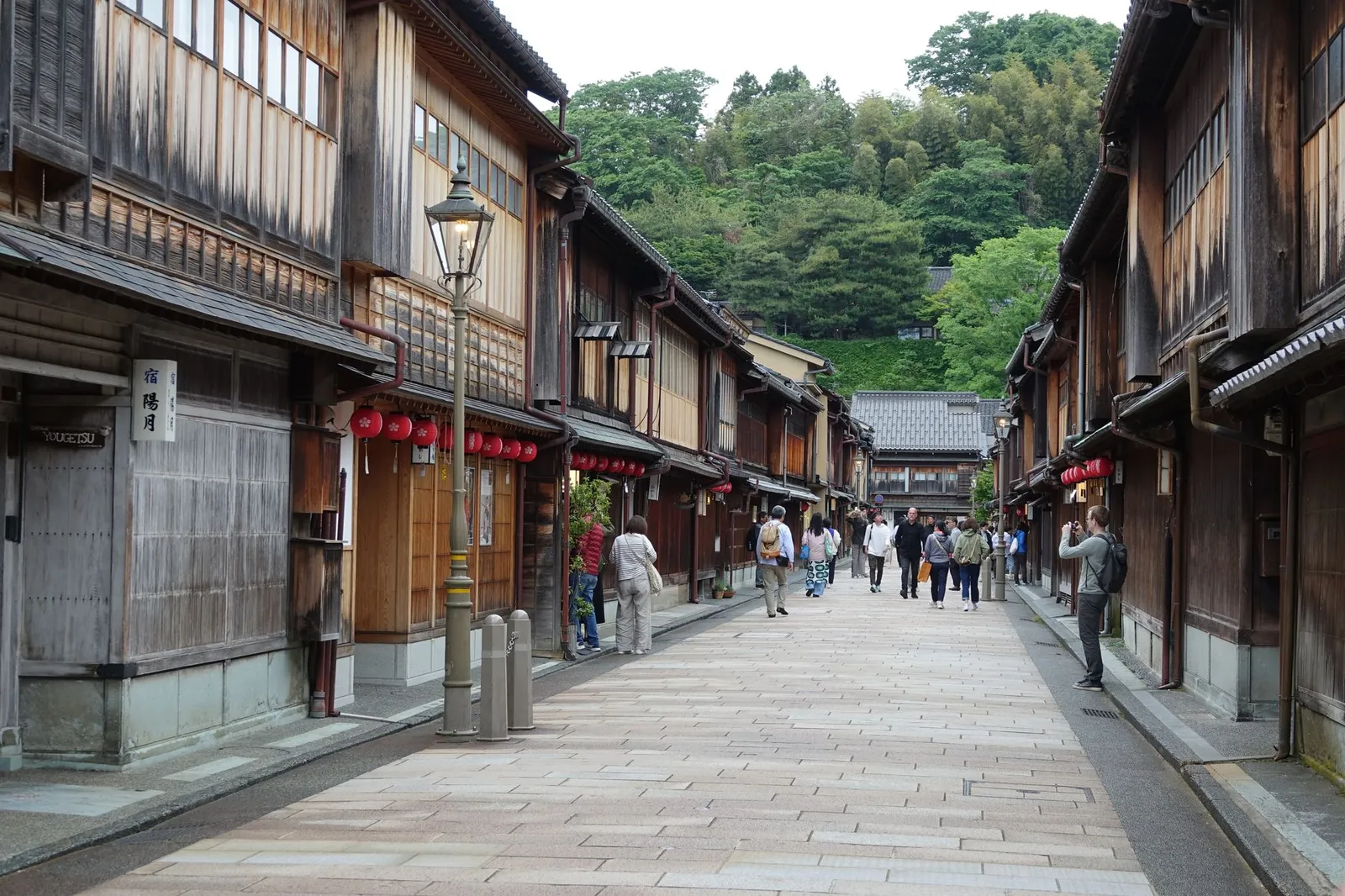
In Higashi Chaya, a pair of chopsticks finished with your own gold leaf costs ¥800 at one shop and ¥1,760 at another a few streets away. On 1 January 2027 the second price becomes ¥1,980. The leaf is the same ten-thousandth of a millimetre in both, and both pairs go home in your bag that afternoon.
Kanazawa is full of gaps like that. Two hours of taxi sightseeing on the official time tariff costs ¥17,400 per car; a day of unlimited loop buses costs ¥800 per person. A wagashi class taught by one of the city’s old confectioners costs ¥1,800, sweets included.
And the one thing every day tour promises, the Ninja Temple, cannot be bought at any price in English. It takes a phone call, cash at the door and a tour in Japanese, and from 1 December 2026 it costs ¥1,300.
In This Article
- Gold leaf: from ¥500 to ¥15,000
- Hakuichi: the cheapest table in Higashi Chaya
- Sakuda: the full hour, and a price rise in January
- No booking: Imai Kinpaku and the Ishikawa Local Products Center
- Wagashi classes for under ¥2,000
- The Ninja Temple: a phone call and ¥1,300
- Loop bus, day pass, taxi or chauffeur
- The loop bus and the ¥800 pass
- Taxis on the meter
- Chauffeur tours, and the free alternative
- Free and nearly free
- A costed day: DIY against a chauffeur
- What each thing costs, and the catch
Gold leaf: from ¥500 to ¥15,000
Almost all of Japan’s gold leaf is beaten in and around Kanazawa, and at least four makers run tables where you press it onto something yourself. The method is the same everywhere: a stencil or sticker, a brush of glue, a square of leaf laid down without breathing on it, then the excess brushed away. What changes with the price is the object, how much design freedom you get and whether you need to book.
Hakuichi: the cheapest table in Higashi Chaya
Hakuichi runs workshops at its main hall, Hakukokan, in Morito on the west side of the city, and at its shop in the teahouse district, Kanazawa Bikazari Asano. At Asano the entry-level course is the cheapest gold leaf in town: a picture postcard for ¥500 (about 10 minutes) or a pair of chopsticks for ¥800 (about 20 minutes). The next level up, with design stickers, runs from ¥800 for a crepe coaster to ¥2,000 for a plate or hand mirror and ¥4,000 for a lacquer tray.
Asano starts sessions at 10:00, 11:00, 13:00, 14:00 and 15:00, and Hakuichi’s workshop menu gives booked guests priority, so book online if the day matters. The main hall in Morito adds the freehand course (¥1,500–2,500) and hakuutsushi, moving a loose sheet of leaf with bamboo tweezers the way the beaters do, for ¥2,000 including tax. It is reservation only, for up to three people.
The top of the range is Hakuichi’s 90-minute class in a 200-year-old teahouse building in Higashi Chaya, using workshop tools and finished with matcha and a fresh sweet. It costs ¥15,000 per person before tax, for groups of two to eight, booked seven days ahead. It is a good class. It is also more than eighteen pairs of the ¥800 chopsticks, before tax is added.
Sakuda: the full hour, and a price rise in January
Gold Leaf Sakuda’s main store, on the edge of Higashi Chaya, runs four sessions a day, at 09:00, 10:30, 13:00 and 15:00, each about 60 minutes. You cut your own masking-tape stencil rather than peeling a sticker, which is why it takes longer and looks less like a kit when you get home. Booking is required.
Sakuda’s workshop prices include materials and tax: chopsticks or two pencils ¥1,760, a round plate ¥2,310, a compact mirror or square box ¥2,640, a hand mirror ¥2,750, an adjustable rack ¥2,970. Every item goes up on 1 January 2027, some sharply: the hand mirror to ¥3,520, the compact mirror to ¥3,300, the rack to ¥3,850. If you are going in December, book now.
Two things soften the price. The session comes with a ticket for 10% off anything in the shop that day, and the shop’s gold-and-platinum toilets cost nothing to see.
No booking: Imai Kinpaku and the Ishikawa Local Products Center
Two places let you walk in. The Ishikawa Local Products Center, two minutes’ walk from Kenrokuen’s Katsurazaka gate, runs gold leaf on its third floor daily from 11:00 to 16:00 (last entry 15:00), first come first served. The center’s gold leaf menu starts at ¥1,600 for a small hand mirror and tops out at ¥2,250 for a lidded box, tax included, about 40–60 minutes. From December to February the building closes on Tuesdays.
Imai Kinpaku’s workshops are more souvenir than craft: badges for ¥1,100 (10 minutes), two postcards for ¥1,650, a tumbler for ¥2,750, with pre-glued designs a five-year-old can manage. The main store is closed on Sundays, Mondays and public holidays. Its small Hirosaka shop near Kenrokuen does the ¥1,100 badges with no booking at all.
The cheapest sheet of leaf you can handle in the city is edible. At Imai’s main store a gold-leaf soft-serve costs ¥700 ready-made or ¥990 if you lay the sheet on yourself, with no booking. Imai also sells a gold-leaf manju for ¥1,500: a rice-flour bun filled with Gorojima sweet potato and Noto red beans, made by a local confectioner, which you gild yourself in about ten minutes. No booking, limited numbers, last entry around 16:00.
For context, the cheapest published calligraphy class in Kyoto is ¥4,500. Every gold-leaf option in Kanazawa below the teahouse class costs less than that, and all of them hand you the finished piece on the spot.
Wagashi classes for under ¥2,000
Kanazawa makes wagashi (Japanese sweets, made to be eaten with tea) the way it makes gold leaf: as a local industry, not a tourist sideline. Two classes are run by the trade itself, and both cost less than ¥2,000.
The Ishikawa Local Products Center wagashi class costs ¥1,800. A confectioner from one of the city’s old shops, a different shop each day, walks the room through seasonal jonamagashi (soft, shaped sweets for the tea ceremony); you make three and take home four. The fee also includes a ¥500 voucher for the ground-floor shop, so the class really costs ¥1,300 if you were going to buy sweets anyway.
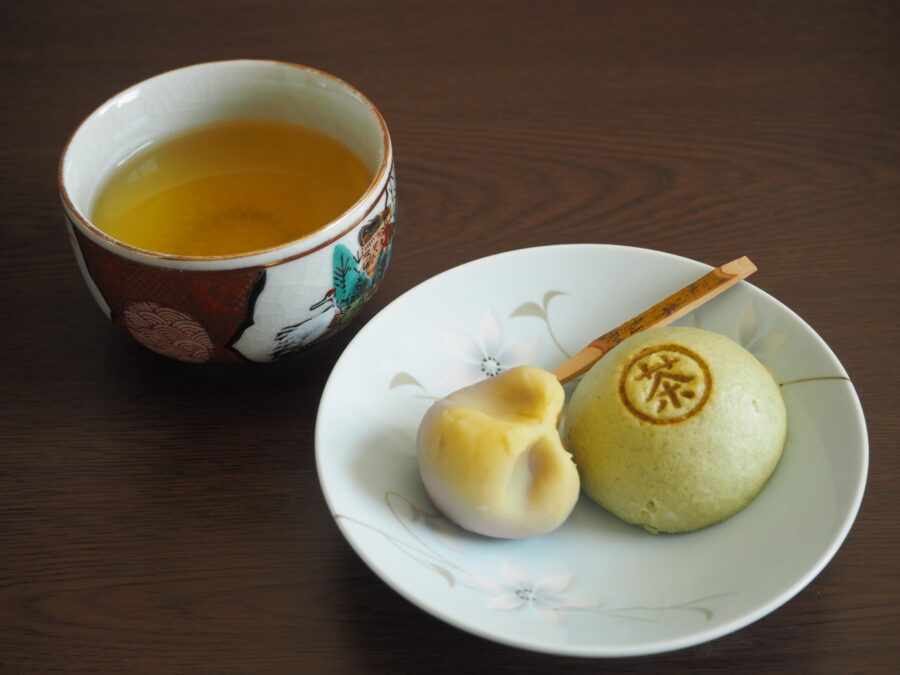
The timing is the catch. From January to November there are four sessions on weekends and holidays (10:00, 11:30, 13:00, 14:30) but only one on weekdays, at 13:00. December runs on an irregular calendar, and on weekdays in January and February there is no class on Tuesdays. Book online up to six hours before; after that it is by phone.
Morihachi, founded in 1625 and once confectioner to the Kaga domain, teaches rakugan instead: dry sweets of sugar and rice flour pressed into carved wooden moulds. The Morihachi rakugan class costs ¥1,870 including tax, lasts about 45 minutes and produces twelve to fifteen pieces, which is more sweet per yen than the other class gives you. The fee covers a bowl of matcha, a box for the leftovers and entry to the confectionery mould museum upstairs, which shows over a thousand moulds from the Edo period on.
There are two sessions: 10:00, booked by the day before, and 15:00, booked by 13:00 the same day, both through the Gurunavi booking site. Bookings are for two to twenty people, so a solo traveller should ask first. The main store is about ten minutes on foot from Kenrokuen, Omicho Market and Higashi Chaya.
The Ninja Temple: a phone call and ¥1,300
Myoryuji is a Nichiren Buddhist temple in Nomachi, south of the Sai river, built with hidden stairs, trick doors and a pit to confuse attackers. The temple is blunt about the nickname: it has nothing to do with ninja, and there is no show or ninja experience. What you pay for is a guided walk through a 400-year-old building with 29 staircases.
Booking is by phone only, from the same date one month ahead, with the line open from 08:30 to 17:00; the number is on the temple’s reservation page. Tours leave every hour or every half hour between 09:00 and 16:00 and take about 40 minutes. Same-day places go if any are left, and weekdays often fill too.
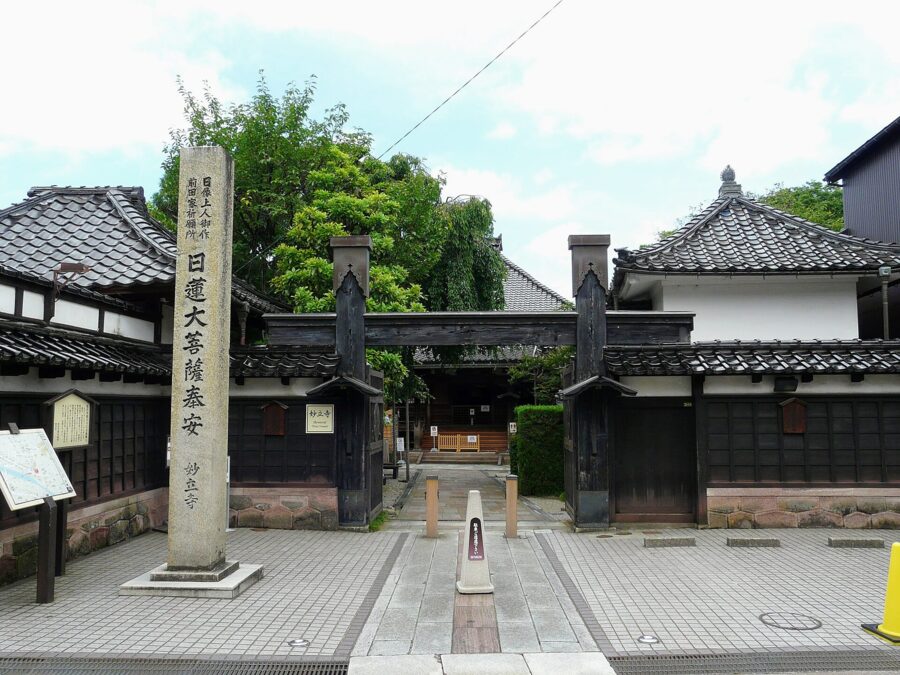
Admission is ¥1,200 for adults and ¥800 for primary-school children until 30 November 2026. Under the temple’s fee revision, it becomes ¥1,300 and ¥1,000 from 1 December. Children below school age are not admitted at all.
The temple’s own rules settle the paid-tour question. The guiding is in Japanese only, and interpreting inside the hall is refused because visitors complained they could not hear the guide. A chauffeur or private guide can brief you outside, but inside you are on the same ¥1,300 tour as everyone else, so do your reading before you go in.
The temple closes to tours on 1 and 2 January, and for repairs from 25 to 31 January 2027. Photography is not allowed inside, and large suitcases do not fit the lockers.
Loop bus, day pass, taxi or chauffeur
The loop bus and the ¥800 pass
Hokutetsu’s Castle Town Kanazawa Loop Bus leaves the station’s East Gate from stop 7 and runs two ways round the sights. The right loop goes every 15 minutes or so from 08:30 to 18:00 and reaches Hashiba-cho, for Higashi Chaya, in 12 minutes. The left loop runs about every 20 minutes from 08:38 to 17:58.
The loop bus fare is ¥220 a ride for adults and ¥110 for children, payable with a transport IC card or a contactless bank card. Only the left loop stops at Hirokoji, the stop for the Ninja Temple and the Nishi Chaya district. Both loops stop at Kenrokuen-shita for the garden and the Ishikawa Local Products Center.
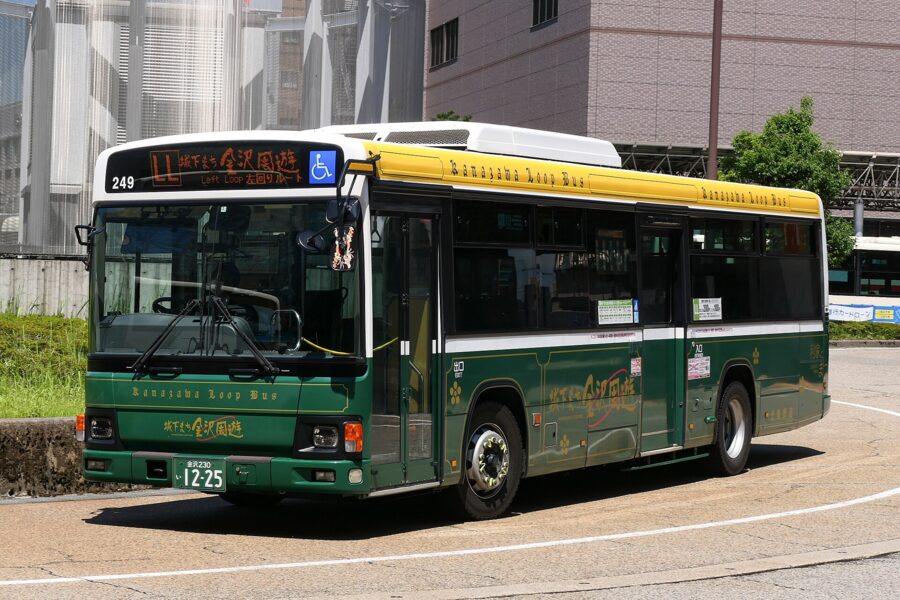
The Kanazawa one-day bus pass costs ¥800 for adults and ¥400 for children. It covers both loops, the Kanazawa Shopping Bus, the ¥100 Kanazawa Flat Bus and ordinary Hokutetsu and JR West buses inside the central zone, but not the evening Light-up Bus. Four loop rides cost ¥880, so the pass pays from the fourth ride.
It is not sold on the bus. Buy it at the Hokutetsu ticket centre by the West Gate bus terminal, the information desk by stop 7, or many central hotels, or as a phone ticket through the city’s Norimasshi Kanazawa site. Showing it also cuts entry at 27 museums and houses on the same day, including the Yasue Gold Leaf Museum, from ¥310 to ¥260.
The city’s bus guide also lists the Kanazawa Flat Bus, four small community routes at ¥100 a ride. Its Zaimoku route joins Omicho Market, the 21st Century Museum, Kenrokuen-shita and the Asanogawa bridge by Higashi Chaya. Two Flat Bus hops and two loop rides come to ¥640, and a day like that does not need the pass.
Taxis on the meter
Kanazawa taxis start at ¥700 for the first 1.22 km in a standard car, then add ¥100 every 226 metres, under the Kanazawa-area taxi tariff. Most hops between the sights are short, which is where a shared taxi makes sense. Taxis also fill the gap the buses leave: the loop’s first departure is 08:30, so a taxi or your own feet are the only way to the free early hour at Kenrokuen.
The same tariff sets the price of a hired car by time: ¥4,350 for the first 30 minutes and ¥1,450 for each 10 minutes after. That makes ¥17,400 for two hours and ¥26,100 for three in a standard car for up to four, with waiting time billed the same as driving. A nine-seat jumbo taxi is ¥5,850 and then ¥1,950 per 10 minutes.
Chauffeur tours, and the free alternative
Booking platforms sell all-day private chauffeur tours of Kanazawa with an English-speaking driver, priced per car. Before paying, compare the total with the city’s own taxi firms. Naruwa Kotsu’s sightseeing courses cost ¥12,000 for two hours and ¥18,000 for three in a standard car (¥16,000 and ¥24,000 in a jumbo taxi), and its Mercedes V-Class is offered with English.
For four people, ¥18,000 is ¥4,500 each for three hours, against ¥800 each for a day of buses. A car earns its fee in heavy rain, with luggage or with someone who cannot manage the walks. It does not buy you any English inside Myoryuji, and a driver waiting outside a 60-minute gold-leaf class is on the clock.
If the reason for a chauffeur is the English, the cheaper fix costs nothing. The Kanazawa Goodwill Guide Network, a volunteer group, sends free English-speaking guides if you apply between two months and two weeks ahead. You pay their entry fees, bus or taxi fares and lunch, they work from 09:00 to 17:00, and they travel only by bus, taxi or train. The same group staffs a walk-in desk at Kanazawa Castle’s Ishikawa-mon gate from 09:30 to 15:30.
Free and nearly free
Kenrokuen’s admission is ¥320 for adults and ¥100 for children from six to 17, from 08:00 to 17:00 between 16 October and the end of February (07:00 to 18:00 the rest of the year). Before that, the garden and Kanazawa Castle Park open free. From November to February the free window is 06:00 to 07:45, with last entry at 07:30; from April to August it starts at 04:00.
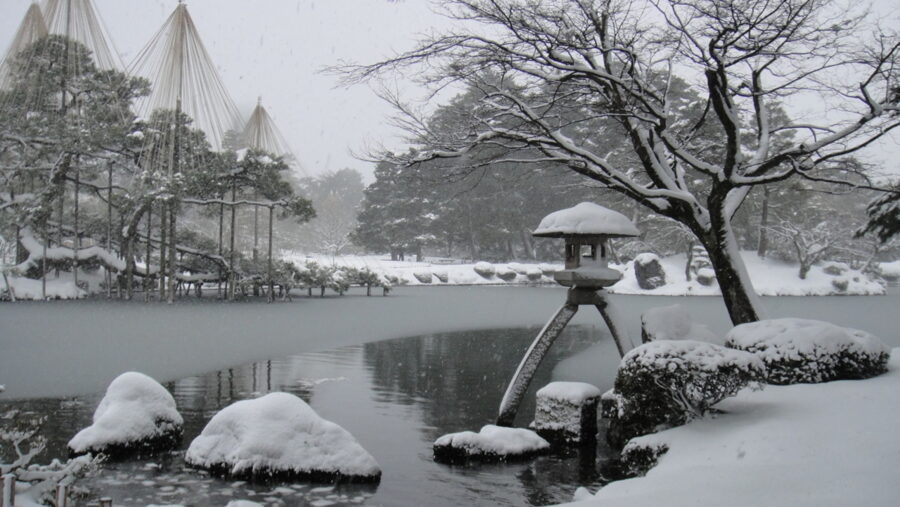
Early entry is only through the Renchimon and Zuishinzaka gates, and you must be out 15 minutes before paid opening. The garden is also free on 31 December to 3 January, on 3 November, from 14 to 16 August and during the cherry-blossom week.
At the 21st Century Museum of Contemporary Art, the building’s free exchange zone is open from 09:00 to 22:00, every day except over New Year. The galleries need a ticket, ¥1,200 for the exhibition running from 31 October 2026 to 18 April 2027, and close on Mondays. The free part is open late enough to end the day there after the buses stop.
Higashi Chaya’s streets cost nothing, and neither does Omicho Market, the city’s covered food market, on both loops at the Musashigatsuji/Omi-cho Market stop. The two teahouses open as museums in Higashi Chaya, Shima and Kaikaro, charge entry; the bus pass takes ¥50 and ¥100 off. The Yasue Gold Leaf Museum, a short walk from the teahouses and closed on Tuesdays, explains how the leaf is beaten for ¥310.
A costed day: DIY against a chauffeur
Here is a weekday in January or February (not a Tuesday), done on foot and by bus. Walk into Kenrokuen through Renchimon before 07:30, free, and leave by 07:45. Breakfast at Omicho Market, then the left loop to Hirokoji for a 10:00 Ninja Temple tour booked by phone. The same loop carries on to Kenrokuen-shita for the 13:00 wagashi class, and on again to Hashiba-cho for gold leaf at Hakuichi’s Asano shop at 15:00.
End at the 21st Century Museum’s free zone, two stops down the right loop, and ride back to the station. That is five rides, ¥1,100 at the single fare.
| Per person | DIY | Chauffeur, 3 hours, two people |
|---|---|---|
| Transport | ¥800 (one-day pass) | ¥9,000 (half of ¥18,000) |
| Kenrokuen | free (early entry) | ¥320 |
| Myoryuji, from 1 December 2026 | ¥1,300 | ¥1,300 |
| Wagashi class | ¥1,800 | ¥1,800 |
| Gold leaf (chopsticks) | ¥800 | ¥800 |
| Total | ¥4,700 | ¥13,220 |
Two people pay ¥9,400 between them for the bus day and ¥26,440 for the car, and the car still only covers three hours of a day that runs from dawn to dusk. Swap Hakuichi for Sakuda, at its January 2027 price of ¥1,980, and the DIY day rises to ¥5,880 each, still less than half the chauffeur version.
What each thing costs, and the catch
| Thing | Price | Catch |
|---|---|---|
| Loop bus, one ride | ¥220 | Last departures around 18:00 |
| One-day bus pass | ¥800 | Not sold on board; pays from the fourth ride |
| Kanazawa Flat Bus | ¥100 | Small buses, every 20 minutes |
| Taxi time charter, standard car | ¥17,400 for 2 hours | Waiting is billed; English depends on the driver |
| Naruwa Kotsu sightseeing course | ¥18,000 for 3 hours | Set courses; per car, not per person |
| Goodwill Guide Network guide | free | Apply 2 months to 2 weeks ahead; you pay their costs |
| Kenrokuen | ¥320, or free early | Early entry by two gates only, out before paid opening |
| 21st Century Museum exchange zone | free | Galleries ¥1,200, closed Mondays |
| Yasue Gold Leaf Museum | ¥310 | Closed Tuesdays; ¥260 with the bus pass |
| Hakuichi postcard or chopsticks (Asano) | ¥500 or ¥800 | Sticker designs; book for priority |
| Sakuda workshop | from ¥1,760 | Booking required; prices rise on 1 January 2027 |
| Ishikawa Local Products Center gold leaf | from ¥1,600 | 11:00–16:00, first come; Tuesdays off December to February |
| Imai gold-leaf soft-serve | ¥700, or ¥990 to apply it | Main store closed Sundays, Mondays and holidays |
| Ishikawa Local Products Center wagashi | ¥1,800 | One weekday session, at 13:00; December irregular |
| Morihachi rakugan class | ¥1,870 | Two sessions; minimum two people |
| Myoryuji (Ninja Temple) | ¥1,200, ¥1,300 from 1 December 2026 | Phone booking, Japanese-only tour, cash, no preschoolers |
Fares and fees here are the ones in force in late November 2026.
Back in Higashi Chaya, the ¥800 chopsticks and the ¥1,760 ones carry the same leaf. Spend the difference on the temple, and ring it first.