Clear customs at Centrair, follow the signs to the Meitetsu station, and the cheapest ticket to Takayama is waiting at a travel counter beside the ticket gates. It costs ¥4,100, it covers a train to Gifu and a bus up into the mountains, and no machine, website or app will sell it to you. The counter stops selling it at 19:00.
The obvious move is to walk straight past it to the airport express, change at Nagoya and pay ¥7,120 for the train, or ¥4,580 for the bus. A group of seven with a wall of suitcases can skip all of it for ¥91,000 in a hired van. And somewhere in the middle sits Shirakawa-go, 50 minutes beyond Takayama by bus, where the order of your stops moves the bill more than the choice of vehicle does.
Fares below are the ones in force at the end of November 2026: one way, per adult, tax included, unless a line says otherwise.
In This Article
- Centrair to Takayama and Shirakawa-go: every fare in one table
- The ¥4,100 ticket via Gifu
- Centrair to Nagoya: the ¥450 question
- Nagoya to Takayama on the JR Hida
- Nagoya to Takayama by highway bus
- Straight to Shirakawa-go from Nagoya
- Takayama to Shirakawa-go, and the order that saves money
- Passes that cover the route, and when they pay
- Private vans for groups: what seven seats cost
Centrair to Takayama and Shirakawa-go: every fare in one table
| Route | Fare | Time | Catch |
|---|---|---|---|
| Takayama–Centrair ticket: Meitetsu to Gifu, highway bus to Takayama | ¥4,100 | about 3 hours 30 minutes | Sold only at two airport counters; book the bus seat first |
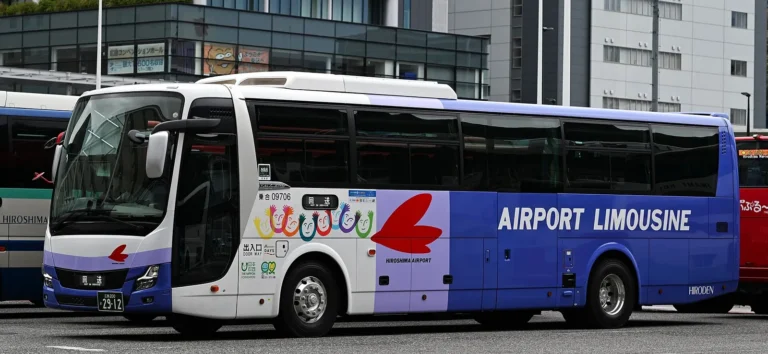
| Meitetsu to Nagoya, highway bus to Takayama | ¥4,580 (¥4,280 with the web fare) | about 4 hours | All seats reserved; slowest of the three |
| Meitetsu to Nagoya, JR limited express Hida | ¥7,120 reserved, ¥6,590 unreserved | about 3 hours 30 minutes | Add ¥450 for the μ-SKY |
| Meitetsu to Nagoya, highway bus to Shirakawa-go | ¥4,580–¥5,680 | about 3 hours 30 minutes | Fare depends on the date; main departures 07:50–09:50 |
| Takayama to Shirakawa-go, Nohi Bus | ¥2,900 | 50 minutes | Some departures reservation-only; ¥2,800 until 30 November |
| Private HiAce van, airport to Takayama, up to nine people | ¥91,000 per van | about 3 hours | ¥13,000 each for seven; book ahead |
| Private Alphard, airport to Takayama, up to four people | ¥76,000 per car | about 3 hours | ¥19,000 each for four |
Children aged 6 to 11 pay roughly half on the trains and buses. The van and the car are priced per vehicle, which is the only reason they belong in a table about saving money.
The ¥4,100 ticket via Gifu
Nohi Bus sells the Takayama–Centrair ticket, a one-way set of a Meitetsu train from the airport to Meitetsu Gifu and the Nohi or Gifu Bus highway coach from Gifu to the Takayama Nohi Bus Center. It costs ¥4,100 for an adult and ¥2,100 for a child, and the price has not moved since April 2024. It is valid for two days, so a night in Gifu on the way costs nothing extra on the ticket.
The catch is the buying. There are two counters on the second floor of the airport: Meitetsu Travel Plaza beside the station gates, open 10:00–19:00, and the Central Japan Travel Center in the arrivals lobby, which sells the ticket from 09:00 to 19:00. Online sales ended in April 2024. Land at 19:30 and the cheapest route is gone until the counters open the next morning.
Every seat on the bus is reserved, so the order is: book the bus by phone with the Nohi Bus Reservation Center (number on the ticket page, 09:00–17:00, seats open one month ahead to the day), then buy the ticket at the counter, then swap its train coupon at the Centrair station ticket window. If you never managed the phone call, the Gifu Bus ticket counter at Meitetsu Gifu will book whatever seat is left.
The train to Gifu takes 56 minutes. The ordinary limited express is included; the μ-SKY or the special cars of a limited express need a μ-ticket on top. From Meitetsu Gifu the bus leaves from stop 6 at 07:40, 10:30, 12:30, 15:20, 17:05 and 19:10, and reaches Takayama about two hours later, on the Takayama–Gifu line timetable. The 12:30, for example, is in Takayama at 14:31, and Nohi’s ticket page pairs each bus with a train from the airport that connects.
This is the route I would take with one suitcase and no plans in Nagoya. The coach from Gifu is about 45 minutes quicker to Takayama than the one from Nagoya, and the set undercuts the Nagoya bus by ¥480 before that ticket’s web discount and ¥180 after it.
Centrair to Nagoya: the ¥450 question
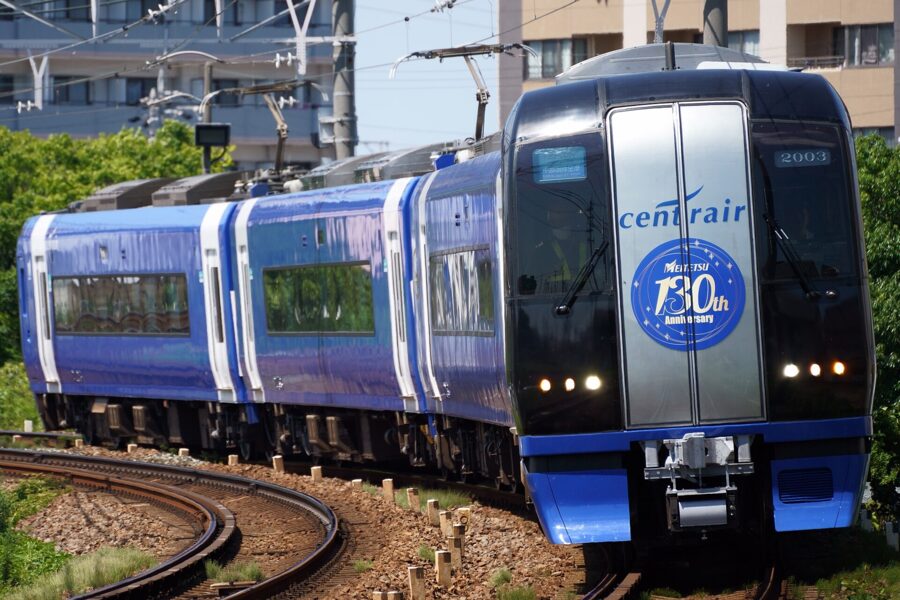
Every route except the van and the Gifu set starts with Meitetsu from Central Japan International Airport station to Meitetsu Nagoya. The fare is ¥980 whichever train you board. The μ-ticket, ¥450 at any age, buys a reserved seat in a special car; the μ-SKY is all special cars, and most limited expresses carry two of them as cars 1 and 2.
The difference is about ten minutes. Meitetsu’s own route search shows the μ-SKY at 30 minutes for ¥1,430 and the limited express, in its ordinary cars, at around 40 minutes for ¥980. With a big case after a long flight, a guaranteed seat is worth the ¥450. With a backpack, take the cheaper train and keep the change for a bento, a boxed lunch, at Nagoya.
Nagoya to Takayama on the JR Hida
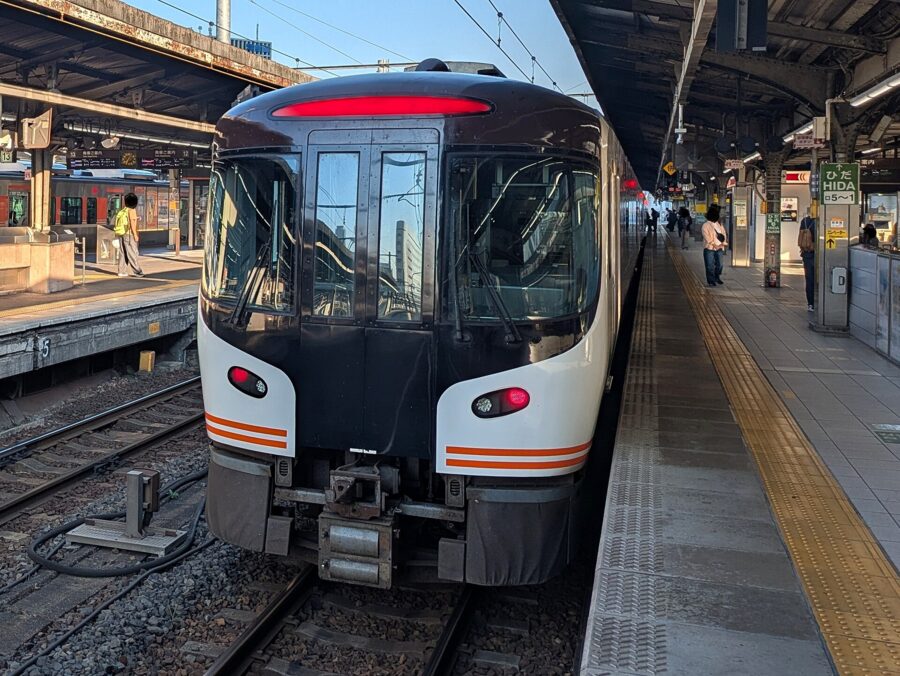
From Meitetsu Nagoya it is a short walk to the JR side, where the limited express Hida runs to Takayama in about two and a half hours. The ticket is two parts: the ¥3,410 base fare and a limited express charge, which JR Central lists at ¥2,730 for a reserved seat in regular season. That makes ¥6,140 reserved or ¥5,610 unreserved, and ¥7,120 or ¥6,590 from the airport once Meitetsu is added.
The reserved charge moves with the calendar: ¥200 less in quiet periods, ¥200 more in busy ones, ¥400 more at the very peak. The unreserved price does not move. The Hida runs around ten times a day in each direction, so an unreserved seat is a reasonable bet on a weekday in a quiet month and a poor one on a Saturday in October.
Is it worth ¥3,020 more than the Gifu bus set? Not for the time: door to door from the airport the two take about as long.
What the train buys is frequency, roughly ten departures against the Gifu bus’s six, no counter and no phone call, and long stretches beside the Hida River. For one person, I think the money is better spent in Takayama. For a Japan Rail Pass holder, whose pass covers the Hida but not Meitetsu, the train is the obvious pick.
Nagoya to Takayama by highway bus
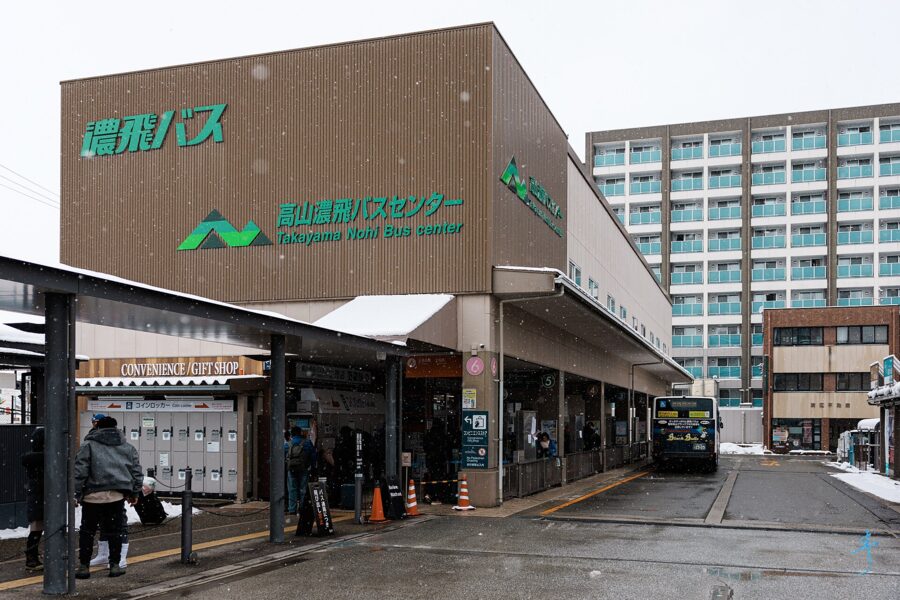
The Takayama–Nagoya highway bus is run jointly by Nohi Bus, Meitetsu Bus and JR Tokai Bus. It leaves from the Meitetsu Bus Center, above the Meitetsu station, and calls at the JR Nagoya Station stop 15 minutes later. There are 12 departures a day between 07:00 and 20:30, and the timetable gives 2 hours 50 minutes to the Takayama Nohi Bus Center.
The fare is ¥3,600, or ¥3,300 booked and paid on highwaybus.com, the operators’ booking site. The web fare has two conditions: pay within three days of booking, counting the booking day, and before 24:00 the day before you travel, or the seat is cancelled automatically. Seats open one month ahead and every one is reserved, including those for children under six who sit in their own seat.
From the airport that is ¥4,280 with the web fare, ¥180 more than the Gifu set and about half an hour slower. It has two real advantages. Nobody needs a phone call or an airport counter, and the last bus leaves Nagoya at 20:30, against 19:10 from Gifu. For a late landing, this is the bus.
Nohi’s own timetable makes the same point from the other side: when the Nagoya bus is full, it sends you to the Gifu line.
Straight to Shirakawa-go from Nagoya
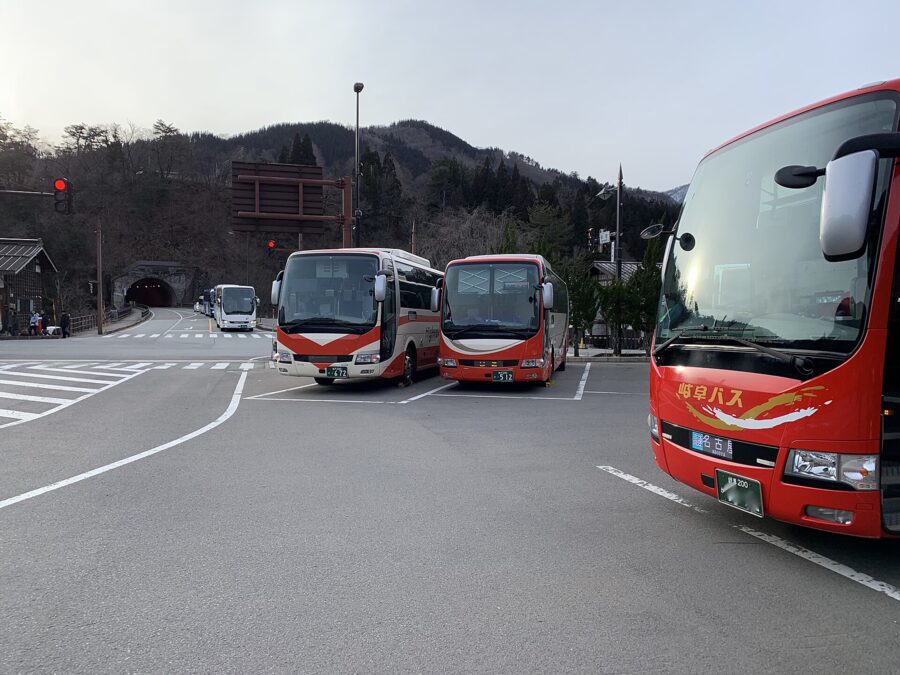
You do not have to go through Takayama to reach Shirakawa-go. The Nagoya–Shirakawa-go highway bus, run by Gifu Bus with Meitetsu Bus and Hokutetsu, leaves the Meitetsu Bus Center at 07:50, 08:50 and 09:20 all year, adds an 08:20 from December to March, and has a 09:50 Meitetsu Bus run that carries on to Kanazawa. The trip takes about 2 hours 40 minutes.
The fare follows a calendar: ¥3,600 on the quietest dates, then ¥3,800, ¥4,000, ¥4,200 and ¥4,700 on the busiest, with the date bands on Gifu Bus’s fare calendar. Children pay a flat ¥2,350. Every seat is reserved and bookings open one month ahead.
The timetable is the real limit. To make the 09:50 you need to be on a Meitetsu train out of the airport by about 08:45, which works for a dawn arrival and almost nothing else; for most flights this route means a night in Nagoya first.
Coming back, Meitetsu Bus’s timetable shows departures from Shirakawa-go to Nagoya at 10:20, 14:30, 15:30, 15:55 and 18:25, plus a 16:30 from December to March.
Takayama to Shirakawa-go, and the order that saves money
The Nohi Bus Shirakawa-go line runs from the Takayama Nohi Bus Center to the village in 50 minutes, with around 20 departures a day in the timetable that starts on 1 December 2026. The fare rises on the same day, from ¥2,800 to ¥2,900, and Shirakawa-go to Kanazawa goes from ¥2,800 to ¥2,900 too. Some departures take only reserved passengers, booked by phone or on the Hassha Orai Net site from one month ahead; the rest are first come, first served.
Nohi’s own warning is worth reading before you plan a tight connection: queues of cars waiting for Shirakawa-go’s car parks, snow or a closed expressway can make a bus more than two hours late, at departure as well as arrival.
If you want the open-air museum, Nohi sells a Shirakawa-go set ticket: return bus from Takayama plus entry to the Gassho-zukuri Minkaen, ¥6,400 from 1 December 2026 and valid for ten days. The return bus alone is ¥5,800, so the museum costs you ¥600 against its ¥800 gate price. The Minkaen closes on Thursdays from December to March, and the set cannot be used those days.
Now the order. If you will fly home from Centrair, there are three sensible ways to see both places:
- Out and back from Takayama: the Gifu set both ways and a return to Shirakawa-go. ¥4,100 + ¥5,800 + ¥4,100 = ¥14,000.
- A loop from Nagoya: Meitetsu, the morning bus to Shirakawa-go, Nohi on to Takayama, the highway bus back to Nagoya at the web fare, and Meitetsu to the airport. ¥980 + ¥3,600–¥4,700 + ¥2,900 + ¥3,300 + ¥980 = ¥11,760–¥12,860.
- The JR Hida Area Free Kippu, below: ¥14,330 with Meitetsu both ways, reserved Hida seats included.
The loop is the cheapest by up to ¥2,240 and it saves one bus ride, because you never double back from Shirakawa-go to Takayama. You carry your bags into the village for half a day, which is what the lockers are for. It usually needs a night in Nagoya at the start to catch a morning bus, and a quiet-calendar date makes the gap widest.
Passes that cover the route, and when they pay
Hida Area Free Kippu (JR Central). The Hida Area Free Kippu costs ¥12,370 from Nagoya and is valid for three days. It covers a return trip on the Hida with reserved seats, unlimited JR rides between Hida-Kanayama and Hida-Furukawa, and, in the bus version, a voucher for a Nohi return to Shirakawa-go. The voucher is good only on the Shirakawa-go buses that take no reservations.
Paid separately, a reserved Hida both ways and the Shirakawa-go return come to ¥18,080, so the ticket saves ¥5,710. It is sold at JR Central stations and on JR West’s e5489 site, with no foreign-passport rule, no child version, and blackout dates of 27 April to 6 May, 10 to 19 August and 28 December to 6 January. If you want the train and not the bus, this is the way to pay for it.
Takayama-Hokuriku Area Tourist Pass. The Takayama-Hokuriku Area Tourist Pass costs ¥19,800 for five consecutive days. It covers the Hida from Nagoya to Toyama, the buses from Takayama through Shirakawa-go to Kanazawa or Toyama, the Hokuriku Shinkansen from Toyama to Tsuruga, and JR on to Kyoto, Osaka and Kansai Airport, with six free reserved seats. It is for holders of a foreign passport with a Temporary Visitor stamp; if you use the automated immigration gates, ask for the stamp.
It does not cover Meitetsu or the Nagoya–Shirakawa-go bus. A one-way run from Nagoya through Takayama and Shirakawa-go to Kanazawa costs ¥11,940 at full fare, so the pass needs another ¥7,860 of travel inside five days. The run on to Kyoto or Osaka, which it also covers, is where it can find that. A loop back to Centrair by Hida, with Shirakawa-go as a return trip from Takayama, comes to ¥18,080, so the pass loses there.
Alpine-Takayama-Matsumoto Area Tourist Pass. At ¥24,500, the Alpine-Takayama-Matsumoto pass is a loop through the Tateyama Kurobe Alpine Route and does not touch Shirakawa-go. Its 2026 season ran from 15 April to 10 November, and sales for 2026 have closed.
Private vans for groups: what seven seats cost
There is no direct public bus from Centrair to Takayama any more; Nohi’s highway bus list no longer includes one. The only one-seat ride is a car you hire. RydAgent, a Japan-only private-car firm, lists the airport-to-Takayama run at a fixed ¥91,000 for a Toyota HiAce taking up to nine people and nine large cases, or ¥76,000 for an Alphard taking four. Its prices were last reviewed in August 2026 and include expressway tolls; the drive is about three hours.
For seven people that is ¥13,000 each. The same seven pay ¥28,700 between them on the Gifu set, or ¥49,840 on the Meitetsu and the reserved Hida. So the van costs the group ¥41,160 more than the train and ¥62,300 more than the bus. What it buys is three hours with no change of train, no phone booking and no ¥450 debates, and the luggage loaded by someone else.
It pays off in three cases. Allowing an hour to clear the airport, a flight landing after about 17:00 will struggle to make the last Gifu bus, and one after about 19:00 the last Nagoya one. A family with small children and car seats (¥2,000 each on that listing) is not going to enjoy two changes. And seven people with ski bags in January are a gamble on a coach whose hold, Nohi warns, can refuse large items when it is full.
Two Alphards for seven would be ¥152,000, so it is the HiAce or nothing. A stop at Shirakawa-go on the way turns the transfer into a charter, quoted separately. For a group already in Takayama, Nohi’s taxi arm has nine-seat jumbo taxis, on the meter, with no published fare to Shirakawa-go.
One thing I would not do is pay van money to avoid the airport ticket counter. It opens at 09:00, the bus seat takes one phone call, and ¥4,100 still gets a person and a suitcase from the arrivals hall to Takayama by mid-afternoon.