An hour of taiko in a basement studio in Aoyama costs one visitor ¥45,000. Bring a friend and it’s ¥22,500 each. Bring two and it drops to ¥15,000 a head, which is still ¥45,000 for the room. Same drums, same teacher, same hour: the studio simply won’t open the door to visitors for less than ¥45,000 a booking.
Across town near Akihabara, a professional group whose roots go back to Tokyo’s first taiko ensemble teaches people from abroad one to one for ¥5,000 an hour, or ¥4,000 each in a small group. In Nishi-Asakusa, ¥500 gets you into a fourth-floor museum where a fair number of the drums are there to be hit.
The difference is mostly English, online booking and a card payment. Sometimes that is worth ¥40,000. Usually it isn’t.
In This Article
- The visitor lessons, priced
- TAIKO-LAB private lesson (Aoyama or Akihabara): ¥15,000–¥45,000
- Oedo Sukeroku Taiko (Sotokanda, near Akihabara): ¥4,000–¥7,500
- Eva Kestner’s workshop (Shibuya, near Daikanyama): from ¥18,500
- What an hour on the drums actually involves
- Japanese-run classes: cheaper, but built for regulars
- Hearing taiko for ¥500 or nothing
- Taikokan, the Drum Museum (Nishi-Asakusa): ¥500
- Festivals: free, if you can stand the crowd
- Stage shows: ¥3,500–¥7,800
- Taiko in Tokyo, side by side
The visitor lessons, priced
Prices in this guide are the ones listed in November 2026, per person, tax included, unless I say otherwise.
TAIKO-LAB private lesson (Aoyama or Akihabara): ¥15,000–¥45,000
TAIKO-LAB is the studio brand of Taiko Center, a Kyoto drum company that runs Japanese-language taiko schools across the country and, on the side, an English lesson for tourists. In Tokyo it teaches visitors in two studios: a basement on Jingumae 3-chome in Aoyama, which holds up to 100 people, and a smaller one at Kanda Neribeicho in Akihabara, which holds 30.
You book through Taiko Center’s visitor booking site, picking a dated slot and paying by card or PayPal. The ticket types tell you everything about the pricing: Solo ¥45,000, Duo ¥22,500 per person, and 3 or more ¥15,000 per person. Four people pay ¥60,000; ten pay ¥150,000.
The cancellation rules are where the ¥45,000 floor shows itself. Dropping people from a group costs nothing 30 to 4 days out. Cancelling the whole booking between 15 and 4 days out costs a “minimum guarantee fee” of ¥45,000, and inside 3 days you pay the lot.
For the money you get a 60-minute lesson that runs to a fixed plan: about five minutes of stretching, forty minutes learning two or three traditional rhythms (the 3-3-7 beat Japanese crowds use for cheering is one), five minutes stringing them into a short piece and playing it together, then ten minutes of the instructor playing solo for you. Drums, bachi and the studio are included, the teaching is in English, and nobody needs a guide.
Who it suits: a family of four or five who want a sure thing in English on a fixed date. At ¥15,000 a head it’s close to what a Japanese-run school charges a group for a one-off with an interpreter (below). As a solo traveller, I would not pay ¥45,000 for this.
Oedo Sukeroku Taiko (Sotokanda, near Akihabara): ¥4,000–¥7,500
Sukeroku Taiko, formed in the 1960s by Bon-dance drummers from Bunkyo, was Tokyo’s first professional taiko ensemble, and it brought the slanted drum stand of Tokyo’s Bon festivals into group drumming. Oedo Sukeroku Taiko, founded in the 1980s by one of the original members, teaches from its practice hall at Sotokanda 2-1-13 in Chiyoda.
Oedo Sukeroku’s lessons for people from abroad are priced like this since the February 2025 revision, tax and drum hire included:
- One hour: ¥5,000 on your own, ¥4,000 each in a group of two to eight
- Ninety minutes: ¥7,500 on your own, ¥5,500 each in a group
- Bachi: ¥300 to rent, ¥3,300 to buy
The catches are all practical. Lessons normally run on Tuesday, Thursday and Friday, inside a 13:00–17:00 window, and other times are by arrangement. You book by emailing the dates, times and number of people you want, and you pay in cash on the day. Same-day cancellation costs the full fee, and anything from 7 days to the day before costs half.
The lesson is open to people who live outside Japan or are foreign nationals, it is taught by the group’s professional players, and the page lists Japanese and English as the teaching languages.
For two people, the hour costs ¥8,000 here against ¥45,000 at TAIKO-LAB. If your days are free on a Tuesday, Thursday or Friday afternoon, this is the one I would book.
Eva Kestner’s workshop (Shibuya, near Daikanyama): from ¥18,500
Eva Kestner co-founded and led Cornell University’s taiko group and now teaches a 90-minute English workshop at the Mirai Taiko studio at 11-1 Uguisudanicho, an eight-minute walk from Daikanyama Station or about twelve from Shibuya. A hostel’s activity desk lists it from ¥18,500 a person, with sessions at 10:00 and 13:00.
The format is a step up from the hour at TAIKO-LAB: stance and grip, rhythm drills, then one or two traditional pieces, and you leave with a video of yourself playing. There is no booking page of her own; the workshop is sold through platforms such as GetYourGuide, Klook and Airbnb, so compare the yen total on two of them before you pay.
Per person it costs more than Oedo Sukeroku and less than TAIKO-LAB for anyone travelling alone or in a pair. You get the longest lesson of the three, in fluent English, with no email back-and-forth.
What an hour on the drums actually involves
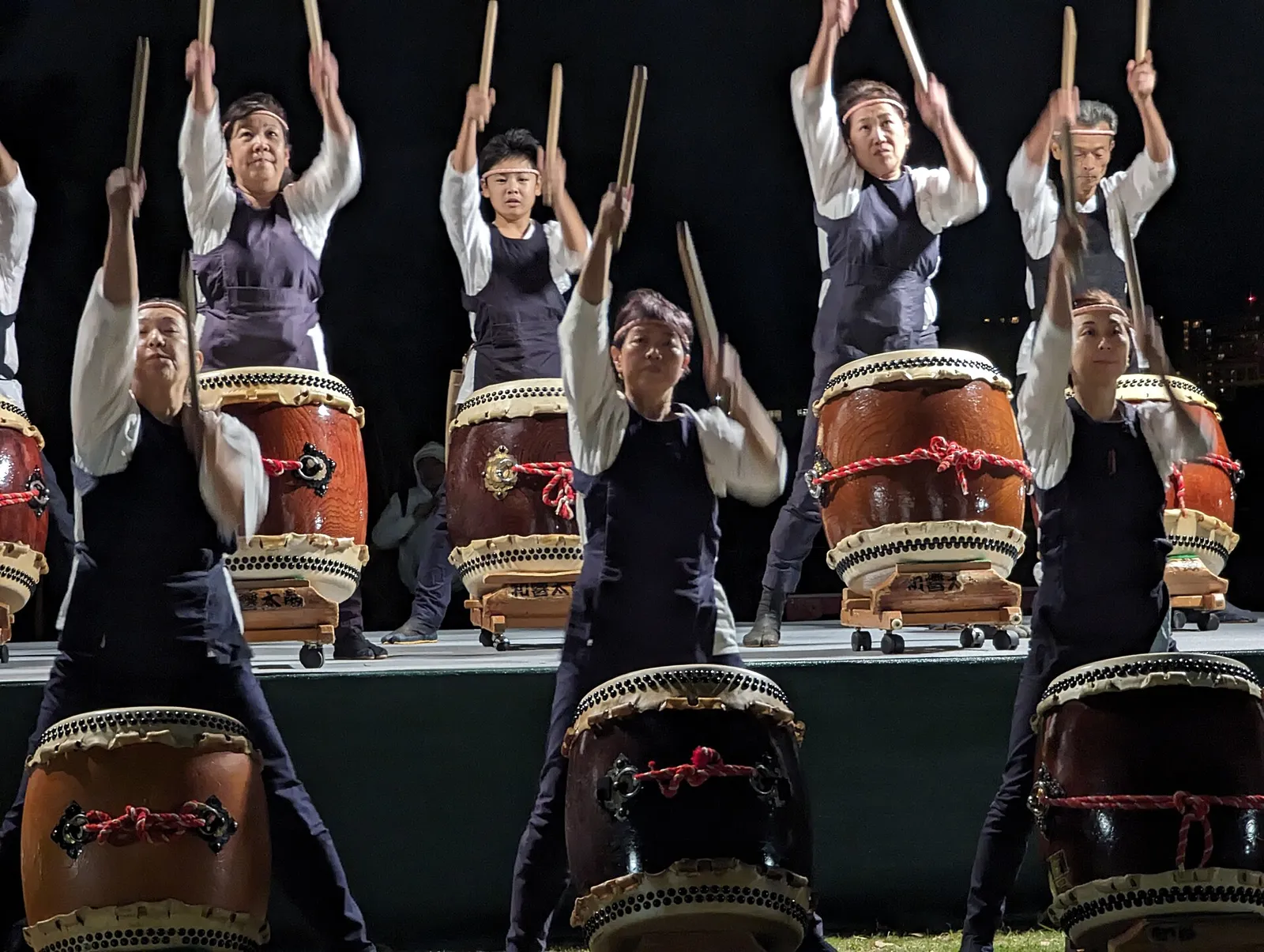
The drum you’ll play is a nagado-daiko, a barrel drum carved from one trunk with cowhide tacked over both ends, set on a stand at hip height or slanted in front of you. You strike it with bachi, thick wooden sticks. All three visitor lessons above supply both.
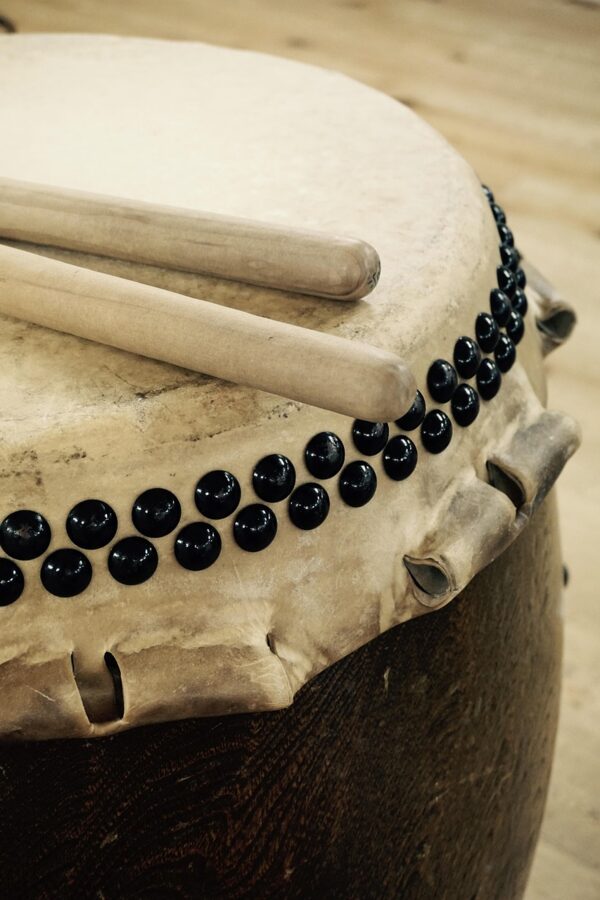
Most of the lesson is your body, not your hands. Teachers start with stance (feet wide, knees bent, weight low) and spend more time on how you raise the arm than on where the stick lands. Rhythms are taught by voice, with syllables like “don” for a hit in the centre and “ka” for the rim, so you don’t need to read music.
What to wear and bring:
- Clothes you can squat and sweat in. Jeans are allowed at Taiko Center’s visitor lessons; sportswear is better.
- Socks. Taiko Center’s visitor Q&A says lessons take place in socks, with changing rooms but no showers.
- Clean indoor trainers if you join a Japanese-run class; TAIKO-LAB’s regular classes require them and don’t rent shoes, tabi or towels.
- A drink, or coins: Taiko Center’s studios have vending machines.
On noise and rules: it is loud, by design, and earplugs are your own call. Taiko Center’s terms ban unauthorised photos, video and sound recording, so ask your teacher before filming, and they also bar anyone under the influence of alcohol. Eva Kestner’s workshop sends you home with a video, which solves that problem.
Who it suits: almost anyone who can stand for an hour. Taiko Center recommends children from age 3, and its Japanese page says people with limited mobility, including wheelchair users, can play seated. It is a real workout for the shoulders and thighs, so I wouldn’t book it for the morning after a long hike.
Japanese-run classes: cheaper, but built for regulars
Tokyo is full of taiko classes run in Japanese for people who live here, and their trial lessons look like a steal next to ¥45,000. Mostly they aren’t open to you, and the ones that are come with a language bill.
TAIKO-LAB’s own trial lesson. The same company that charges visitors ¥45,000 runs a trial lesson for would-be members at ¥1,100 for 30 minutes (its fee page lists the trial at ¥3,000 for 60 minutes, so check which applies when you book). The booking page answers the obvious question in English: the trial class is not for tourists, and visitors should apply for the private lesson. Bring indoor trainers for Aoyama and Akihabara, sportswear and a towel, and arrive 15 minutes early.
Members then pay monthly fees from ¥10,320 to ¥18,750 depending on class and studio, plus ¥11,000 to join and ¥5,390 for their own set of bachi. TAIKO-LAB’s one-off 1DAY workshops, ¥4,400–¥6,600 for up to 90 minutes, point first-timers to the trial instead.
HIBIKUS Asakusa Basement. The drum maker Miyamoto Unosuke runs its own taiko school in the basement of its Asakusa head office at Asakusa 6-1-15, six minutes from Exit 7 of Asakusa Station on the Ginza Line. It advertises a free trial lesson, then charges ¥11,000 to join and from ¥7,500 a month for two 80-minute classes. It’s open 10:00–22:00 every day (Mondays until 17:30).
The school says it gets a lot of overseas visitors for experiences, but it publishes no visitor price; ask before you assume the free trial applies to someone flying home on Friday.
Yume Academy’s one-day taiko. This school, which runs regular classes in Sumida, shows what a Japanese-run one-off costs once the extras are added. Its one-day taiko course is ¥10,500 a person for 60 minutes, plus a venue from ¥7,500 for up to ten people, plus ¥13,000 for an English or Chinese interpreter, because the class itself is in Japanese.
One person with an interpreter pays ¥31,000. A group of six splits the venue and interpreter and gets down to about ¥14,000 each, a little under TAIKO-LAB’s ¥15,000.
So the price gap is real, but it is a gap between a monthly hobby and a one-off. The one Japanese-run group that has built a cheap one-off for people from abroad is Oedo Sukeroku.
Hearing taiko for ¥500 or nothing
Taikokan, the Drum Museum (Nishi-Asakusa): ¥500
Miyamoto Unosuke Shoten has made drums and festival shrines in Asakusa for about 150 years and supplies the Imperial Household Agency and the Kabuki-za. Its Nishi-Asakusa store at 2-1-1 is a showroom of drums, mikoshi (portable shrines) and festival gear, open 10:00–18:00 and closed on Tuesdays, and it costs nothing to walk in and look.
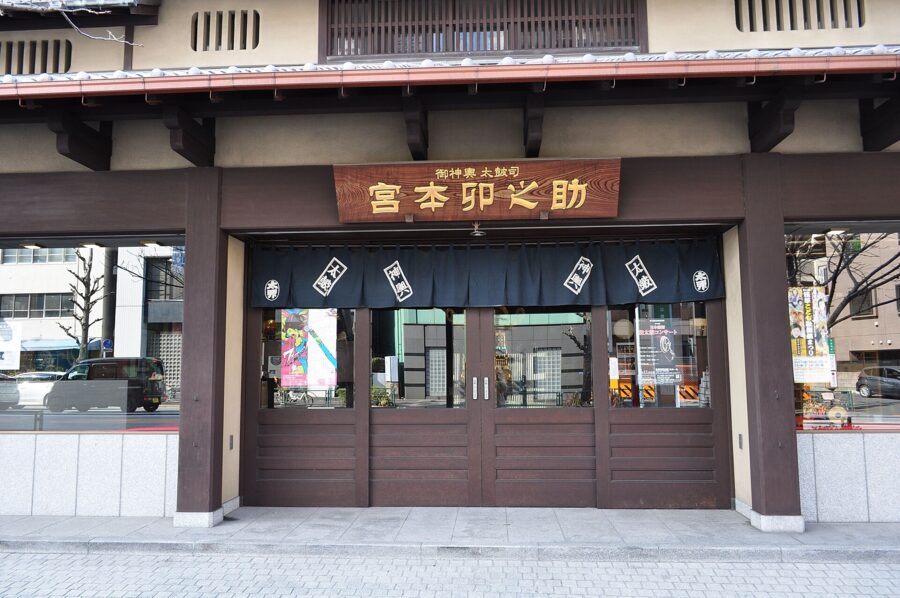
On the fourth floor of the same building is Taikokan, the company’s drum museum: about 800 drums from Japan and around the world, opened in 1988. Any exhibit with a “♪” mark on its card is there to be played. Entry is ¥500 for adults and ¥150 for children, 11:00–16:00 with last entry at 15:00, closed Mondays (open when Monday is a public holiday) and Tuesdays. It’s two minutes from Exit 3 of Tawaramachi Station on the Ginza Line.
That is ¥3,500 less than the cheapest lesson a visitor can book in Tokyo. Nobody will teach you a rhythm, but for ¥500 nobody will hurry you out either.
Festivals: free, if you can stand the crowd
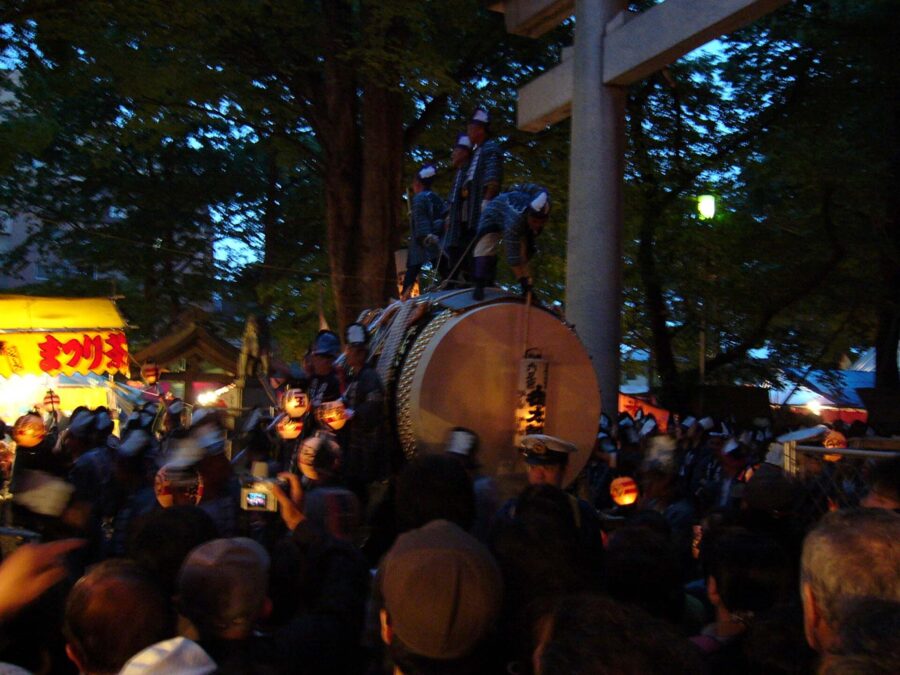
Kurayami Matsuri, Okunitama Shrine, Fuchu (30 April–6 May). This is the festival to see if you want drums rather than mikoshi. The shrine’s own programme lists two drum moments.
On 4 May from 17:00 to 18:00, some of the largest odaiko in Japan line up in front of the great torii and are played as hard as their drummers can manage. On 5 May from 18:00 to 21:00, six of them lead eight mikoshi through the town in the main procession, and at 04:00 on 6 May they lead them back again. Fuchu is on the Keio Line, west of central Tokyo.
Sanja Matsuri, Asakusa Shrine (mid-May). Sanja Matsuri runs Friday to Sunday on the weekend of the third Saturday in May and draws around 1.8 million people. It’s a mikoshi festival first, but Friday’s opening procession brings out the festival-music floats, with small shime-daiko drums and flutes on board.
Shinjuku Eisa Matsuri (late July). Eisa is an Okinawan Bon dance in which the dancers carry and strike their own drums. The 23rd Shinjuku Eisa Matsuri filled the streets around Shinjuku Station’s east and west exits on Saturday 25 July 2026, 13:00–20:00. It’s free and it’s in the middle of the city, so you can drift in and out between groups.
Stage shows: ¥3,500–¥7,800
If you want to hear taiko played at its best, pay for a seat. Kodo, the Sado Island ensemble that turned 45 in 2026 and still tours abroad every year, plays Tokyo twice in the next twelve months. Kodo’s December concert runs 17–20 December 2026 at Bunkyo Civic Hall. Its Asakusa run is 23–27 June 2027 at Asakusa Kokaido: ¥7,800 for S seats on the first and second floors, ¥5,500 for A seats on the third, and ¥3,500 for anyone 25 or under.
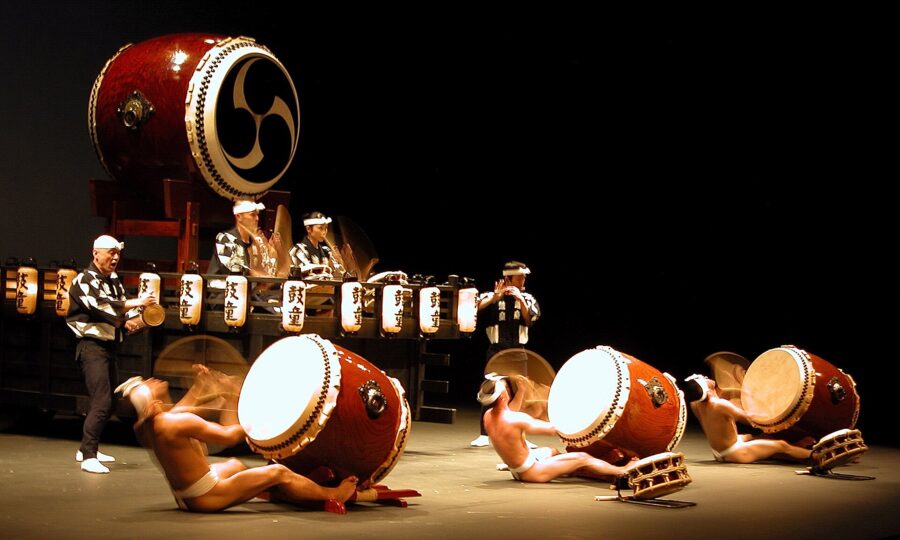
Closer to the lesson end of things, TAIKO-LAB’s professional groups play a year-end show in the Aoyama studio on 27 December 2026, doors 16:30, start 17:00, for ¥5,800. Seats are allocated by lottery, tickets are sold through Peatix, and there are no cancellations.
Taiko in Tokyo, side by side
| Option | Price | Length | Catch |
|---|---|---|---|
| Oedo Sukeroku Taiko visitor lesson (Sotokanda) | ¥5,000 alone, ¥4,000 each for 2–8 | 1 hour (1.5 hours: ¥7,500 / ¥5,500) | Usually Tue, Thu, Fri afternoons; book by email, pay cash |
| TAIKO-LAB private lesson (Aoyama, Akihabara) | ¥45,000 alone, ¥22,500 each for 2, ¥15,000 each for 3 or more | 1 hour | ¥45,000 minimum per booking, even to cancel 4–15 days out |
| Eva Kestner workshop (near Daikanyama) | From ¥18,500 | 90 minutes | Sold only through booking platforms; prices vary |
| Yume Academy one-day taiko | ¥10,500 plus venue from ¥7,500 plus ¥13,000 interpreter | 1 hour | Taught in Japanese; only adds up for groups |
| TAIKO-LAB trial lesson | ¥1,100 | 30 minutes | For would-be members; not for tourists |
| HIBIKUS Asakusa Basement | Free trial, then ¥11,000 plus ¥7,500 a month | 80-minute classes | Japanese-language school for regulars |
| Taikokan drum museum (Nishi-Asakusa) | ¥500 | 11:00–16:00 | Closed Mondays and Tuesdays; no teaching |
| Kurayami Matsuri (Fuchu) | Free | 4 May 17:00–18:00; 5 May 18:00–21:00 | Huge crowds; west of central Tokyo |
| Kodo, Asakusa Kokaido | ¥5,500–¥7,800 (¥3,500 if 25 or under) | About 90 minutes | 23–27 June 2027 only |
Back in that Aoyama basement, the ¥45,000 buys a good lesson, and for a family of five it’s fair. For one person, the hour at Oedo Sukeroku costs a ninth as much, and the ¥500 drum museum is right there in Asakusa for the afternoon after.