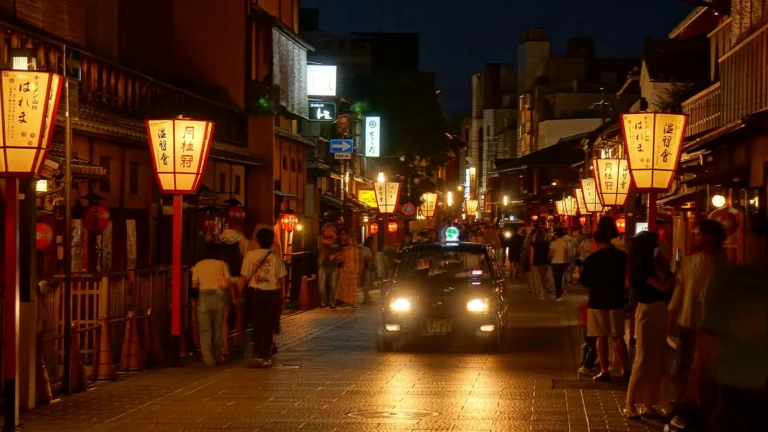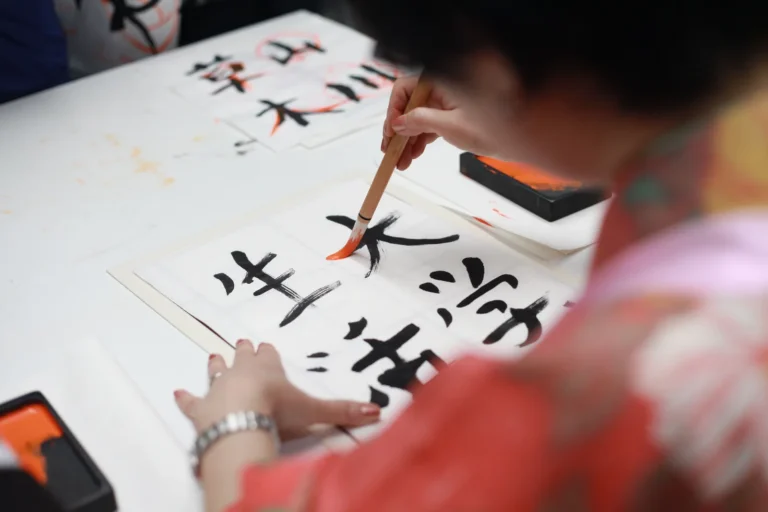
Miyajima Komachi, a kimono shop tucked down an alley off Miyajima’s main street, will dress you for ¥4,950 and let you keep the kimono until 19:00. Okeiko Japan, a five-minute walk away inside a 300-year-old temple, charges ¥9,000 for its day rental and wants it back by 16:00.
Both prices buy a kimono, a sash and someone to tie it. What separates them is the clock, the small things you are expected to bring, and who is standing next to you when you go out. The same gaps run through every shop in Hiroshima city, where a casual kimono costs anything from ¥5,000 to ¥9,000.
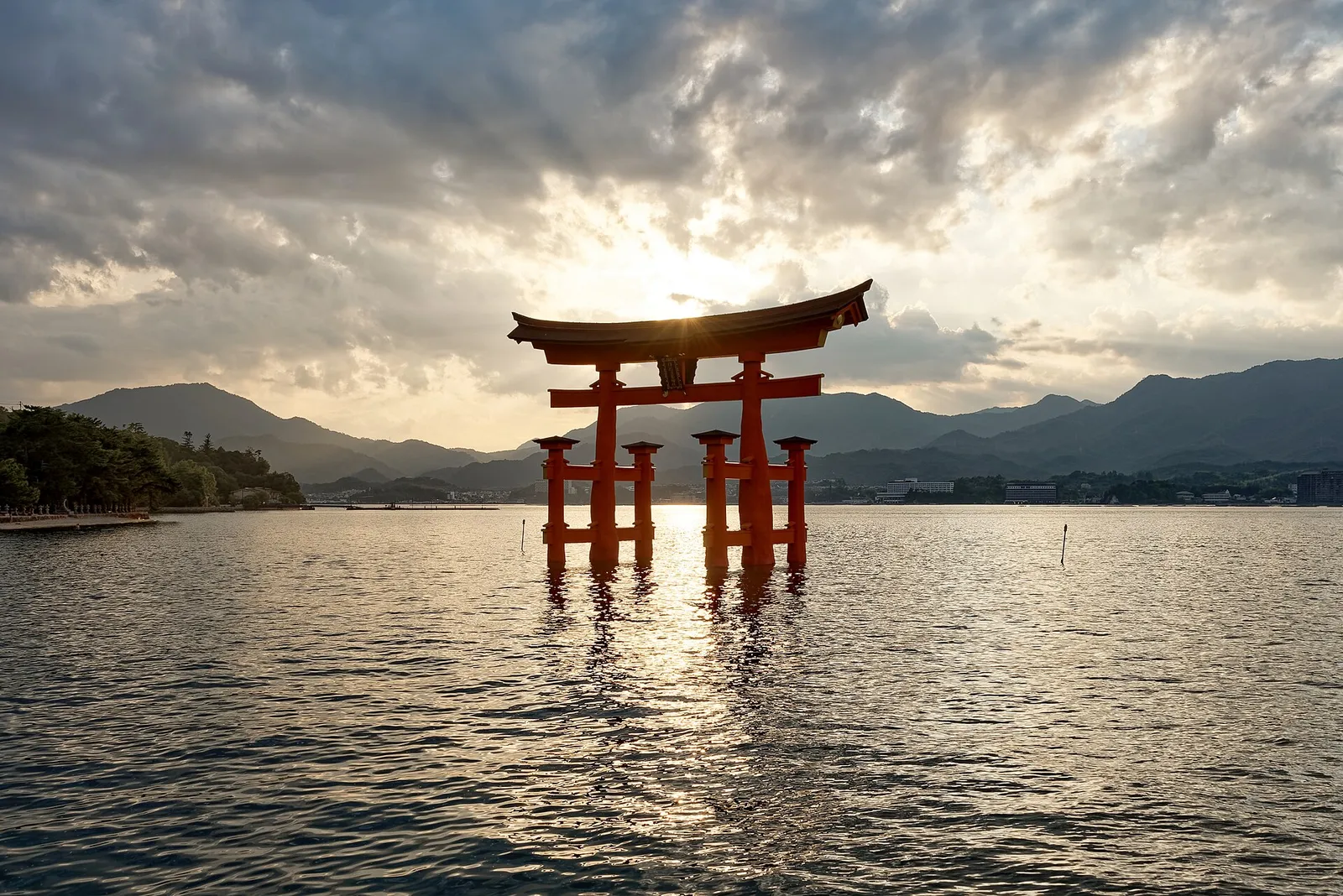
Then there is the photographer. The backdrop most people book one for, Itsukushima Shrine and its torii, does not allow professional shoots inside its grounds. So the question is less “which shop” than where you want to be standing at 16:00, and whether the photos need a professional at all.
In This Article
- What the price buys
- Renting on Miyajima
- Miyajima Komachi: the cheap one with the late return
- Okeiko Japan: a temple, a garden, an early finish
- Miyajima Momijinoga: not a kimono at all
- Renting in Hiroshima city
- City or island: the ferry, the tax and the clock
- Adding a photographer
- Rain, cold and the small print
- The plans side by side
- Cheaper ways to wear one
- The other paid hours: yoga and okonomiyaki
- A yoga class in English
- Making okonomiyaki
What the price buys
Every shop below quotes a price that includes dressing, and every one is tax-inclusive. After that, five lines decide what you actually pay.
The sash. The base plan nearly always means a casual komon kimono with a hanhaba obi, a half-width sash tied in a flat bow. Ask for the wider Nagoya obi tied in a drum knot and the price moves up: ¥5,940 to ¥6,930 at Miyajima Komachi, ¥8,800 to ¥9,900 at Hiroshima Kimono Asobi.
Socks and bag. Some base plans leave out the tabi (split-toe socks) and the handbag. Komachi’s cheapest course expects you to bring both; Kimono Asobi does not include tabi but sells them for ¥550.
Hair. This is where prices drift furthest. Sachi Kimono Rental in the city does a simple set for free, Momiji Hiroshima charges ¥2,000, Komachi’s visiting hairdresser ¥4,950, and Kimono Asobi’s Japanese price list starts at ¥8,000.
The return time. City shops want the kimono back between 17:00 and 18:00. Komachi on Miyajima allows 19:00, or 11:00 the next morning if you sleep on the island.
The season. From roughly June to September most shops switch to yukata, the unlined cotton summer version, and the price usually drops. Komachi charges the same ¥4,950 for either.
Renting on Miyajima
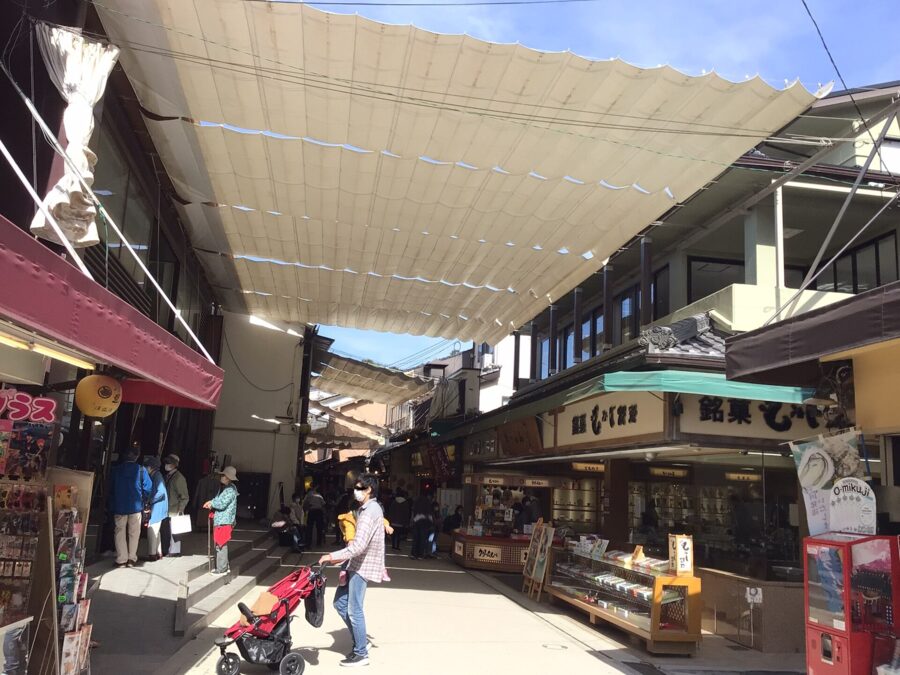
Three places on the island dress tourists, and they sell three different afternoons.
Miyajima Komachi: the cheap one with the late return
Komachi’s kimono courses start at ¥4,950 for the Petit Komachi plan: kimono, half-width obi, sandals and under-robe, with your own tabi and bag. The standard Komachi course at ¥5,940 adds a bag and a pair of tabi socks you keep. Nagoya obi is ¥6,930, a dressier fukuro obi with cords ¥7,920, and men’s kimono start at ¥5,000.
Dressing runs 10:00–17:00 by reservation, the shop is closed on Tuesdays, and it holds your luggage while you are out. It is five minutes’ walk from the ferry pier and six from the shrine. The 19:00 return is the best thing it sells: in late autumn the shrine closes at 17:30, so you can be inside the gates at closing time and still walk the waterfront in kimono as the lights come on.
Okeiko Japan: a temple, a garden, an early finish
Okeiko Japan works out of Tokuju-ji, a temple five minutes from the ferry terminal, and its kimono rental for a day costs ¥9,000 from October to June. Sandals, bag and hair ornaments are included, staff take photos of you in the temple garden, and you start at 10:00 or 13:00 and come back by 16:00. Add a tea ceremony and it is ¥13,000; the tea ceremony alone is ¥5,000.
You pay nearly double Komachi’s entry price for a quieter setting, guidance in English and the garden photos. Cancel the day before or later and you pay in full.
Miyajima Momijinoga: not a kimono at all
Momijinoga dresses women in tsubo-shozoku, the travelling costume of Heian-era noblewomen, with a wide sedge hat and red trousers. The walking plan costs ¥8,800 for up to 90 minutes around Daisho-in temple and Momijidani Park. It is for women only, booked ahead, with the last dressing at 16:00.
The catch is spelled out on its own page. Itsukushima Shrine does not let anyone in costume onto its grounds unless they are marrying there that day, so you photograph the shrine from outside. In rain the walk becomes a 30-minute indoor session at ¥7,150, and nobody takes your photo except, on request, a member of staff with your phone.
Renting in Hiroshima city
The city shops cluster around Shukkeien garden and Hiroshima Station, and their customers mostly walk the garden, the castle grounds and the streets between. Prices for the same casual kimono are close to double from the cheapest to the dearest.
Sachi Kimono Rental in Kami-hatchobori is the cheapest of the city shops here: ¥5,000 for a komon, ¥4,000 for a yukata, ¥4,000 for a man’s kimono, with a simple hair set thrown in. Opening hours are 08:00–18:00; its price list gives no return time, so ask when you book.
M Kimono Rental, near Hiroshima Station in Matoba-cho, lists plans from ¥6,600 on its Klook listing, where its standard plan runs four hours and return slots go up to 18:00.
Hiroshima Kimono Asobi, a cultural association five minutes’ walk from Shukkeien, runs two price lists. The Japanese page charges ¥8,800 for a komon with half-width obi and ¥5,500 for a yukata, with hair from ¥8,000, return by 18:00 and ¥4,000 extra to keep it overnight. The English page charges ¥9,000 with a simple hair style and a Japanese umbrella included, return by 17:00, or ¥6,000 for a yukata from June to September.
If you want your hair done, the English price is the better deal; if you do not, book through the Japanese form. It is closed on Wednesdays.
Momiji Hiroshima, in the Shukkeien Building, is part rental shop and part self-portrait studio. Its casual kimono plan is ¥8,800 and includes 15 minutes in a lit studio with a remote shutter, with every frame sent to your phone. Return is by 17:00, or by noon next day for ¥3,000 plus a ¥10,000 deposit; it is closed on Mondays and stores suitcases free.
Cross, a formal-wear and studio business in Nakamachi, sits at the top: its rental for overseas guests starts at ¥8,800 for a yukata and ¥22,000 for a homongi, the formal visiting kimono. Unless you want a formal kimono, skip it for a sightseeing day.
City or island: the ferry, the tax and the clock
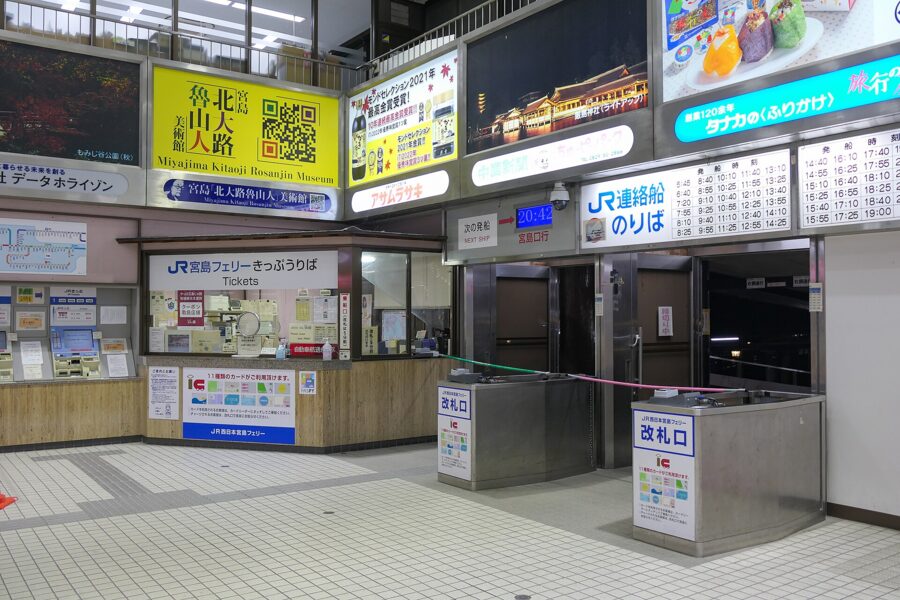
Getting to Miyajima costs the same whichever shop you choose. The JR West ferry fare is ¥200 one way for an adult, and the Matsudai Kisen fare is the same. On top of that comes Hatsukaichi city’s Miyajima visitor tax, ¥100 per arrival since October 2023, which the ferry company adds to your outbound fare. The crossing takes about ten minutes.
From central Hiroshima, the slow, cheap way to the ferry is the Hiroden streetcar to Hiroden-Miyajimaguchi, which costs a flat ¥240 however far you ride. A round trip by streetcar and ferry comes to ¥980 with the tax, before the ¥300 to enter the shrine.
Wearing a city rental on the ferry is perfectly possible, and it works against you on time. A kimono that has to be back in Kami-hatchobori by 18:00 gives you a short afternoon on the island once you count dressing, the streetcar and the boat both ways. If Miyajima is the point of the day, rent on Miyajima; if the city is, rent in the city and do the island another day in your own clothes.
The shrine itself closes early in winter: 17:30 from mid-October to the end of November, 17:00 in December. With a city rental due back at 17:00 or 18:00, that leaves you choosing between the shrine and the shop.
Adding a photographer
Photographer prices in Hiroshima run from ¥8,000 to ¥33,000 for an hour, and the cheap end is real.
- Sachi Kimono Rental: 60 minutes on location for ¥8,000 for one person, with all the files and ten edited, or ¥12,000 for a couple with fifteen edited. Book the shoot with a rental and make-up and the bundle comes off ¥2,000.
- Momiji Hiroshima: from ¥18,000 for an hour in Shukkeien or the castle grounds, 50 or more retouched photos.
- Cross: studio shoots from ¥22,000, location shoots from ¥33,000.
- Hiroshima Kimono Asobi: a professional photographer from ¥30,000, on the English price list.
- Miyajima Komachi: a photographer who knows the island for ¥33,000, one hour for up to five people, booked at least two weeks ahead, with files sent two to three weeks later.
Where the photographer can work matters as much as the fee. Komachi’s own photo page says professional shoots inside the grounds of Itsukushima Shrine are in principle not allowed, and families having a blessing there in October and November must get the shrine’s permission themselves. On Miyajima you are paying for the streets, the temple steps and the shrine seen from outside.
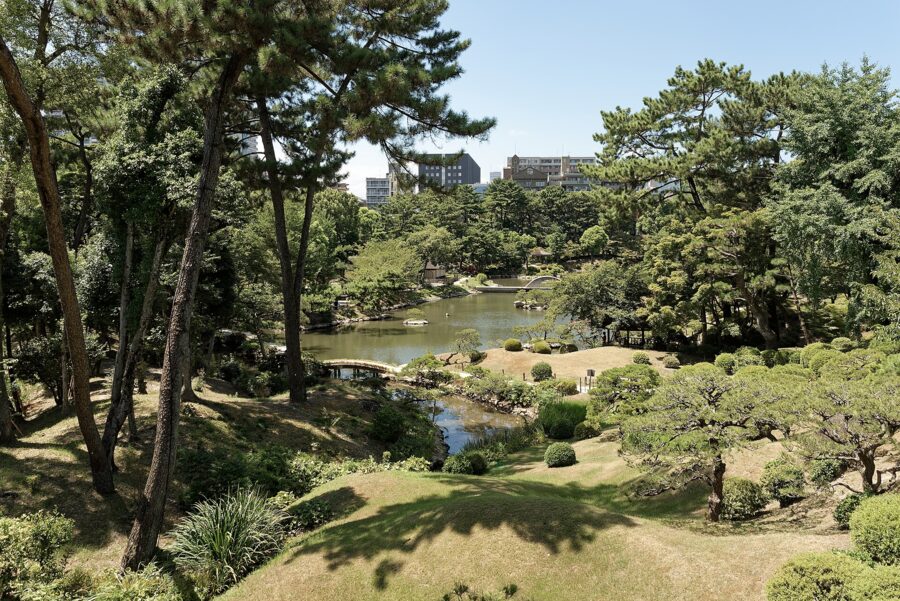
Shukkeien is easier. Its rules for photo shoots treat commemorative shoots by a hired photographer as a same-day sign-in at reception, with some event days blacked out. Admission is ¥350 for an adult, and the garden is open 09:00–17:00 from mid-September to mid-March, 09:00–18:00 the rest of the year.
The free option is better than it sounds. Momiji Hiroshima’s 15-minute studio session is already inside its ¥8,800 plan, Okeiko Japan’s staff photograph you in the garden, and every shop will take a few frames on your phone. The Peace Memorial Park is a short walk from most of the city shops; I would walk through it in kimono gladly and would not stage a shoot at the Cenotaph.
Rain, cold and the small print
Rain changes more than your mood. Momiji Hiroshima does not let its ¥11,000 Elegant plan outdoors in rain or snow, and Momijinoga moves you indoors. Ask any shop what happens to your booking if it pours, because cancellation terms run from free changes to 100% on the day.
Cold is your problem to solve. Komachi asks for thin thermal underwear with a wide or low neckline, since the collar of a kimono sits low at the back. Leggings are fine, but nothing high-waisted: the obi goes on top, and the shop warns that you will struggle in the toilet.
Momiji Hiroshima insists on your own underlayer whatever the season and rents Japanese-style underwear for ¥2,000. Men can add a haori jacket at Komachi for ¥1,100.
Overnight returns carry their own rules. Momiji Hiroshima tells next-day customers not to sit for long in yakiniku or okonomiyaki restaurants, where the smoke and grease get into the silk, and bills cleaning if they do. Plan dinner before you change, or after you hand it back.
The plans side by side
These are the prices in force in November 2026, from each shop’s own price page or current listing.
| Plan | Price | What is included | Catch |
|---|---|---|---|
| Sachi Kimono Rental, komon | ¥5,000 | Kimono, dressing, simple hair set | No return time published |
| Miyajima Komachi, Petit Komachi | ¥4,950 | Kimono, half-width obi, sandals, under-robe | Bring your own tabi and bag; closed Tuesdays |
| Miyajima Komachi, Komachi course | ¥5,940 | As above plus bag and tabi socks | Hair ¥4,950 extra, paid to the hairdresser |
| M Kimono Rental | From ¥6,600 | Kimono and dressing, four hours | Prices published only on its Klook listing |
| Hiroshima Kimono Asobi (Japanese page) | ¥8,800 | Komon, half-width obi, dressing | Tabi not included; hair from ¥8,000 |
| Hiroshima Kimono Asobi (English page) | ¥9,000 | Kimono, dressing, simple hair, umbrella | Back by 17:00 |
| Momiji Hiroshima, casual | ¥8,800 | Kimono, obi, 15-minute self-portrait studio | Hair ¥2,000 extra; closed Mondays |
| Okeiko Japan, day rental | ¥9,000 | Kimono, sandals, bag, garden photos by staff | Back by 16:00; October to June only |
| Momijinoga, Heian costume walk | ¥8,800 | Full costume for 90 minutes | Women only; no entry to the shrine |
| Cross, yukata | From ¥8,800 | Yukata and dressing | Studio shoot from ¥22,000 |
Cheaper ways to wear one
Go in yukata season. Sachi’s yukata is ¥1,000 less than its kimono and Kimono Asobi’s is ¥3,300 less. Komachi points its yukata customers at Tokasan, the city’s own yukata festival, and at the summer fireworks.
Bring the small things. Komachi’s ¥4,950 plan is cheap partly because you supply the tabi and bag. Pack a pair of split-toe socks and a small handbag and you stay on the bottom price.
Rent where you will spend the afternoon. A city rental taken to Miyajima wastes your return window on the streetcar and the boat. A Miyajima rental worn back to the city means booking overnight at Komachi and returning it by 11:00 the next day, which only works if you sleep on the island.
Skip the hired photographer on the island. At ¥33,000 you buy an hour that cannot include the shrine’s own grounds. The same money buys Sachi’s photographer four times over, and Shukkeien lets a photographer work after a sign-in at the gate.
The other paid hours: yoga and okonomiyaki
A yoga class in English
One World Meditation & Yoga is a small studio a few minutes’ walk from the Atomic Bomb Dome, run by an instructor who has taught in English and Japanese for about 15 years. Its drop-in class for travellers is listed on ActivityJapan at ¥4,500, mat included. That buys 60 minutes for no more than four people on Thursday or Friday at 09:00, gentle stretching and meditation that ends with Tibetan singing bowls.
The studio is in room 702 of the Lion Otemachi building, three minutes’ walk from the Genbaku Dome-mae streetcar stop. Cancel the day before and you pay half; on the day, all of it. At ¥4,500 it is a cheap hour of quiet in a city that asks a lot of you, and it is over by 10:00, when the first dressing slots open.
Making okonomiyaki
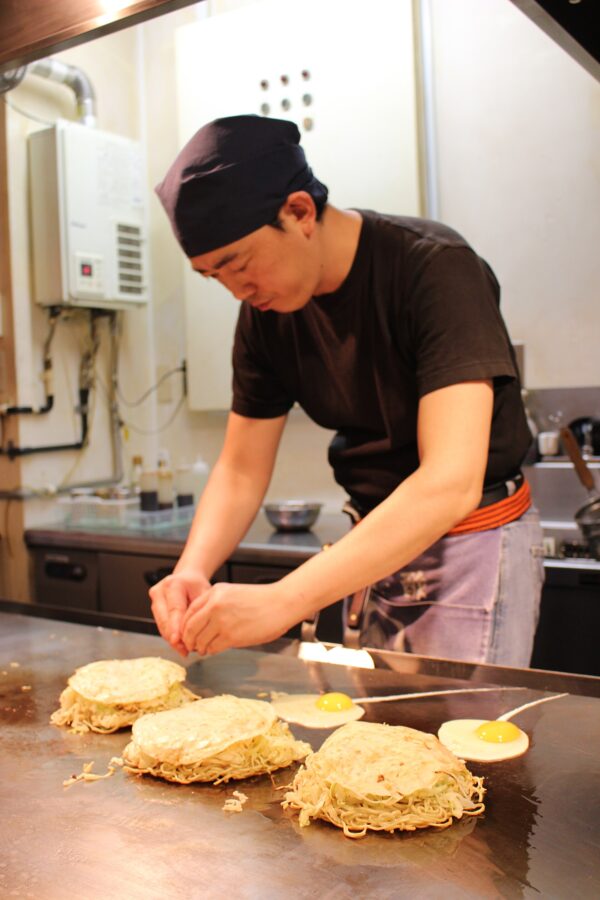
Otafuku, the sauce company, runs two classes, and both cost less than most of the hair sets above. OKOSTA, in the ekie building two minutes from Hiroshima Station, charges ¥2,500 for 90 minutes on a professional griddle with one topping, and you eat what you make. Sessions start at 10:30, 13:00 and 18:30, bookings close three days ahead, and there are halal, vegetarian and gluten-free versions at the same price.
The English page says English classes are available, and on the same page that guidance is given in Japanese, so ask which you will get when you book. The 18:30 session can be booked as a dinner plan at ¥3,300 with snacks and a drink, or ¥5,500 with two hours of drinks.
The cheaper class is at Otafuku’s head office in Nishi-ku. The Wood Egg Okonomiyaki Museum runs a 90-minute class on a household hot plate for ¥1,100, on Tuesdays only at 11:30, for a minimum of two people. The museum on the same site is free on weekdays, and the factory tour is free with a booking.
Do the cooking class in your own clothes. A griddle, a spatula and a sleeve that hangs to your wrist do not mix, and a stained rental can come back to you as a cleaning bill.
At ¥4,950 and a 19:00 return, Komachi’s plan is still the cheapest way to be in kimono when the lights come on along the Miyajima waterfront. Spend the change on the ¥2,500 okonomiyaki, in a T-shirt.