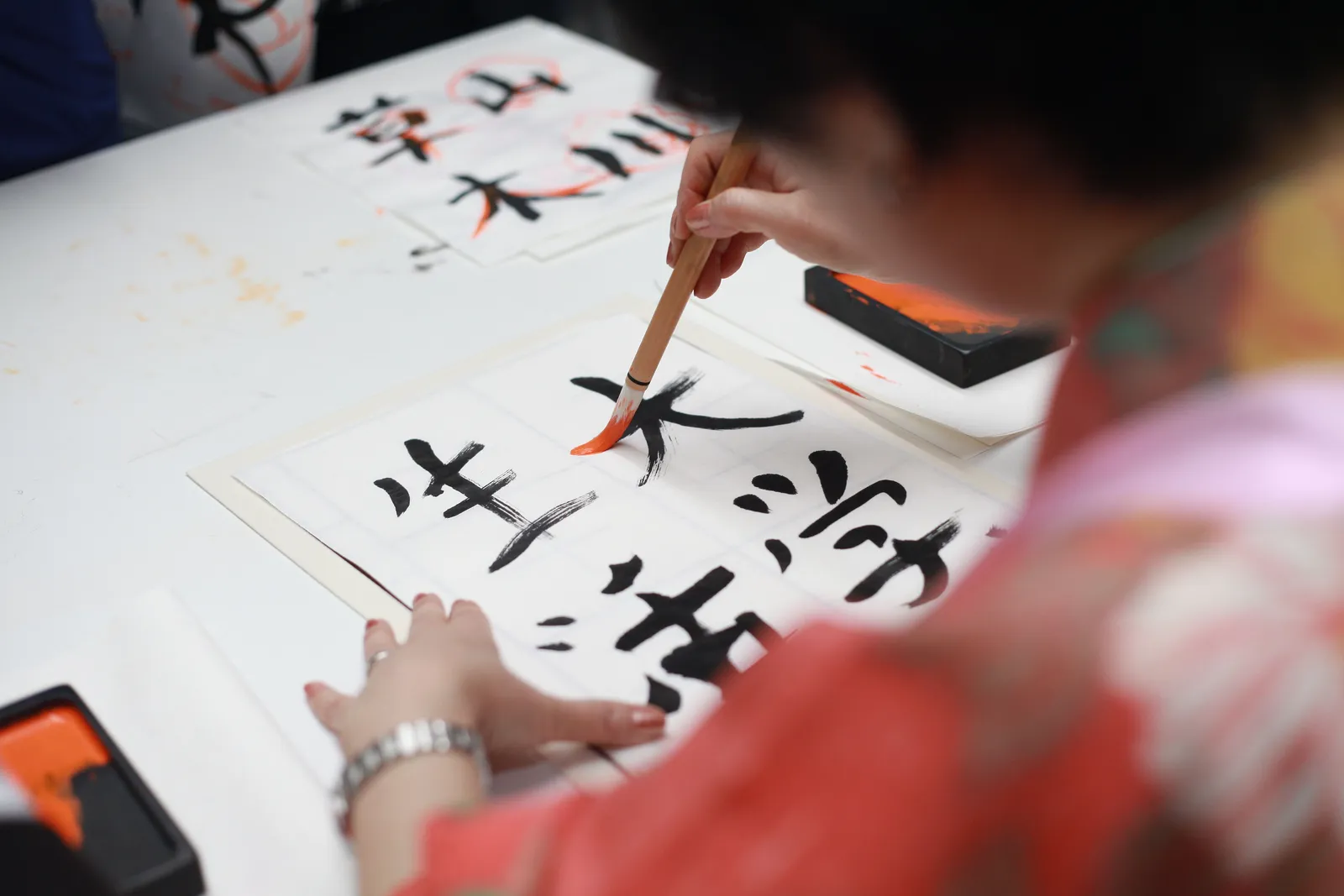
At Toji, a short walk from Kyoto Station, ¥1,000 buys a seat in the temple’s dining hall, a brush and a sheet of the Heart Sutra printed faintly enough to trace. Across town, a two-hour class that mounts your characters on a hanging scroll and stamps them with a seal costs ¥25,000. Same brush, same black ink, same 262 characters if you want them.
The gap is not the ink. It is what you carry out of the room, whether someone is standing over your shoulder correcting the angle of your wrist, and how long it takes you to get there. Kyoto has calligraphy at every price in between, and for a first-timer the ¥4,500 class teaches the same first hour as the ¥15,000 one.
The same arithmetic runs through the other two crafts that tend to end up on the same wish list. A pottery painting session in Osaka looks cheap until you learn the bowl stays behind for three months. A Hakata doll painting class in Fukuoka costs about the same and goes home in your hand that afternoon.
In This Article
- Kyoto calligraphy classes, from ¥4,500 to ¥25,000
- SHOLOGO, Fushimi-Momoyama: ¥4,500 shared, ¥9,500 private
- Malligraphy, Gion: ¥6,500 for 50 minutes
- Calligraphy Kyoto CHIFUMI: ¥15,000 to ¥25,000, mounted
- Private or group?
- Shakyo: the ¥1,000 version
- Toji: ¥1,000, no booking
- Unryu-in: ¥2,000 with admission and matcha
- Myoken-ji and Kennin-ji
- Osaka pottery: painting versus the wheel
- Maishima Craft-kan: ¥3,500 to paint, ¥4,900 on the wheel
- RoomRoom, Minami-Horie: ¥3,300 to paint, ¥3,600 on the wheel
- Where to see good Osaka ceramics for free
- Hakata doll painting in Fukuoka
- Hakata Machiya Folk Museum: ¥2,200 with admission
- Hakata Doll Hall Shogetsudo: from ¥2,530, walk-in
- Hakata Traditional Craft and Design Museum: free, plus Sunday classes
- The workshops side by side
- The free and nearly free versions
Kyoto calligraphy classes, from ¥4,500 to ¥25,000
Every beginner class in Kyoto teaches roughly the same first hour of shodo (brush calligraphy): how to hold the brush upright, how to load it, a few practice strokes, then a character you choose. What changes with the price is the group size, the paper you finish on and whether it comes mounted. Three studios publish their prices on their own sites, and between them they cover the whole range.
SHOLOGO, Fushimi-Momoyama: ¥4,500 shared, ¥9,500 private
The cheapest published class in the city is SHOLOGO’s 45-minute shared kanji workshop: ¥4,500 per person, up to eight people, all materials included. You choose one of six characters (harmony, heart, moon, light, mountain, flower), practise it, then write a final copy on postcard-size Echizen washi (handmade paper) of about 10 × 15 cm. It goes home with a red seal, a card explaining the character and a protective sleeve.
Sessions run Monday to Friday and Sunday at 10:30 and 13:00. The host is an architect and designer rather than a calligraphy teacher, and he explains with demonstrations and a translation app. Matcha is not included, the studio is up three flights of stairs with no lift, and cancelling at least 24 hours ahead gets a full refund.
The 90-minute private sessions cost ¥9,500 per person (Standard: Uji matcha, brush practice, a washi postcard you post home from Kyoto with the international stamp included) or ¥18,500 (Premium Zen: a longer ritual opening, better matcha, solid ink and a larger piece on Echizen washi). Both include a small hinoki wood keepsake. A paulownia box for the finished piece is ¥4,000 extra at the studio.
Malligraphy, Gion: ¥6,500 for 50 minutes
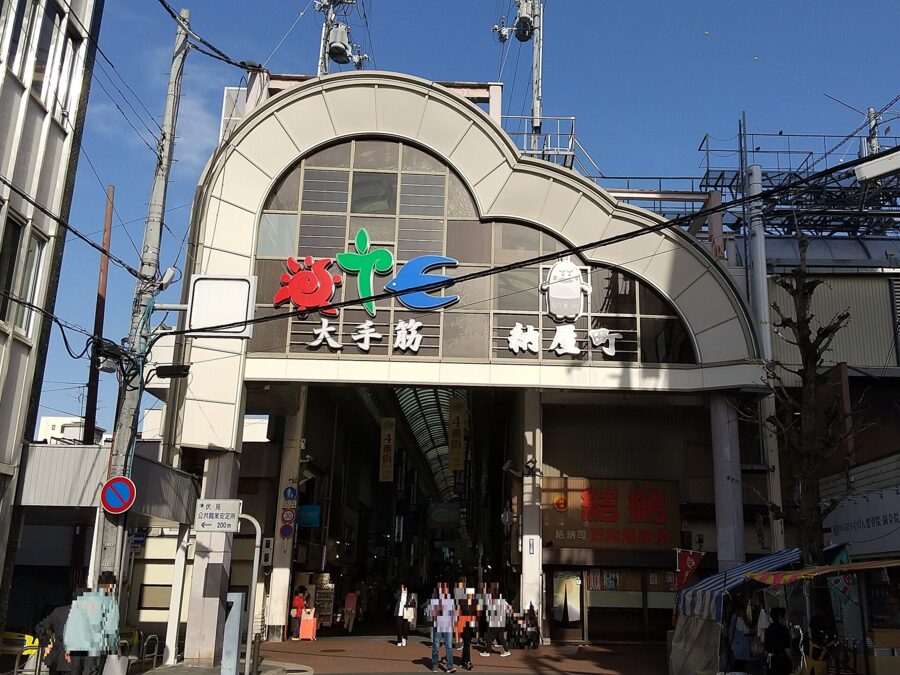
Malligraphy’s Gion workshop costs ¥6,500 for adults and ¥5,500 for children under 12, and runs 50 minutes. The teacher is a calligrapher and high school calligraphy teacher, the class is in English, and the studio is next to the Shinmon gate of Chion-in, so it fits between Yasaka Shrine and Maruyama Park without a bus. You write your name or any word you ask for (she writes a model for you on the spot), then finish on a calligraphy board or a folding fan.
This is the one I would book for a family. It is the only studio here with a published child rate, it is central, and 50 minutes is about as long as most children want to hold a brush. Refunds are possible up to a week before, minus a 3.6% card processing fee.
The add-on worth knowing about is the 90-minute stone seal carving class (¥10,500 adult, ¥7,000 under 12): you carve your name into a real stone seal and stamp it on your calligraphy. It is the difference between a souvenir and something you will keep using.
Calligraphy Kyoto CHIFUMI: ¥15,000 to ¥25,000, mounted
If the point is an object that goes on a wall, CHIFUMI’s courses are priced around the mounting. The one-hour shikishi course (your writing on a stiff gold-edged paper board that stands on a shelf without a frame) is ¥15,000. Two-hour special courses at ¥20,000 finish on a seal, a folding fan or a copied sutra. The two-hour hanging scroll and hanko course, at ¥25,000, gives you both a shikishi and a kakejiku (hanging scroll).
Two things the price buys: a professional calligrapher who has taught for 35 years, in a machiya studio in central Kyoto, with lessons in English and Mandarin as well as Japanese. Read the small print on the seal, though. The studio describes its hanko as a red seal rubber stamp, not carved stone, so Malligraphy’s ¥10,500 seal class is the cheaper route to a real one. Same-day bookings are sometimes possible, but the studio prefers notice.
Private or group?
Private classes earn their price when there are two or three of you and you want the teacher’s eye on every stroke, or when the piece is a gift and the finish matters. For one person who wants to know what a brush feels like, a shared class teaches the same grip and the same strokes. The ¥4,500 SHOLOGO session and the ¥6,500 Malligraphy one both send you home with a finished, sealed piece, which is more than most people do with their ¥15,000 board.
Shakyo: the ¥1,000 version
Shakyo is sutra copying, and Kyoto’s temples have been offering it to anyone who walks in for a long time. You are not taught. You sit at a low desk, trace the Heart Sutra (or a short passage) over a faint printed guide, write a wish and your name at the end, and leave it with the temple or take it home, depending on where you are. It takes 30 to 90 minutes, and it is the cheapest brush-and-ink hour in Japan.
Shakyo suits anyone who wants the quiet more than the lesson. It is a poor choice if you want to learn to write your name, because nobody corrects you and the characters are already chosen.
Toji: ¥1,000, no booking
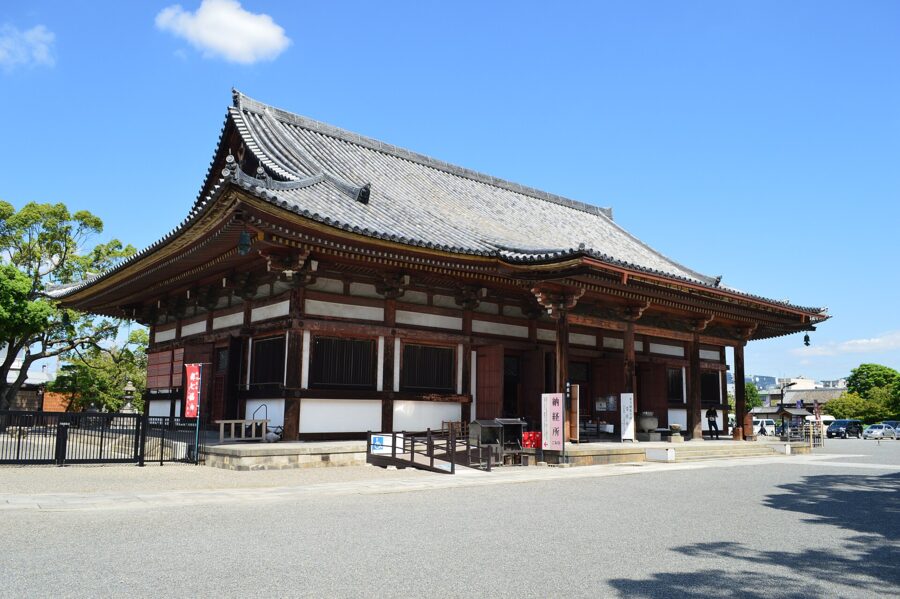
Toji has a sutra-copying space in its Jikido (dining hall), open for applications 09:00–15:00. The Heart Sutra costs ¥1,000, paid as a sutra offering, and the model you trace is in the hand of the calligrapher Sakaki Bakuzan. The Jikido and the Mieido are free to enter, so that ¥1,000 is all you pay. During the spring and autumn special openings the copying sometimes moves to Kanchi-in, the sub-temple just north of it, so expect to be redirected rather than turned away.
Unryu-in: ¥2,000 with admission and matcha
Unryu-in’s sutra copying, on the hill above Sennyu-ji in Higashiyama, is the one to choose if you only do one. ¥2,000 covers temple admission, the copying and a bowl of matcha afterwards; allow about 90 minutes. You purify your hands with incense and copy in shuboku (vermilion ink), which the temple has used for generations. No booking is needed unless you come as a large group, and you can leave the copy at the altar or take it home.
Myoken-ji and Kennin-ji
Myoken-ji, a Nichiren temple north-west of the Imperial Palace, leaves paper and brushes out in its guest hall: you put ¥1,000 in the offering box, light incense and start, with no reception or booking. Temple admission is ¥500 on top, so ¥1,500 in all, for 30 to 45 minutes. You leave the copy to be read at the next morning’s service and take a free postcard.
Kennin-ji, Kyoto’s oldest Zen temple, charges ¥3,000, which includes a temple seal stamp and a clear file. It runs on weekdays only, with reception 10:30–10:45 and 13:30–13:45, ten people a session, first come first served. Check before you go: Kennin-ji has paused it from 1 November to 6 December 2026 and again from 26 December to 17 January 2027.
Osaka pottery: painting versus the wheel
Osaka’s pottery studios are not cheaper than Kyoto’s calligraphy studios because the clay is cheaper. They are cheaper because you only do half the job. You paint (or throw) the piece; the studio glazes and fires it later, and you collect it weeks or months after you have gone home.
That is the number to plan around. The class fee is the small part; the question is where the bowl goes when it comes out of the kiln.
Maishima Craft-kan: ¥3,500 to paint, ¥4,900 on the wheel
Maishima Craft-kan’s painting class costs ¥3,500 including tax: you choose a rice bowl, cup or small plate in unglazed bisque and paint it with coloured pottery paints. One-hour slots start at 10:30, 12:00, 14:00 and 15:30, and same-day booking is fine. It is the easy option for children.
The wheel classes are ¥3,500 for 20 minutes (same-day walk-in only, no bookings) or ¥4,900 for 60 minutes. You can throw as many pieces as you like in the time, but the fee covers firing one; each extra piece is ¥1,650.
Finished pieces are sent by courier about two and a half to three months later, and shipping is charged on top. The studio’s page gives no overseas rate, so ask before you book if you have no Japanese address.
Maishima is also an island in Osaka Bay: getting there means the JR Yumesaki Line to Sakurajima and then the Maishima Active Bus, or Osaka City Bus 81 from Nishikujo. The studio closes at 16:00 on weekdays and 17:00 at weekends.
RoomRoom, Minami-Horie: ¥3,300 to paint, ¥3,600 on the wheel
RoomRoom is a small members’ studio about five minutes on foot from Yotsubashi Station, and much easier to reach. Painting a ready-made mug or rice bowl is ¥3,300 for about an hour. A one-hour wheel session is ¥3,600: you throw two pieces and choose one (rice bowl or teacup size) to be finished. Hand-building is ¥3,700 for an hour to an hour and a half, with the studio doing the trimming and glazing.
The wheel rules are practical: short nails, trousers rather than a skirt, nothing white, and bring an apron or pay ¥100 for a disposable one. Cancelling after 17:00 the day before costs half the fee, and on the day the full fee. Their daruma and cat figure painting takes about a month to come out of the kiln, which gives you a sense of the wait.
Where to see good Osaka ceramics for free
Nowhere right now, which is worth knowing before you plan an afternoon around it. The Museum of Oriental Ceramics, Osaka, the city’s main ceramics museum, is closed for renovation until around April 2027.
Hakata doll painting in Fukuoka
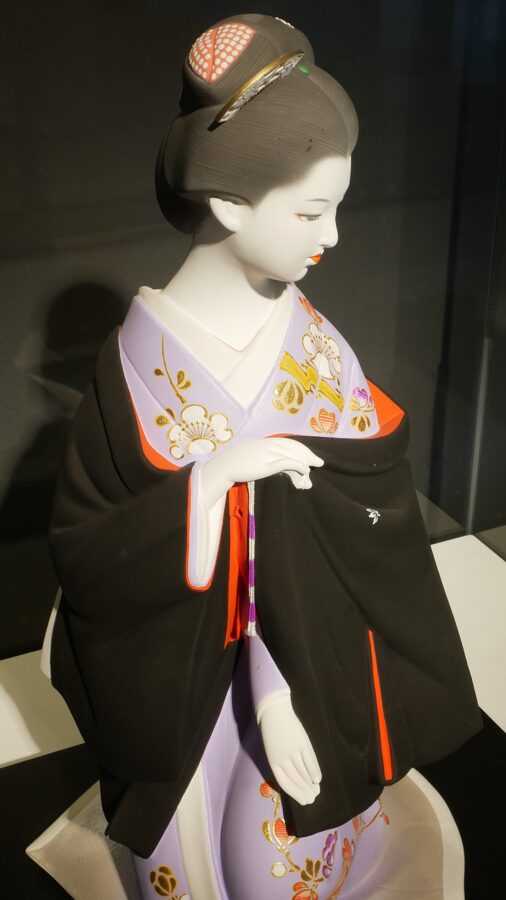
Hakata ningyo are fired clay figures painted with pigment, not glazed, so a doll painting class ends the way an Osaka pottery class cannot: the paint dries and you carry the doll out. No firing, no courier, no three-month wait. For anyone flying home within the week, that settles it.
Hakata Machiya Folk Museum: ¥2,200 with admission
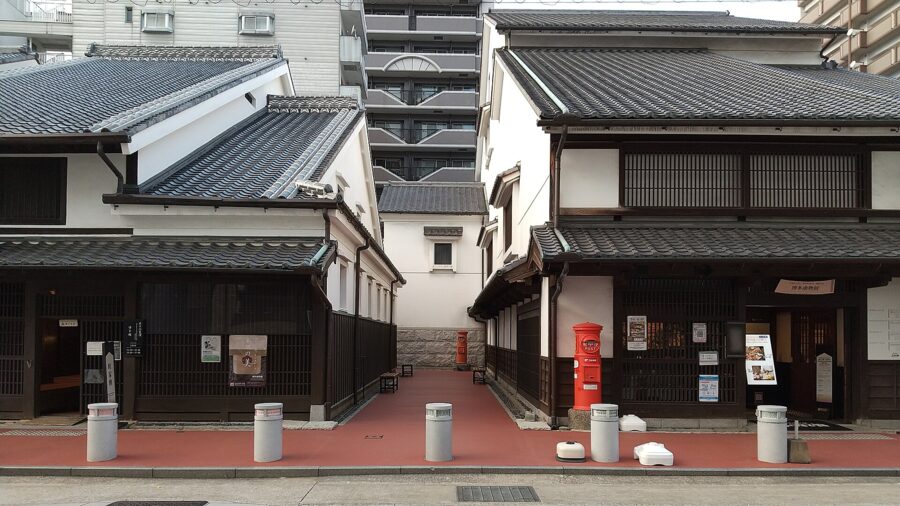
The Hakata Machiya Folk Museum’s doll painting costs ¥2,200, museum admission included, and is taught by a certified craftsperson. It runs Friday to Monday in two sessions, 10:00–11:30 and 14:00–15:30, and you take the doll home once it is dry. The city asks for bookings through the museum website at least four days ahead, and the museum closes on the fourth Monday of the month.
Other days bring other crafts at the same desks: Hakata hariko (papier-mâché) painting on Tuesdays, Hakata koma (spinning top) painting on Wednesdays, and a cedar magemono accessory box on Thursdays for ¥3,700. The museum faces the approach to Kushida Shrine, about five minutes from Gion Station, and admission alone is ¥200; children of primary and middle-school age go in free.
Hakata Doll Hall Shogetsudo: from ¥2,530, walk-in
Shogetsudo’s painting class in Nakasu starts at ¥2,530 a doll, depending on the figure, and takes about an hour. Small groups need no booking, which makes it the fallback when the folk museum is full or closed; groups of ten or more should send a form ahead. The shop says it ships overseas, so ask for a quote if you want the doll sent rather than packed.
The shop itself is the free half. Shogetsudo keeps about 800 dolls of 400 designs on display, by most of the working Hakata doll makers, and nobody charges you to look.
Hakata Traditional Craft and Design Museum: free, plus Sunday classes
The Hakata Traditional Craft and Design Museum is free, open 10:00–18:00 (closed Wednesdays), and now sits on the ground floor of the Park Front building in front of Hakata Station. It runs one craft class most Sundays, booked by email. On 6 December 2026 a Hakata doll maker teaches cat-figure painting for ¥2,300, or a zodiac sheep for the coming year at ¥5,000 (that one by reservation only). If your dates fit, it is the one doll class in the city with a named maker at the table.
The workshops side by side
Prices are the ones in force in November 2026, per person, tax included.
| Workshop | City | Price | Length | You take home | Catch |
|---|---|---|---|---|---|
| Toji shakyo | Kyoto | ¥1,000 | Your own pace | Nothing; the copy stays at the temple | No teaching |
| Myoken-ji shakyo | Kyoto | ¥1,500 with admission | 30–45 min | A postcard | No teaching |
| Unryu-in shakyo | Kyoto | ¥2,000 with admission and matcha | About 90 min | Your copy, if you want it | Uphill walk from the bus |
| Kennin-ji shakyo | Kyoto | ¥3,000 | About 60 min | Temple seal stamp | Weekdays only; paused through 6 December and from 26 December to 17 January |
| SHOLOGO shared | Kyoto | ¥4,500 | 45 min | Postcard-size washi piece with seal | Up to 8 people; stairs only |
| Malligraphy | Kyoto | ¥6,500 (¥5,500 under 12) | 50 min | Board or folding fan | Book through the online calendar |
| SHOLOGO private | Kyoto | ¥9,500 | 90 min | Washi postcard mailed home | Translation app, not a calligraphy teacher |
| CHIFUMI scroll and hanko | Kyoto | ¥25,000 | 2 hours | Shikishi and hanging scroll | Seal is rubber, not stone |
| RoomRoom painting | Osaka | ¥3,300 | About 1 hour | A mug or rice bowl, later | Collect or arrange delivery after firing |
| Maishima Craft-kan painting | Osaka | ¥3,500 | 1 hour | A bowl, cup or plate, by courier | 2.5–3 months; shipping extra |
| Maishima Craft-kan wheel | Osaka | ¥4,900 | 1 hour | One fired piece, by courier | Extra pieces ¥1,650 each |
| Hakata Machiya doll painting | Fukuoka | ¥2,200 with admission | 90-min session | Your painted doll, same day | Friday to Monday; book 4 days ahead |
| Shogetsudo doll painting | Fukuoka | From ¥2,530 | About 1 hour | Your painted doll, same day | Price depends on the figure |
The free and nearly free versions
Each craft has a way in that costs almost nothing, and in two cities out of three it is worth doing before you pay for a class.
- Calligraphy, Kyoto: the Toji shakyo above is the cheapest brush hour. For tools, Kyukyodo’s head shop on Teramachi (10:00–18:00) sells brushes, ink, inkstones and paper, and browsing is free. Its prices are not online, so set a budget before you walk in.
- Hakata dolls, Fukuoka: the Hakata Traditional Craft and Design Museum and the Shogetsudo display are both free. Hakata Machiya Folk Museum is ¥200 and adds a free hand-loom weaving demonstration and a free volunteer-led walk around Kushida Shrine at 14:00 every day (about an hour, first six people).
- Ceramics, Osaka: nothing free of note until the Museum of Oriental Ceramics reopens. The ¥3,300 painting class is the cheapest way to get clay on your hands.
Then there is the ¥1,000 at Toji, which is still the best value of the lot. The difference between that and the ¥25,000 scroll is real: a teacher, a seal and something to hang. Just make sure it is the difference you came for.