Two people climbing into a rickshaw at Asakusa-bashi pay ¥5,000 for twelve minutes beside Otaru Canal. The train that brought them from Sapporo cost ¥800 each. The canal path the rickshaw rolls along costs nothing at all.
That gap is the whole puzzle of an Otaru day trip. The town is small, the warehouses and the glass and music-box shops of Sakaimachi are free to wander, and most of what you can pay for is another way of looking at the same water: from a boat, from a rickshaw seat, from a ropeway car on the hill behind town.
Some of those are worth the money and some are not, and the answer changes depending on whether you are one person or two. Prices here are the ones in force in late November 2026, per adult and tax included, from each operator’s own page.
In This Article
- The day, priced
- Getting there: ¥800 by train, ¥730 by bus
- Getting around: walk
- The free half of Otaru
- The Otaru Music Box Museum costs nothing
- Rickshaws: priced by the minute, per car
- Is a rickshaw worth it?
- Otaru Canal Cruise: ¥1,800 by day, ¥2,000 after dark
- Museums that charge, and the ¥600 ticket
- Eating: from ¥980 to ¥19,800
- Winter: the free light shows
- Two days, costed
The day, priced
| Thing | Price | Catch |
|---|---|---|
| JR Rapid Airport, Sapporo to Otaru | ¥800 one way | ¥1,800 if you sit in the reserved car |
| Kosoku Otaru bus, Sapporo to Otaru | ¥730, or ¥1,360 return | About an hour, and road traffic decides |
| Otaru 1-day free set (bus return plus city bus day pass) | ¥2,000 | Only pays off with three or more town bus rides |
| Canal walk, Sakaimachi, music-box and glass shops | Free | Every shop is built to change that |
| Bank of Japan Otaru Museum | Free | Closed Wednesdays |
| City Museum and Former Nippon Yusen, combined ticket | ¥600 | Main building and Nippon Yusen close on Tuesdays |
| Otaru Canal Cruise, 40 minutes | ¥1,800 by day, ¥2,000 at night | Book ahead for night sailings and holidays |
| Rickshaw, 12 minutes | ¥5,000 per car for two, ¥4,000 for one | A photo stop more than a tour |
| Rickshaw, 30 minutes | ¥10,000 per car for two, ¥9,000 for one | Solo riders pay almost double per head |
| Tenguyama Ropeway, return | ¥2,000 | Needs a bus each way |
| Nigiri set at Masazushi, Sushiya-dori | From ¥4,180 | Lunch service ends at 15:00 |
| Half a fried chicken at Naruto | ¥1,190 | Not seafood, which is rather the point |
A cheap, full day comes to about ¥3,000. The same day with a cruise, half an hour in a rickshaw and a proper sushi lunch comes to about ¥12,600 per person for a pair. Both are costed at the end.
Getting there: ¥800 by train, ¥730 by bus
The train is the default and it should be. JR Hokkaido’s fare list puts Sapporo to Otaru at ¥800 on the Rapid Airport, about 34 minutes, and you can tap through the gates with an IC card for the unreserved cars. Car 4 is the reserved one, and a seat there lifts the fare to ¥1,800. On a 34-minute ride with the sea out of the right-hand window, that is ¥1,000 for a guaranteed seat and nothing else.
Flying in, the same line runs on from New Chitose Airport. The airport-to-Otaru fare is ¥2,040, and some Rapid Airport trains run straight through in about 75 minutes; on the rest you change at Sapporo. Coming straight off a plane, Otaru can be your first stop rather than a day trip.
The bus is cheaper and slower. The Kosoku Otaru highway bus charges ¥730 from Sapporo Ekimae to Otaru Ekimae, or ¥1,360 for a return, and takes about an hour over 38 km. Chuo Bus and JR Hokkaido Bus run it together and accept each other’s tickets, so take whichever bus comes first. You pay as you get off, and IC cards work.
A return by bus saves ¥240 on the train, which is real money only if you are counting every coin. The better bus deal is the Otaru 1-day free set: ¥2,000 for the Sapporo return plus a day of Chuo buses inside Otaru. Town buses cost ¥240 a ride, so the set is cheaper than buying separately from your third ride. It is sold only at Chuo Bus’s Sapporo windows, not on the bus.
Older guides send you looking for a Sapporo-Otaru Welcome Pass. It no longer appears among JR Hokkaido’s passes for visitors, which leaves the Sapporo-Noboribetsu Area Pass at ¥10,000 bought before you arrive (¥11,000 at a station) for four days. That is a pass for someone also going to Noboribetsu. JR’s own savings sum prices the Otaru return at ¥3,600, which assumes reserved seats both ways; in an ordinary seat it is ¥1,600.
Getting around: walk
Otaru Station sits at the top of a straight road that runs downhill to the harbour, and the canal is about ten minutes’ walk away at the bottom. The canal loop bus that used to circle the sights is listed as suspended on Chuo Bus’s Otaru route list, so the main stretch is on foot anyway. Sakaimachi picks up near the southern end of the canal, and the whole loop of station, canal, Sakaimachi and back is an easy morning’s walk.
Buses earn their fare only for the outlying sights, such as the Tenguyama Ropeway and the aquarium. Chuo Bus’s Otaru day pass is ¥800 on its own and pays off on the fourth ¥240 ride, which few canal-and-Sakaimachi days ever reach.
The free half of Otaru
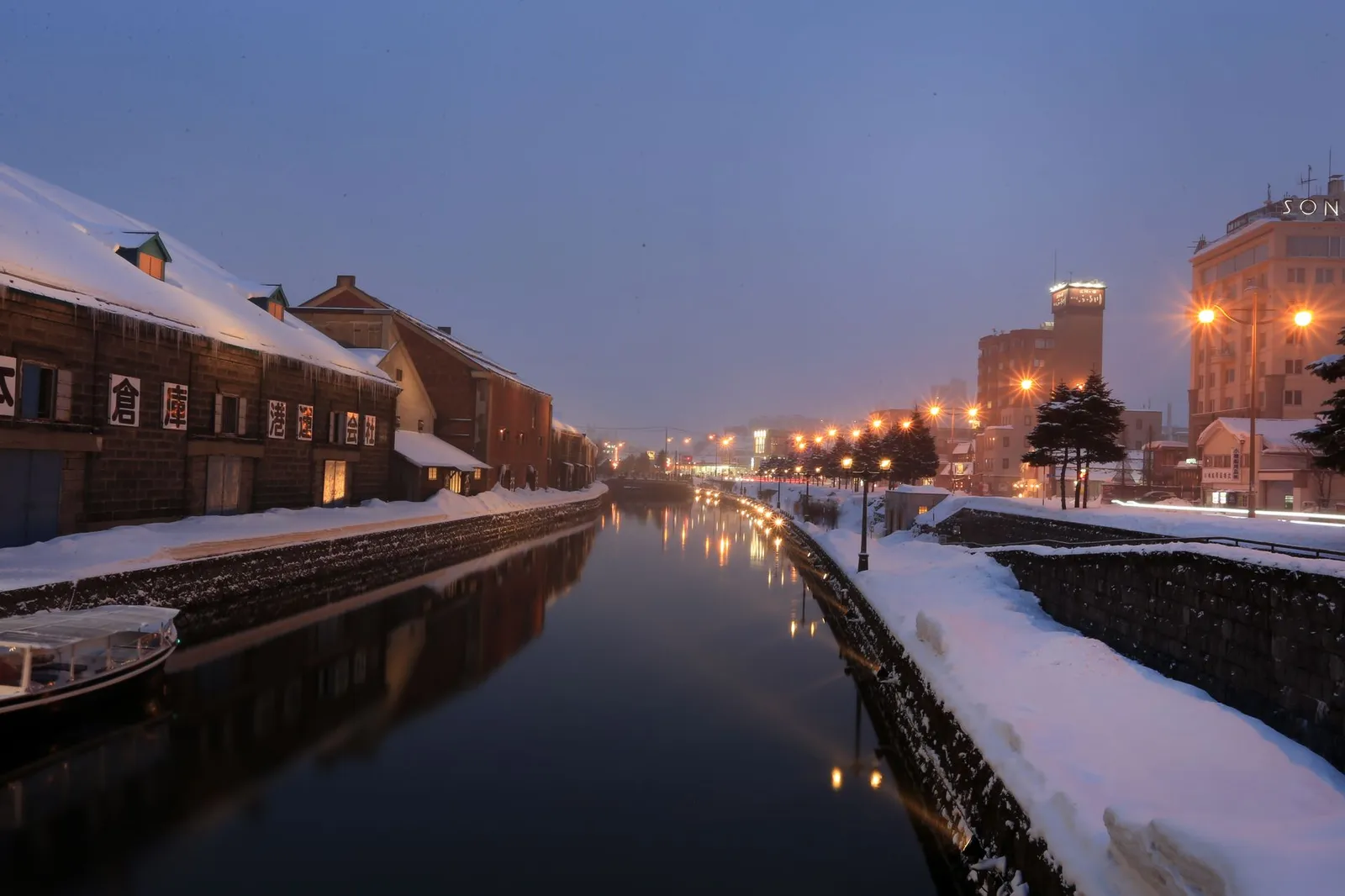
The canal was finished in 1923 and lost its job when the harbour got proper quays after the war. In 1966 the city planned to fill it in for a six-lane road. More than a decade of argument ended in a compromise, completed in 1986: half the width became road, the other half a stone path with 63 gas lamps. The canal runs 1,140 metres, and at the North Canal end the water is still its original 40 metres wide.
Walk it twice if you can, once in daylight and once after the lamps come on. The North Canal sees a fraction of the people standing on Asakusa-bashi for the classic photo. It costs nothing, and it is the stretch the rickshaw pullers charge for on their 30-minute course.
Sakaimachi-dori is the shopping street, and many of its stone buildings were merchant houses and banks. Glass and music boxes are the trade now. Kitaichi Glass’s Kitaichi Hall is a café lit by 167 oil lamps, and staff light them one by one when it opens, from 09:00 to 09:30, with visitors welcome to watch. Get to Sakaimachi by 09:00 and that is a free show most day-trippers miss.
The Otaru Music Box Museum costs nothing
The name misleads. The Otaru Music Box Museum main hall (Otaru Orgel-do) at the Marchen crossroads is a shop, and a big one: around 3,200 kinds of music box and more than 38,000 pieces in a building from 1915. There is no admission, and it opens 09:00–18:00 every day.
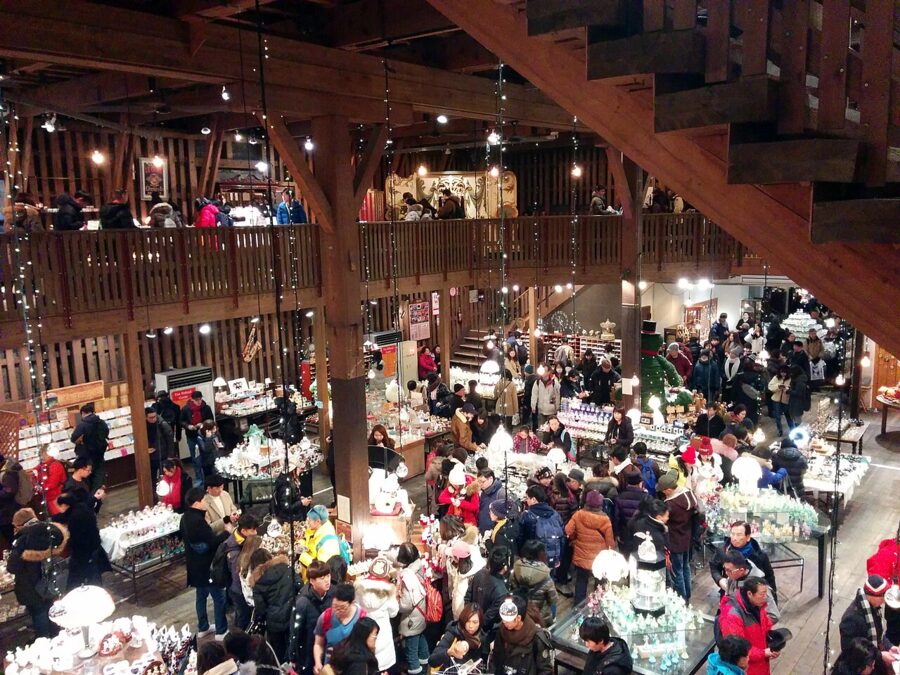
Making your own box is the paid part. The price depends on the base and the figures you choose, so there is no single figure to quote; set a ceiling before you sit down.
Back towards the station, the Bank of Japan Otaru Museum fills the old branch bank on the street once called the Wall Street of the North. Entry is free, it opens 09:30–17:00 (from 10:00 between December and March), and it closes on Wednesdays. Staff give a free 30-minute talk at 14:00. Of all the indoor sights, this is the one I would not skip.
Rickshaws: priced by the minute, per car
Ebisuya is the rickshaw company on the canal, and its pullers wait at Asakusa-bashi, the bridge everyone photographs, about fifteen minutes’ walk from Otaru Station. They start at 09:30 every day of the year; the last ride of the day moves with the season. You can turn up without booking and they will tell you the wait.
The thing to grasp is that Ebisuya’s Otaru prices are per rickshaw, not per person. Two people share one fare. One person pays almost as much as two.
| Ride | Two riders, per car | Each, for two | One rider |
|---|---|---|---|
| 12 minutes | ¥5,000 | ¥2,500 | ¥4,000 |
| 30 minutes | ¥10,000 | ¥5,000 | ¥9,000 |
| 45 minutes | ¥15,000 | ¥7,500 | ¥13,000 |
| 60 minutes | ¥20,000 | ¥10,000 | ¥16,000 |
| 90 minutes | ¥29,000 | ¥14,500 | ¥23,500 |
| 120 minutes | ¥38,000 | ¥19,000 | ¥31,000 |
| 180 minutes | ¥60,000 | ¥30,000 | ¥50,000 |
Past an hour, each extra ten minutes adds ¥3,000 for two or ¥2,500 for one, which is how the 90- and 120-minute courses are priced. The 180-minute course comes with a T-shirt or a figure. Extras are ¥1,000 a car each: asking for a particular puller, asking for one who speaks a particular language, bringing a small pet, and pickup or drop-off away from the canal (from ¥1,000, by distance).
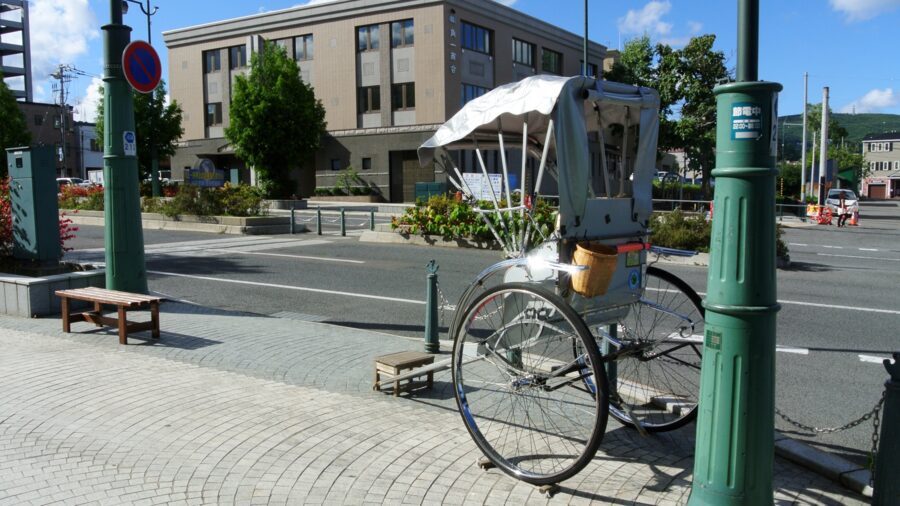
What each length buys: the 30-minute course runs up the North Canal past the old warehouses. The 45-minute one adds the Former Temiya Line, Hokkaido’s first railway, now a strip of track you can also walk for free. The hour reaches the Former Nippon Yusen office and the old Bank of Japan, and the two-hour course goes inside the Nippon Yusen building and the City Museum. Booking online for the “decide on the day” plan, you pay the 30-minute fare up front and settle any difference at the bridge.
Is a rickshaw worth it?
For two people, a 30-minute ride at ¥5,000 each is a guided history of the canal from someone who pulls the route every day. That is a fair price for what it is. The 12-minute ride is mostly the photo.
For one person, I would walk. ¥9,000 for half an hour buys streets you can walk for free, and the 40-minute canal cruise below costs ¥1,800. The longer courses only make sense if you would otherwise hire a private guide, and you want one with legs.
Otaru Canal Cruise: ¥1,800 by day, ¥2,000 after dark
The boats leave from Chuo-bashi, the next bridge along from Asakusa-bashi and about ten minutes’ walk straight down from the station. Each sailing lasts about 40 minutes and goes out of the canal into the harbour and back, which is the part no rickshaw can do. Departures run every half hour on the cruise timetable, and the number of sailings changes month to month.
The cruise’s fares are ¥1,800 for an adult by day and ¥2,000 for the night cruise, and ¥500 for primary-school children either way. One infant per adult rides free. The operator recommends booking ahead for holidays and the night sailings, which fill first. Tickets for the other sailings are sold at the Chuo-bashi ticket office.
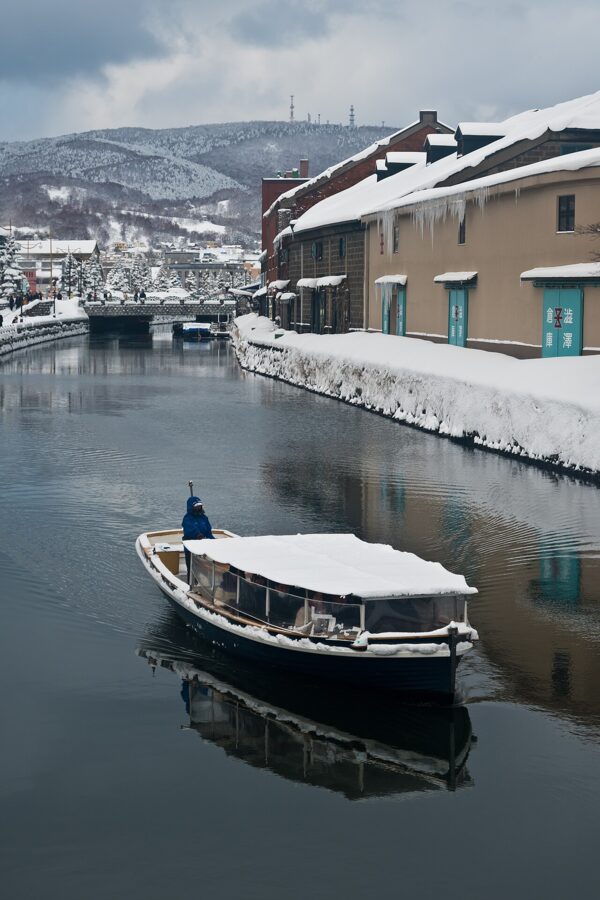
If you take one paid thing on the canal, make it this one. It is the cheapest, it covers the most ground, and it is the only way to see the warehouses from the water they were built for.
Museums that charge, and the ¥600 ticket
The Otaru City Museum has two sites. The main building, at Temiya where Hokkaido’s first railway began, is the railway half: locomotives, Hokkaido’s railway story, and an outdoor yard partly closed in winter. It costs ¥400, or ¥300 in the winter season from early November to late April. The canal building, in an old warehouse, covers the town’s history for ¥300.
The Former Nippon Yusen Otaru Branch, the shipping company’s stone office by the North Canal, is another ¥300. A combined ticket covers all three for ¥600 and lasts two opening days, which beats any two singles. All three open 09:30–17:00, but the main building and Nippon Yusen close on Tuesdays, so do not plan a Tuesday around them.
The Tenguyama Ropeway is the view over the whole town and harbour, at ¥2,000 return. Its winter season runs from 28 November 2026 to 28 March 2027, with cars every 12 minutes from 09:00 and the last one down at 20:00. You need a bus to the foot of it, and Chuo Bus sells a Tenguyama set from Otaru at ¥2,450 from 28 November: the ropeway plus a town bus day pass, ¥350 less than buying them apart.
Eating: from ¥980 to ¥19,800
Sushiya-dori, the sushi street, is where Otaru’s reputation lives, and where the bills are. Otaru Masazushi’s main shop, which has stood at the start of the street for more than 80 years, is a fair guide to the band. Its nigiri sets are ¥4,180 and ¥6,820, and the counter courses run ¥13,200 to ¥19,800.
The cheapest seat at that address is a bowl: ¥2,420 for salmon, ¥3,080 for a tuna tekkadon (tuna sashimi on rice). Lunch is 11:00–15:00 and dinner 17:00–21:00, and it closes on Wednesdays. On a day trip, lunch is the sitting to aim for: the menu prices the sets the same, and you are not watching the clock for the last train.
The market is cheaper and closer to the train. Otaru Sankaku Market is one minute from the station, a narrow covered slope of about sixteen stalls that grew from street sellers outside the station around 1948. It is the only market in town open every day, and six of its stalls are eateries, serving from about 07:00 to 17:00.
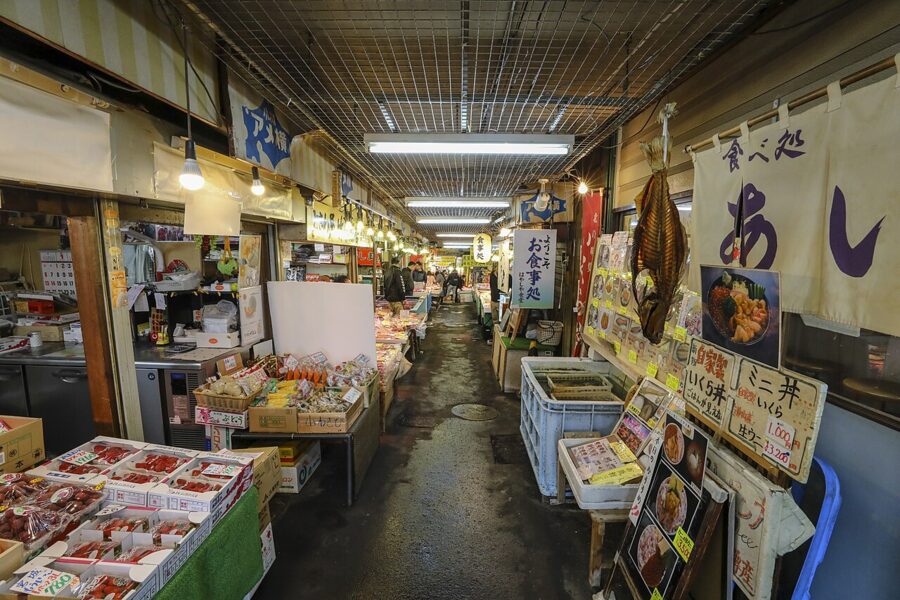
The best known is Takinami Shokudo, open 07:00–17:00 every day but New Year’s Day. Its wagamama-don lets you pick three or four toppings from ten, in a regular or small bowl. The shop warns that menu prices move with the catch and the weather, so read the board on the day. Queue by taking a ticket from the touch panel outside, then scan its QR code to watch your turn come up while you browse the crab tanks.
The cheapest good meal in town is not seafood at all. Naruto’s main shop, seven or eight minutes from the station, is famous for half a chicken deep-fried whole: ¥1,190 on its own, ¥1,490 as a set meal. The zangi set (Hokkaido fried chicken pieces) is ¥980. It opens 11:00–21:00 and closes only on 1 January.
Winter: the free light shows
Winter is when Otaru gives the most away. Until 31 January 2027 the Blue Canal illumination lights the stretch between Asakusa-bashi and Chuo-bashi from sunset to 22:30. It is free, and it is a good reason to take a later train home.
The Otaru Snow Light Path runs from 6 to 13 February 2027, and it is free. Snow lanterns line the canal path and the Former Temiya Line, and candles float on the canal inside glass fishing floats of the kind the herring boats once used. At the last festival, message candles sold for ¥100 each at a stall by Asakusa-bashi.
The 2027 Sapporo Snow Festival runs from 4 to 11 February, so one trip north can cover both. For the lanterns, go out in the afternoon, eat at the market before it shuts at 17:00, and walk the canal once it is dark.
Two days, costed
The cheap day: bus return from Sapporo for ¥1,360, the canal and Sakaimachi on foot, the Bank of Japan museum free, the ¥600 museum ticket, and a zangi set at Naruto for ¥980. That is ¥2,940. By train instead of bus, with the half-chicken set, it is ¥3,690. Either way you have seen everything that makes Otaru Otaru.
The full day, for one of a pair: train both ways for ¥1,600, the canal cruise for ¥1,800, a 30-minute rickshaw for ¥5,000 each, and a ¥4,180 nigiri set on Sushiya-dori. That is ¥12,580 each. Travelling alone, the same day is ¥16,580, because the rickshaw does not get cheaper when the second seat is empty.
Twelve minutes, ¥5,000, two people. Or forty minutes on the water for ¥1,800 each and the canal path for nothing. I know which I would book first.