Gion Corner and the Miyako Odori share an address: 570-2 Gionmachi Minamigawa, the Gion Kobu Kaburenjo. On most evenings ¥5,500 at the small theatre buys fifty minutes of seven classical arts, two short pieces of which are danced by a maiko. In April, ¥5,000 at the main hall buys a second-class seat at the Miyako Odori, where the district’s geiko and maiko fill the stage for the whole performance.
Ask for a maiko at your table instead and the arithmetic changes. One Gion-area restaurant charges ¥50,000 per performer for about two hours, before the food, and the side lanes she walks down to get there carry signs threatening tourists with a ¥10,000 fine.
Between those numbers sit a dozen ways to see geiko and maiko in Kyoto. The dancing changes less than the price suggests. What you pay for is how close you sit, who pours the tea and whether you get a photograph.
In This Article
- Every option, priced
- Gion Corner: ¥5,500 for the sampler
- The five districts’ dances: ¥4,000–¥8,000 for the real stage
- Kitano Odori (Kamishichiken): ¥6,000–¥7,000
- Miyako Odori (Gion Kobu): ¥5,000–¥8,000
- Kyo Odori (Miyagawacho): ¥6,000–¥7,000, tea included
- Kamogawa Odori (Pontocho): ¥4,000–¥7,000
- Gion Odori (Gion Higashi): ¥6,000–¥7,000
- Miyako no Nigiwai and the autumn recitals
- Maiko shows with tea and a photo: ¥4,840–¥22,000
- Dinner with maiko: ¥25,000 a seat or ¥50,000 a performer
- Gion in the evening: alone, or with a guide
- The private-lane rules, and what the ¥10,000 fine is
- Which one I would book
Every option, priced
Prices are the ones in force in November 2026, per person and tax included unless I say otherwise. Dance dates are the latest each district has announced: 2027 where it has published them, 2026 where it has not yet.
| Option | Price | When | What you see | Catch |
|---|---|---|---|---|
| Gion Corner | ¥5,500 (tea seat ¥6,050) | 18:00 and 19:00, most days | Seven arts in about 50 minutes, two maiko dances | The maiko is on stage for minutes, not the hour |
| Miyako Odori (Gion Kobu) | ¥5,000–¥8,000 | 1–30 April 2027 | The full Gion Kobu company on stage | No cancellations or refunds |
| Kamogawa Odori (Pontocho) | ¥4,000–¥7,000 | 5–22 May 2026 | Dance drama, then pure dance | Only the ¥6,000 and ¥7,000 seats sell online |
| Kyo Odori, Kitano Odori, Gion Odori | ¥6,000–¥7,000 | April, late March, 1–10 November | One district’s geiko and maiko, with tea | Kyo Odori admits no one under 10 |
| Miyako no Nigiwai | ¥6,500–¥14,000 | Two days in late June | All five districts, about 70 performers | Two days a year, no refunds |
| an Kyoto maiko dance | ¥4,840 | Daily, five sessions | Two dances close up, a game, a photo | Maiko or geiko is the house’s call; English costs extra |
| Kamanza tea plan (Ninenzaka) | ¥5,500 | 16:30–17:30 | Two dances, matcha, photo | Six-person minimum, recorded music |
| MEET MAIKO (Handicraft Center) | From ¥6,160 | Selected days | One maiko, English host, photo | In Sakyo, not Gion; no food or drink |
| MUTEKI geisha show | From ¥11,000 | Booked by time slot | A one-hour show with Q&A and games | The dancing is a fraction of the hour |
| Kurochiku noh-stage plan | ¥22,000 | 15:00 | Tea made by a maiko, dance, parlour games | Groups of 6–20 only |
| Five Kagai Utage lunch | ¥25,000 | 19 December 2026 | Hotel lunch, dances, talk, free drinks | Prepaid by bank transfer in Japan |
| Restaurant ozashiki (Manjiro) | ¥50,000 per performer, plus food | By booking | Your own room, pouring, games, dance | The fee is per performer, not per guest |
| Guided Gion night walk | From ¥4,451 | Evenings, three hours | The district and its stories | No geiko or maiko guaranteed |
| Walking Gion yourself | Free | Any evening | Hanamikoji and the public streets | Private lanes are off-limits |
Gion Corner: ¥5,500 for the sampler
Gion Corner is a short introductory show run by the Ookini Zaidan, the foundation that supports Kyoto’s five geisha districts (kagai). The programme at Gion Corner runs through tea ceremony, koto, ikebana, bugaku court dance, a kyogen comedy and kyomai, the Kyoto dance, plus either bunraku puppets or a scene of noh depending on the month. The kyomai is danced by a Gion Kobu maiko: one piece chosen for the season and the old favourite Gion Kouta.
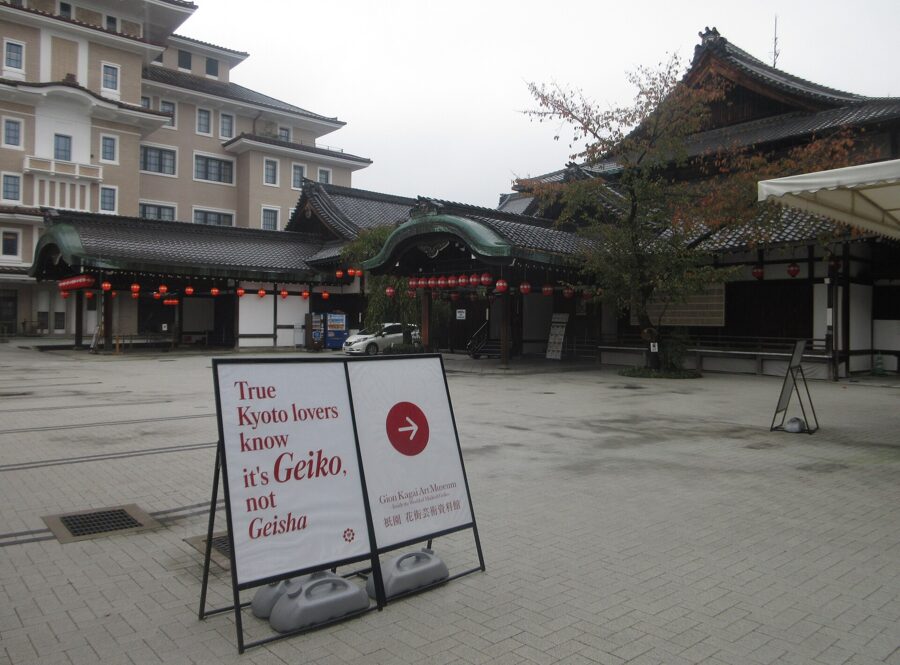
Shows start at 18:00 and 19:00 and last about fifty minutes. From 1 December to 11 March the theatre plays only Tuesday to Friday, holidays excepted, and drops bunraku and noh. In exchange, the winter show ends with a photo session with the maiko, which the rest of the year does not offer. The theatre is shut on 16 July, 16 August, 26 December to 4 January, and 11 and 23 February.
Gion Corner’s admission prices, tax included:
- Adult (23 and over): ¥5,500
- Ages 16–22: ¥3,850; ages 7–15: ¥3,300; under 7: free without a seat of their own, otherwise a 7–15 ticket
- Seat with Japanese tea and sweets: ¥6,050
- Premium seat with a translation tablet: ¥6,600 (30 of the 165 seats)
- Groups of 20 or more: ¥4,700 each
The two upgrades are flat prices, so a 19-year-old pays ¥6,050 for the tea seat like everyone else. You can book reserved seats on the theatre’s site or buy at the window on the day if any are left, by card or electronic payment. The city’s Kyo Navi tourist information centre at Kyoto Station sells them too. Booking platforms list the same ¥5,500 ticket, so there is nothing to save by going through one.
Is it worth it? As a tasting menu of Japanese stage arts, yes, and it is the only theatre show here that runs nearly every night of the year. As a way to see a maiko, it is a thin slice: two short dances at a distance.
If maiko are the point and your dates allow it, a spring dance gives you an hour of them for a similar price. In winter, the photo session tips it back towards Gion Corner.
The five districts’ dances: ¥4,000–¥8,000 for the real stage
Each of Kyoto’s five kagai puts on one big public dance a year, four in spring and one in autumn. These are the districts’ own productions, staged in their own theatres, with the whole company of geiko and maiko and the musicians (jikata) playing live. The dearest seat at most of them includes a bowl of matcha and a sweet, served by geiko or maiko in a tea room before the curtain.
Kitano Odori (Kamishichiken): ¥6,000–¥7,000
Kamishichiken, beside Kitano Tenmangu shrine, opens the season. The 75th Kitano Odori runs from 20 March to 3 April 2027 (no show on 25 March), at 14:00 and 16:30, about 90 minutes each. A seat costs ¥6,000, or ¥7,000 with the tea ticket, and the tea ticket can also be bought on the day for ¥1,000. Children under six are not admitted.
Miyako Odori (Gion Kobu): ¥5,000–¥8,000
The biggest of them, all of April in the Gion Kobu Kaburenjo. The 2027 Miyako Odori runs from 1 to 30 April with three shows a day, at 12:30, 14:30 and 16:30. First class with tea is ¥8,000, first class ¥7,000, second class ¥5,000, and a second-class student ticket ¥3,000. Tickets go on sale at 10:00 on 6 January 2027, online or by phone, and there are no cancellations, changes or refunds.
The tea room starts taking guests an hour before each show and serves no one after it, so the ¥1,000 tea supplement is only worth paying if you arrive at least 40 minutes early, as the theatre asks. At ¥5,000, second class is the cheapest full-length geiko and maiko performance in Gion.
Kyo Odori (Miyagawacho): ¥6,000–¥7,000, tea included
Miyagawacho, just south of Gion along the Kamo River, staged the 75th Kyo Odori from 4 to 19 April 2026 in its rebuilt theatre, the first time in five years. Both tiers include tea: ¥7,000 downstairs, ¥6,000 upstairs. Shows ran at 13:00 and 16:00, an hour each, with the tea room open beforehand; arrive late and you get your sweet to take away instead. Nobody under 10 is admitted, which rules it out for many families.
Kamogawa Odori (Pontocho): ¥4,000–¥7,000
The Kamogawa Odori started in 1872 and fills most of May at the Pontocho Kaburenjo, by Sanjo Bridge. In 2026 it ran from 5 to 22 May at 12:30, 14:20 and 16:10, in two parts: a dance drama, then pure dance. Seats are ¥7,000 with tea, ¥6,000 for a special seat, or ¥4,000 for an ordinary seat.
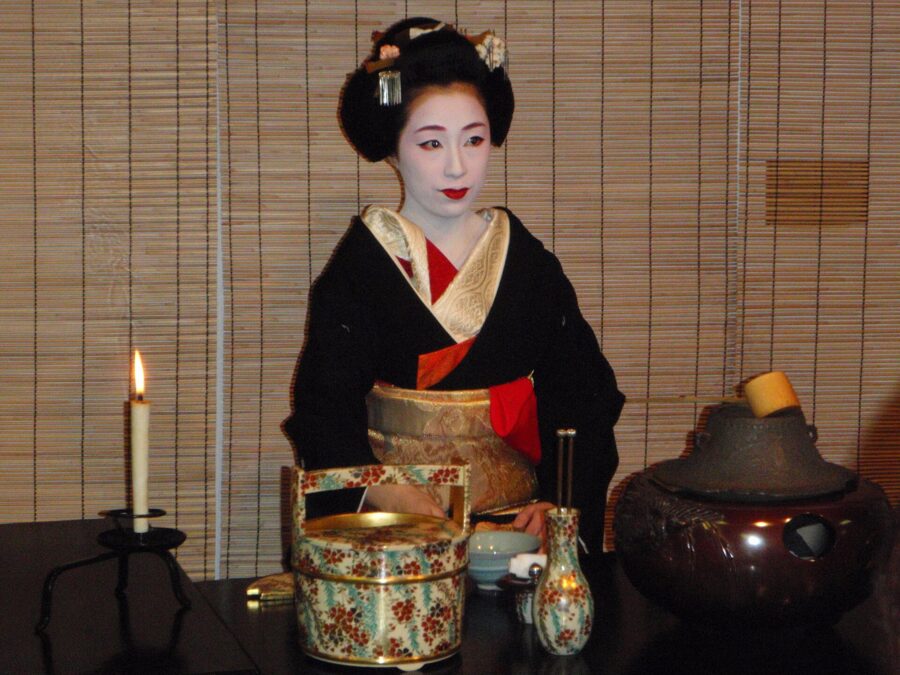
The ¥4,000 seat is the cheapest ticket to any of the five dances, but you cannot book it online: Pontocho’s ticket page sells only the two dearer tiers, without seat choice and with no cancellation once paid. Ask at the Kaburenjo about ordinary seats when you are in town.
Gion Odori (Gion Higashi): ¥6,000–¥7,000
The only one in autumn. The 67th Gion Odori ran from 1 to 10 November 2026 at Gion Kaikan, opposite Yasaka Shrine, at 13:30 and 16:00, about an hour each. ¥7,000 with tea, ¥6,000 without, and the programme is ¥1,000. Tickets went on sale on 1 August, so plan before you fly.
Miyako no Nigiwai and the autumn recitals
One weekend a year all five districts share a stage. The 33rd Miyako no Nigiwai played Minamiza theatre on 27 and 28 June 2026, at 11:00 and 14:30, with about 70 geiko and maiko. Special seats were ¥14,000, first class ¥13,000 and the third floor ¥6,500, with students paying ¥3,250 on the day if third-floor seats were left.
In October the districts also hold recitals of the geiko’s own skills, priced for regulars. Miyagawacho’s Mizue-kai charged ¥10,000 or ¥8,000 in 2026, and Pontocho’s Suimeikai ¥10,000 or ¥8,000 reserved, ¥5,000 unreserved. Kamishichiken’s Kotobukikai follows in November. For a first visit, the spring dances give you more for less.
Maiko shows with tea and a photo: ¥4,840–¥22,000
The private shows sell the one thing the theatres cannot: a few metres of distance and a picture with the maiko. They are short, usually 45 to 90 minutes, and most use one maiko. Here they are from cheapest up.
an Kyoto, ¥4,840. This culture-class house in Shimogyo runs a 45-minute maiko dance session every day at 11:15, 13:45, 16:15, 18:45 and 21:15. You get two dances close up, a parlour game, a two-shot photo and a name-sticker (senjafuda) as a souvenir.
Booking after 17:00 the day before raises the price to ¥6,040, the house decides whether a maiko or a geiko appears, and guaranteed English costs ¥6,600 per group. The building has no lift.
Kamanza, ¥5,500. A restaurant on Ninenzaka, near Kiyomizu-dera, brings a Miyagawacho maiko for its tea plan from 16:30 to 17:30: matcha and a sweet, two dances to recorded music, questions and photos. It needs six people.
Four can still go by paying for six, which works out at ¥8,250 each. Watching the maiko make the tea costs ¥6,050 and has to be booked two weeks ahead for six or more.
MEET MAIKO, from ¥6,160. The Kyoto Handicraft Center in Sakyo runs a 45-minute meet-and-greet on selected days: one maiko dances, an English-speaking host explains, you ask questions and take photos with your own camera. The price moves with the date. Klook lists it from ¥6,160, which in November 2026 undercut the ¥7,700 starting price the centre announced at launch.
MUTEKI, from ¥11,000. A one-hour show near Kiyomizu-dera (with a teahouse version in Kamishichiken), sold through booking platforms with matcha and an interpreter included. The dancing takes a small part of the hour; the rest is talk and games. At twice an Kyoto’s price for much the same contact, I would pass.
Kurochiku, ¥22,000. The noh stage inside a Kurochiku building on Shinmachi-dori, just north of Nishikikoji, hosts a 90-minute maiko programme at 15:00: a maiko makes and explains tea, then dances, and you play ozashiki games with her. It runs for groups of 6 to 20, everyone sits on chairs, and a private booking for one to five people is ¥165,000. Kimono dressing adds ¥7,700 a head.
Booking platforms also bundle a guided Gion walk with a maiko performance, from ¥12,000 for a half day. You pay a lot for the walk; book the show and the walk separately and it costs less.
Dinner with maiko: ¥25,000 a seat or ¥50,000 a performer
A real evening in an ochaya, a Gion teahouse, needs an introduction from a regular. The workarounds come in two shapes: a ticketed banquet where hundreds share the performers, or a restaurant that books a maiko for your private room.
The foundation’s banquets. The Ookini Zaidan runs two a year.
The 2026 Five Kagai Utage is a lunch on 19 December, 12:30–14:30, at Hotel Granvia Kyoto, connected to Kyoto Station: ¥25,000 with free drinks, dances by Gion Higashi geiko and maiko with live music, a talk and time with them at the tables.
There are 200 places, applications close at 16:00 on 4 December, men need a jacket and nobody may wear jeans, trainers or sandals. Payment is by transfer to a Japan Post account within a week of booking, which is awkward from abroad.
The other is Gokagai no Yube, dinner in a grand ryotei (a traditional restaurant of private rooms) on the evening of Miyako no Nigiwai in late June. In 2026 it cost ¥26,000 at Rokusei, ¥34,000 at Takemoro and ¥42,000 at Kikunoi, drinks extra, and all three were down to a waiting list.
A maiko at your table. Manjiro, a Kyoto restaurant near Kodaiji, takes first-time guests without an introduction. Manjiro’s maiko evening is priced in two parts: ¥50,000 per maiko, geiko or shamisen player for about two hours (tax included, 10% service on top), plus food from ¥10,000 a head before tax and service. A maiko alone dances to a CD; for the drinking games you need a shamisen player too, at another ¥50,000.
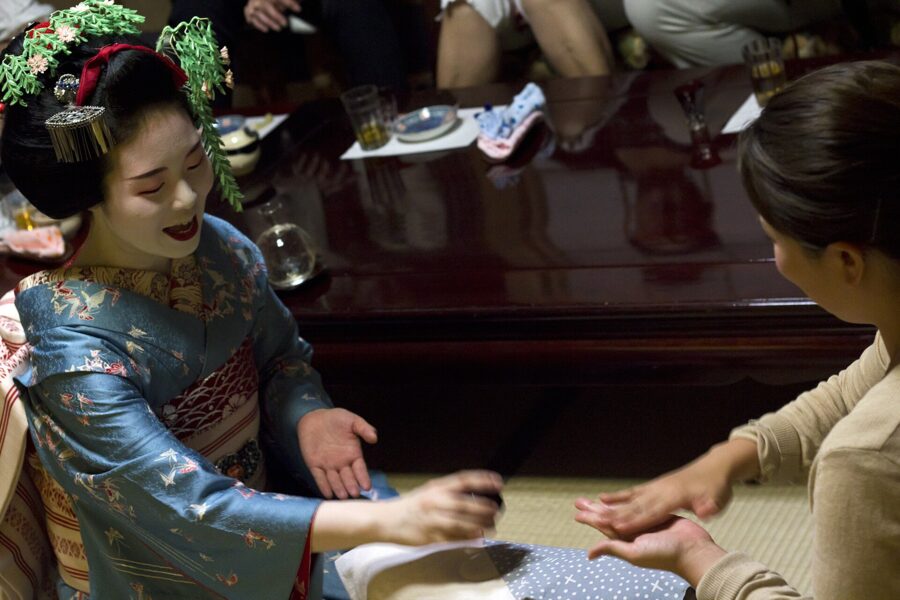
Manjiro’s own example: ten guests, one maiko, one geiko and one musician, with a drinks-included banquet, comes to ¥275,000, or ¥27,500 each. A couple with one maiko pays roughly ¥80,000 before drinks. The fee does not shrink, so this only makes sense split six or more ways.
Gion in the evening: alone, or with a guide
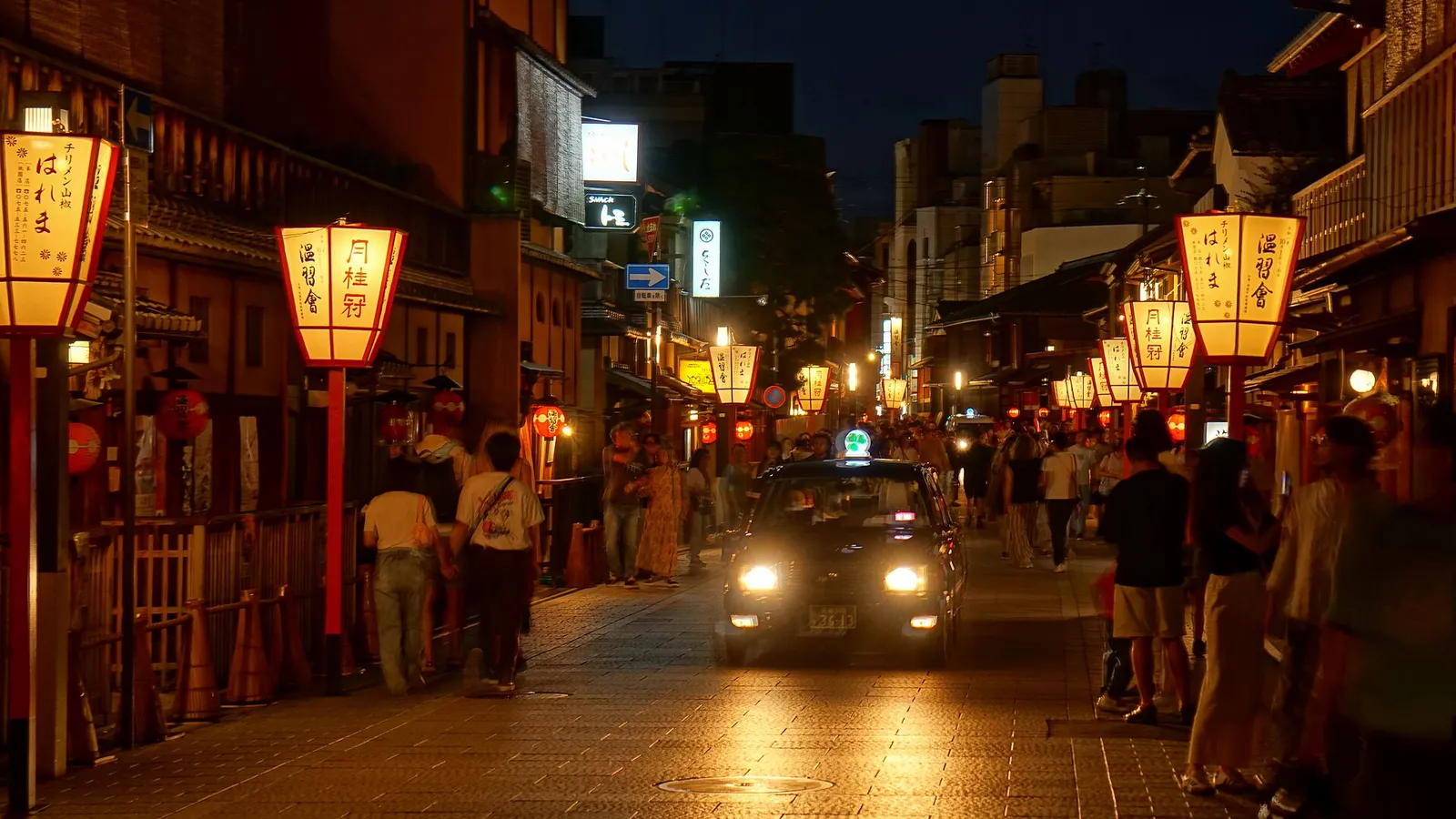
Walking Gion costs nothing, and the early evening is when geiko and maiko move between engagements. Hanamikoji Dori, the main street running south from Shijo-dori to the Kaburenjo, is a city road and open to everyone. North of Shijo, the streets along the Shirakawa canal make the other half of an evening walk.
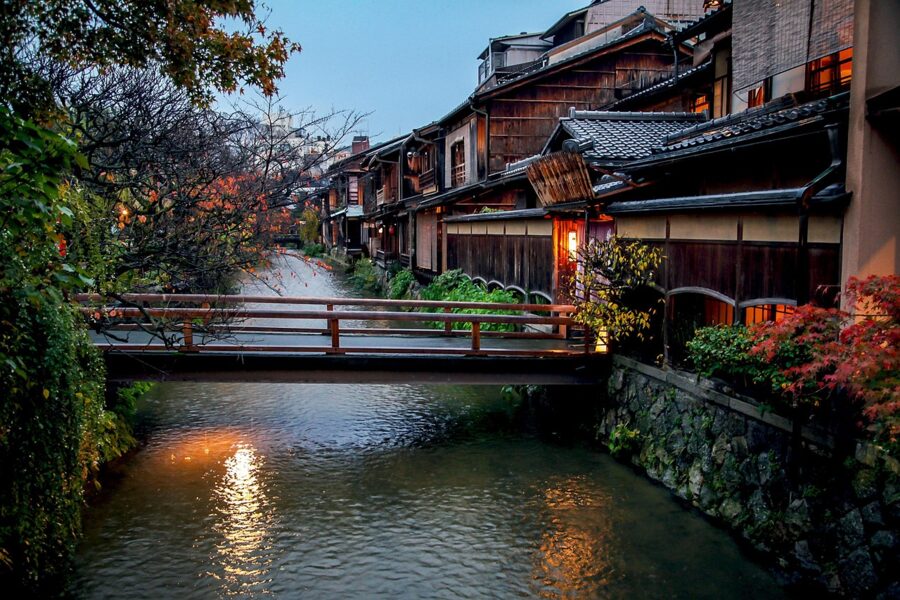
If you see a maiko, let her pass. A Kyoto City Tourism Association study of the area found manners problems peaking in the 13:00 and 18:00 hours, and the rules tourists knew least were not stopping in the road for photos and not photographing maiko. The association’s Gion manners programme answered with multilingual patrols and phone notifications on these streets. A maiko on her way to work is not part of the show.
A guide earns the fee by explaining what you are looking at: the name plaques by teahouse doors, the difference between a maiko’s and a geiko’s hair, why a street is quiet. Klook’s three-hour small-group night walk in Gion starts at ¥4,451 in English, with a matcha dessert as a paid extra, and says plainly that it cannot promise you a geiko or maiko. Two-hour daytime district walks were listed from ¥2,000 in November 2026.
The cheap evening I would put together: walk Hanamikoji and the Shirakawa streets at dusk, then take the 19:00 Gion Corner show for ¥5,500. That gets you the district, the arts and a maiko on stage for less than a guided walk plus a private show.
The private-lane rules, and what the ¥10,000 fine is
Most of the narrow lanes off Hanamikoji, south of Shijo, are private roads lined with teahouses, okiya (the houses maiko live in) and homes. The Gionmachi Minamigawa district council, a residents’ body, banned photography on them in 2019. In spring 2024 it went further, putting up signs that close the lanes to tourists and guided tours altogether.
The best known is Kosode-koji, a lane of about 90 metres with teahouses and okiya, owned by the school that runs the Miyako Odori and managed by the council. Its signs, in Japanese, English and Chinese, say that tourists and tour groups may not enter or take photos, and that entering without permission means a ¥10,000 fine. The fine has no legal force, as reports at the time pointed out; the council’s aim is to deter. By December 2025 it had put up its twelfth sign, at a lane off Aoyagi-koji, telling tour groups to keep out.
So the rule is simple: if a lane has a sign, stay out, and never photograph a geiko or maiko without asking. These are people’s front doors, and the council’s patience has been running out for years.
Which one I would book
One evening in Kyoto, any month: Gion Corner at 19:00, after a walk down Hanamikoji. In April or May, skip it and buy a Miyako Odori second-class seat or a Kamogawa Odori ticket instead. For a photo and a close look, an Kyoto at ¥4,840 beats every other private show on price. A maiko at dinner is worth ¥50,000 only if there are enough of you to split it.
The two tickets on the same Gion Kobu address still tell the story. ¥5,500 buys you a maiko for a few minutes any night of the year; ¥5,000 buys you the whole company, if you can wait for April.