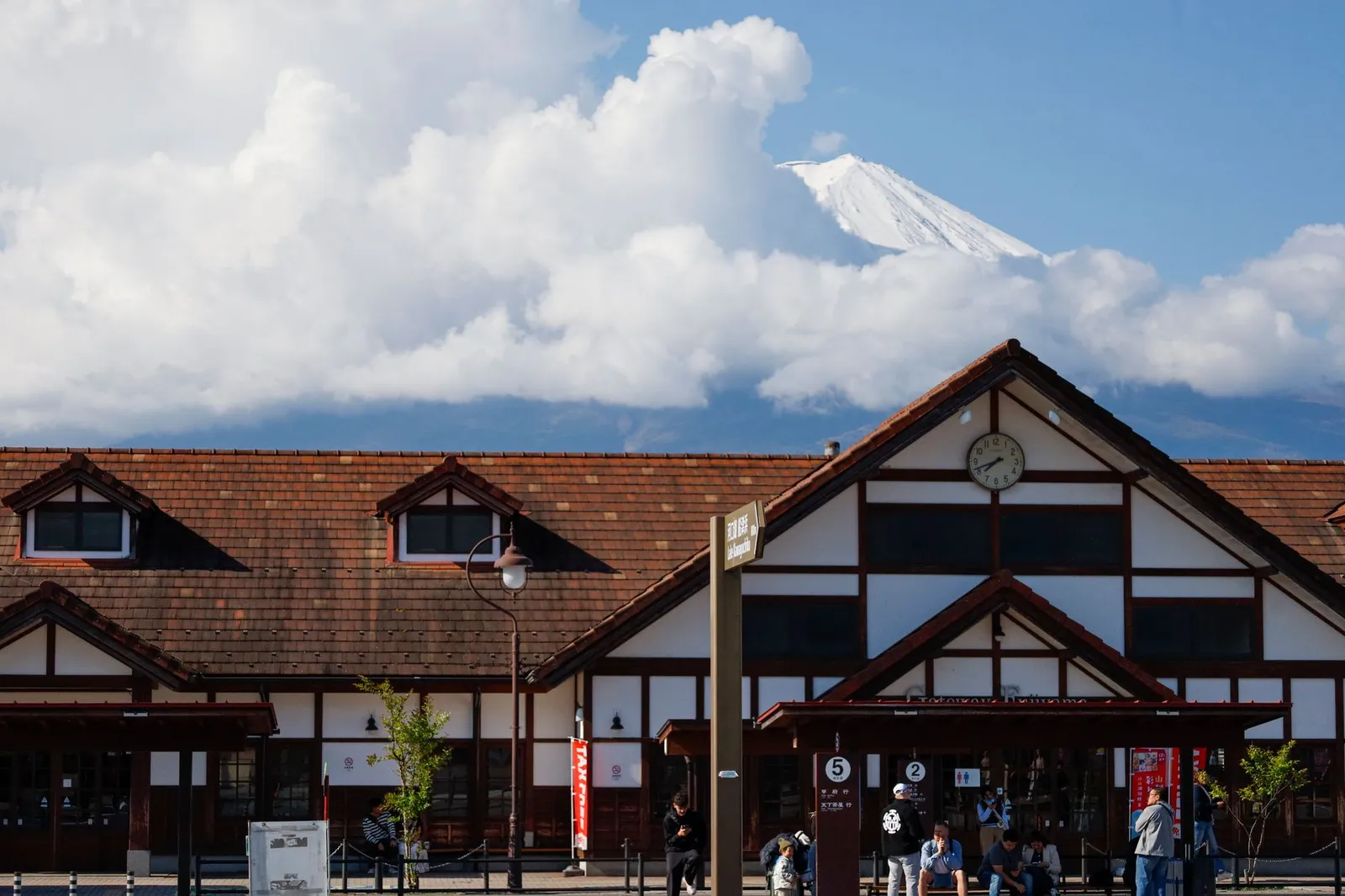
The highway bus from Busta Shinjuku to Kawaguchiko costs ¥2,000 if you pay online and ¥2,200 if you pay at the counter. The Fuji Excursion, the direct train from the JR platforms below, costs ¥4,200. A private car over the same 100 km or so, at the meter rate the Fujikyu group’s own taxi company publishes, comes to about ¥44,000 before the first toll.
All three end at the same small station under the same mountain. The bus takes about 1 hour 45 minutes on a clear road and the train about two hours, so time barely separates them. What separates them is the ¥2,200, the traffic on a holiday Saturday, and where you happen to be standing when you set off: Shinjuku, Tokyo Station, or an arrivals hall at Haneda or Narita.
That last one matters more than most people expect. Narita has a direct bus to the lakes, and it costs nearly three times the Shinjuku fare for a ride twice as long.
In This Article
- Every way there, priced
- The highway bus: the default for a reason
- From Tokyo Station or Shibuya
- Luggage on the bus
- The train: Fuji Excursion, or the slow way via Otsuki
- Fuji Excursion
- Via Otsuki, with a change
- Straight from Haneda or Narita
- Haneda
- Narita
- Private transfers and taxis: what a car costs
- Reserved seats, sell-outs and rail passes
- What a rail pass covers
- From Kawaguchiko: the 5th Station and the other lakes
Every way there, priced
Fares here are the ones in force in November 2026, one way, adult, tax included. Kawaguchiko Station is the end point unless stated; every train and most buses also serve Fujisan Station in Fujiyoshida, one stop away from it.
| Route | One-way fare | Time | Catch |
|---|---|---|---|
| Highway bus from Busta Shinjuku | ¥2,000 online, ¥2,200 at the counter | About 1 hr 45 min | Road traffic; the hold takes luggage only while there is room |
| Highway bus from Shibuya Mark City | ¥2,100 online, ¥2,300 | 2 hr to 2 hr 45 min | 12 departures a day |
| Highway bus from Tokyo Station (Yaesu South Exit) | ¥2,300 | About 2 hr | Ticket needed before boarding; cash only at the stop |
| Local trains via Otsuki (JR Chuo Line, then Fujikyu) | ¥2,580 | About 2 hr 45 min from Shinjuku | At least one change |
| JR limited express to Otsuki, then Fujikyu | ¥3,600 (¥4,000 on a Fujikyu express) | 2 hr to 2 hr 30 min | A change at Otsuki |
| Fuji Excursion, Shinjuku direct | ¥4,200 | About 2 hr | Four a day, all seats reserved |
| Direct bus from Haneda Airport | ¥3,300 (¥2,300 from Shinagawa) | About 2 hr 50 min | Two a day |
| Direct bus from Narita Airport | ¥6,000 | 3 hr 30 min to 3 hr 40 min | Two a day, both late morning |
| Taxi or private car | About ¥44,000 on the meter, plus tolls | About 2 hr | Priced per car, not per person |
If you want one line: take the bus from Busta Shinjuku and pay online. Take the Fuji Excursion on a weekend or holiday morning when the expressway is likely to clog, or if you hold a rail pass that covers it. A car only earns its price in a handful of cases, covered further down.
The highway bus: the default for a reason
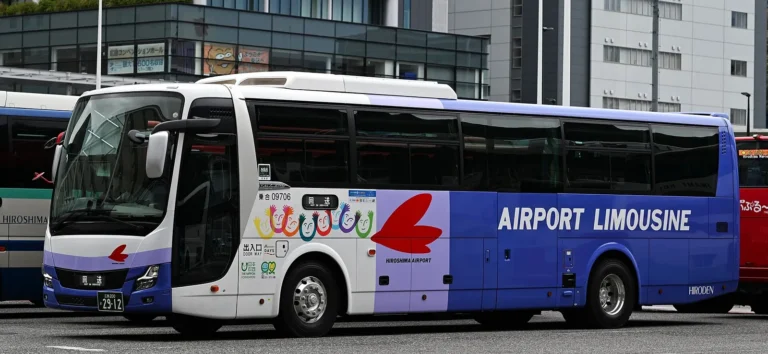
The Shinjuku to Kawaguchiko highway bus leaves from the 4th floor of Busta Shinjuku, the expressway terminal connected to the south exit of Shinjuku Station. Fujikyu and Keio run it jointly, and the November 2026 timetable has more than 50 departures a day, from 06:45 to 22:25. Before 10:00 there is a bus roughly every ten minutes.
The fare is ¥2,200 at the Busta counter (open 05:40–23:45) and ¥2,000 if you book and pay online. That ¥200 is the cheapest saving on this whole page, and it needs nothing more than a phone. Children pay half.
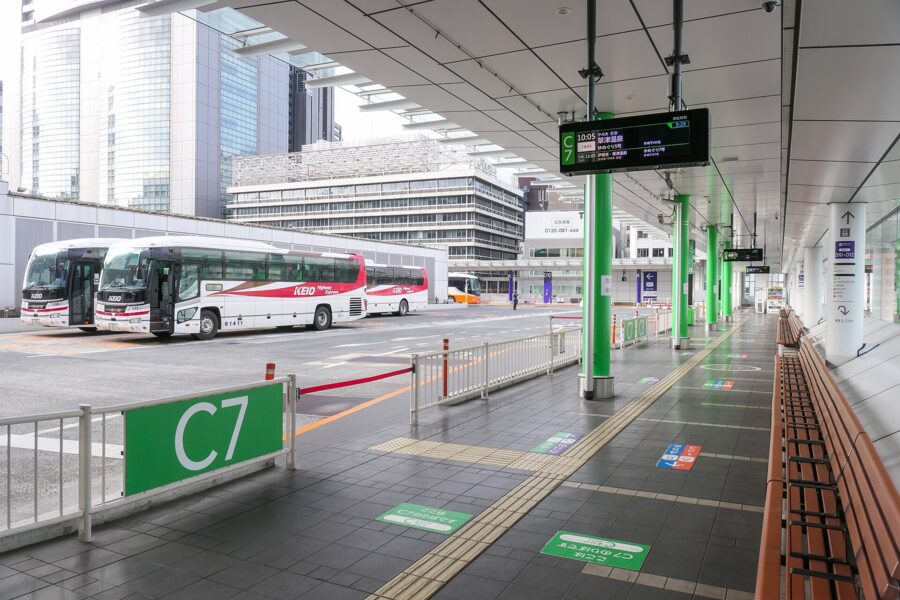
Seats are assigned when you buy, not chosen. Booking opens one month ahead, on the same date of the previous month, and closes ten minutes before departure. Be at the stand on time: a ticket for a bus that has left is void, and even a ticket-holder who is not there at departure time can lose the seat.
Most buses stop at Fuji-Q Highland, then Kawaguchiko Station, and many go on to Fujisan Station. The operator gives the run as about 1 hour 45 minutes, and the timetable allows between 1 hour 35 minutes and just under 2 hours. Traffic, accidents and weather can add a lot more, and a late bus earns no refund.
From Tokyo Station or Shibuya
If you are staying east of the palace, the Tokyo Station bus saves you the trip across town. It leaves from the Yaesu South Exit bus area (stand 8 is the usual one, though the operator says to check on the day), with a few departures also calling at the Tekko Building on the Yaesu North side. The fare is a flat ¥2,300 to Kawaguchiko or Fuji-Q Highland, there are 17 departures a day from 06:20 to 18:10, and the run is a little over two hours.
There are two catches. Every seat must be bought before boarding, and a ticket bought at the stop or on board is cash only: no Suica, no PASMO. Book it online or pay at a convenience store and the problem goes away.
The Shibuya bus leaves from Shibuya Mark City, costs ¥2,300 (¥2,100 paid online) and runs only 12 times a day. Its timings spread from two hours to 2 hours 45 minutes, so it suits you only if you are sleeping in Shibuya and one of the departures fits.
Luggage on the bus
Suitcases go in the hold, and there is no way to reserve space for them. Fujikyu says plainly that if the hold is full, your bag cannot come into the cabin instead. For a group with large cases, the operator itself suggests sending luggage ahead to your hotel.
In practice one medium case each is rarely a problem on a weekday. A family of four with four large cases on a Saturday in autumn is the case to worry about, and that is where the train starts to look better.
The train: Fuji Excursion, or the slow way via Otsuki
No JR line reaches Kawaguchiko. Every train trip is JR to Otsuki, then the Fujikyu Railway for the last 27 km up to the lakes. The only question is whether you change trains at Otsuki or sit on one that changes companies for you.
Fuji Excursion
The Fuji Excursion (Fuji Kaiyu on Japanese tickets) runs from Shinjuku straight through to Kawaguchiko, four times a day each way. From Shinjuku it leaves at 07:30, 08:30, 09:30 and 10:30, arriving at 09:28, 10:26, 11:28 and 12:24. Back from Kawaguchiko it leaves at 14:08, 14:58, 16:48 and 17:41.
The one-way price from Shinjuku is ¥4,200: a ¥2,580 fare and a ¥1,620 limited express ticket. To Shimoyoshida, the station for the Chureito Pagoda, it is ¥4,010. Between Shinjuku and Otsuki the Fuji Excursion runs coupled to a Kaiji or Azusa limited express, so check the car number on your ticket before you walk down the platform.
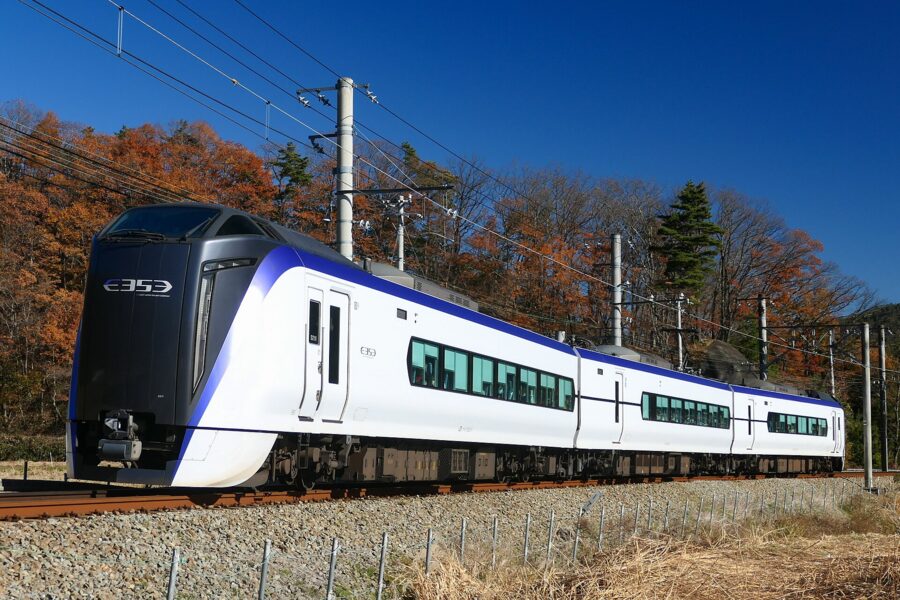
Tickets are sold at JR East ticket offices and machines, on Eki-net, and on JR East’s booking site for overseas visitors. In autumn and winter an extra pair runs on some days: weekdays from late October, with a Shinjuku departure at 11:34, and weekends with one at 09:02. Check the calendar on the Fujikyu page before counting on it.
Is ¥2,200 more than the bus worth it? On a weekday, rarely. On a Saturday in November or a holiday Monday, when the expressway backs up, a train that cannot get stuck in traffic is the one I would pay for.
Via Otsuki, with a change
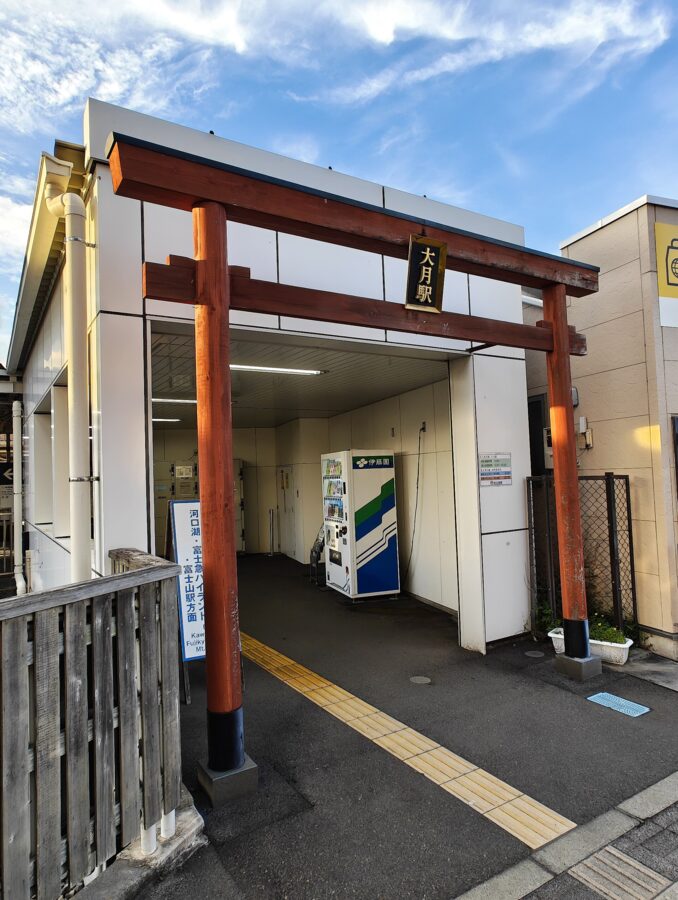
The cheapest rail fare is the plain one. Ride JR Chuo Line rapid and local trains to Otsuki, then a Fujikyu local up to the lakes, and you pay the same ¥2,580 fare as the Fuji Excursion with no limited express ticket at all. Allow about 2 hours 45 minutes from Shinjuku. Two evening trains run through from Tokyo Station to Kawaguchiko with no change, leaving Tokyo at 18:06 and 19:04 on weekdays and arriving at 21:06 and 22:08.
The middle option is a JR Kaiji or Azusa limited express to Otsuki, about an hour from Shinjuku. The JR limited express ticket for that stretch is ¥1,020, the same JR share that makes up most of the Fuji Excursion’s ¥1,620 supplement. Add the Fujikyu fare of ¥1,170 from Otsuki and the trip is ¥3,600, or ¥4,000 if you take one of Fujikyu’s own expresses for the last leg (¥400 extra).
Fujikyu’s own expresses are the Fujisan Express and the Fujisan View Express, the second a red train with a special first car that serves a welcome drink. The ¥400 express ticket gets you an unreserved seat; a reserved seat on the View Express is ¥200 more. On the Fujikyu line alone, a stopping train takes just under an hour from Otsuki and the expresses save about ten minutes, so I would spend the ¥400 only for the View Express ride itself.
Straight from Haneda or Narita
Both airports have a direct bus to the lakes. Both run so rarely that your flight time decides whether they are any use. For getting from either airport into the city instead, the cheapest way from Narita and Haneda to central Tokyo compares every option.
Haneda
The Haneda to Kawaguchiko bus runs twice a day. It leaves Terminal 3 at 06:45 and 11:50, Terminal 2 ten minutes later and Terminal 1 five minutes after that, and reaches Kawaguchiko at 09:35 and 14:40. The fare from the airport is ¥3,300, and the operator puts the trip at about 2 hours 50 minutes.
Here is the trick. The same bus calls at Shinagawa Station (Konan Exit) at 07:30 and 12:35, and from there the fare is ¥2,300. If you are spending a night in Tokyo first, board at Shinagawa and keep ¥1,000; Shinagawa is 11 to 14 minutes from the Haneda terminals on the Keikyu line.
Booking opens a month ahead, and an online booking can cover at most three people. Book by phone or online and the ticket must then be paid for at a Lawson or FamilyMart, or a Fujikyu counter at the lakes, by 17:00 the day before, or the booking lapses. Without a booking you can still board if seats are free on the day.
Miss the 11:50 and the direct bus is gone for the day. The fallback is the train or a bus into Shinjuku and the Busta bus from there, which runs until 22:25 and reaches Kawaguchiko just after midnight.
Narita
The Narita to Kawaguchiko bus costs ¥6,000 and leaves only twice a day: 10:25 and 10:55 from Terminal 3, five and ten minutes later from Terminals 2 and 1. It reaches Kawaguchiko at 14:05 and 14:35, with a rest stop on the way. The fare is paid in cash on board, and electronic money is not accepted.
Against it, the Tokyo Station bus to Kawaguchiko is ¥2,300. The ¥3,700 gap is your budget for getting from Narita to Tokyo Station, and the cheaper trains and buses into the city cost a good deal less than that. The direct bus earns its price only when your landing time fits it and you want to sit still for three and a half hours.
Private transfers and taxis: what a car costs
A private car is priced per vehicle, so the only sensible way to judge it is per head. Fujikyu Yamanashi Hire, the taxi company in the Fujikyu group at Kawaguchiko Station, publishes its meter rates: ¥600 for the first 1.2 km, then ¥100 for every 229 m in a standard car. For its large “jumbo” vehicles it is ¥680, then ¥100 every 202 m.
Run 100 km through that meter, roughly the distance from Shinjuku, and a standard car shows about ¥44,000; a jumbo shows about ¥49,700. Expressway tolls, parking and any entry fees are on top. For anything outside its set sightseeing plans the company quotes by itinerary, so treat those figures as the scale of the thing, not a price.
Split four ways, a standard car is still about ¥11,000 a head before tolls, against ¥2,000 on the bus. Nine people sharing a jumbo get it down to about ¥5,500 each, which is still more than the train. From Narita the distance is well over 160 km, so even a full jumbo works out above the ¥6,000 airport bus per person.
So a car is never the cheap option. It earns its price in a few cases:
- You land after the last direct bus and want to reach a lakeside hotel tonight, not after midnight.
- Your hotel or ryokan is on Lake Saiko or Motosu, far from any station, and you have large cases.
- Someone in the group cannot manage stairs, platforms and a changeover at Otsuki.
- You have more luggage than a bus hold is likely to take on a busy day.
If what you want is a car for a day of viewpoints rather than a drop-off at the hotel, that is a different purchase, priced in the guide to a private Mt Fuji day tour from Tokyo.
Reserved seats, sell-outs and rail passes
Both the buses and the Fuji Excursion open for sale one month ahead. For the bus that is the same date of the previous month (phone bookings start at 09:00 on that day); for the train it is 10:00. Weekday seats are easy to get a few days out. For a Saturday in cherry-blossom or autumn-leaf season, or any holiday weekend, book the day sales open, because four trains a day with no unreserved car do not go far.
If the Fuji Excursion is full, the Kaiji-plus-Fujikyu route is the fallback with the most room: Fujikyu’s local trains need no reservation at all. If the bus is full, check the Tokyo Station departures, which sell separately.
What a rail pass covers
The nationwide Japan Rail Pass (¥50,000 for seven days in a standard car, bought online) covers only the JR half of the trip, Shinjuku to Otsuki. Fujikyu is a private railway, so from Otsuki you pay the ¥1,170 fare plus ¥600 on the Fuji Excursion or ¥400 on a Fujikyu express. With the pass, the Fuji Excursion costs you ¥1,770 one way.
The JR Tokyo Wide Pass is the better fit for this trip. It costs ¥16,000 for three consecutive days and includes the Fujikyu Railway, so the Fuji Excursion is covered end to end; only reserved seats on Fujikyu’s own expresses cost extra. A Fuji Excursion return is ¥8,400, so the pass pays only if you add another long trip in the same three days, such as Nikko or a Narita transfer.
From Kawaguchiko: the 5th Station and the other lakes
The bus to the Fuji Subaru Line 5th Station leaves from Kawaguchiko Station and from Fujisan Station ten minutes earlier. It costs ¥2,000 one way or ¥3,400 return and takes 50 minutes. The current timetable runs from 1 October to 13 December 2026, with five departures from Kawaguchiko between 09:40 and 14:00 and the last bus down at 15:50.
The road decides everything. If the Subaru Line is closed, the bus does not run, and if the road is open only to the 4th Station, the bus turns round there. The timetable changes with the season, so check before planning a winter trip around it.
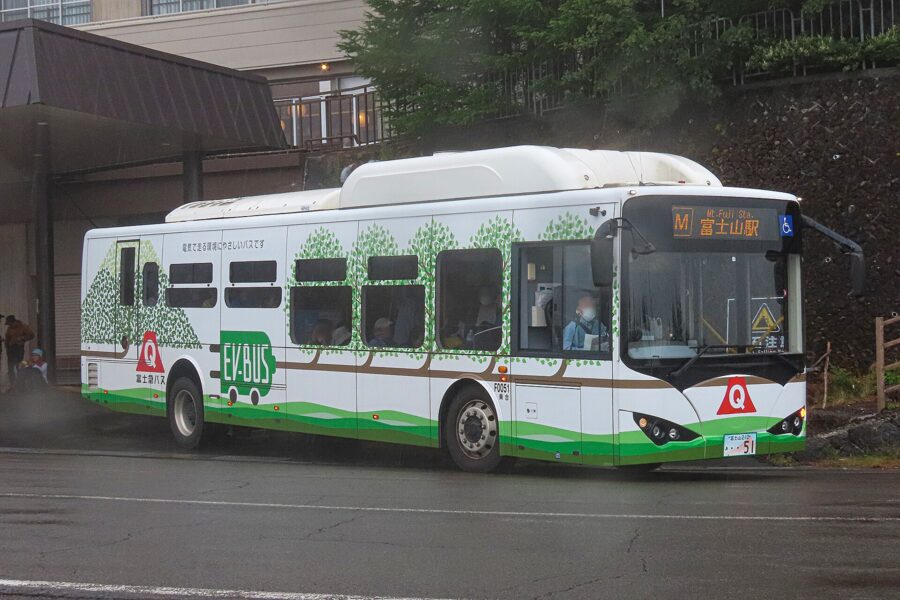
For the lakes themselves, Fujikyu runs three sightseeing bus lines from Kawaguchiko Station. The Red Line loops the north shore of Lake Kawaguchi past Oishi Park, the Green Line goes out to Lake Saiko, Aokigahara and the Narusawa Ice Cave, and the Blue Line carries on to Lakes Shoji and Motosu. A single ride starts at ¥180; a one-day pass for all three is ¥1,500 and a two-day pass ¥2,000, sold at the station bus window, online, or (one-day only) on board.
Lake Yamanaka has its own buses from Tokyo. Some Shinjuku buses continue to the lake, and to Yamanakako Hirano the fare is ¥2,650 (¥2,350 online). From Tokyo Station it is ¥2,600 to Oshino and ¥2,700 to Yamanakako Asahigaoka. If you are staying at Yamanaka, take one of those rather than going via Kawaguchiko and doubling back.
Pay the ¥2,000 for the Shinjuku bus instead of ¥4,200 for the train, and the difference is the 5th Station bus fare with ¥200 left over. On a clear morning, that is the better use of it.