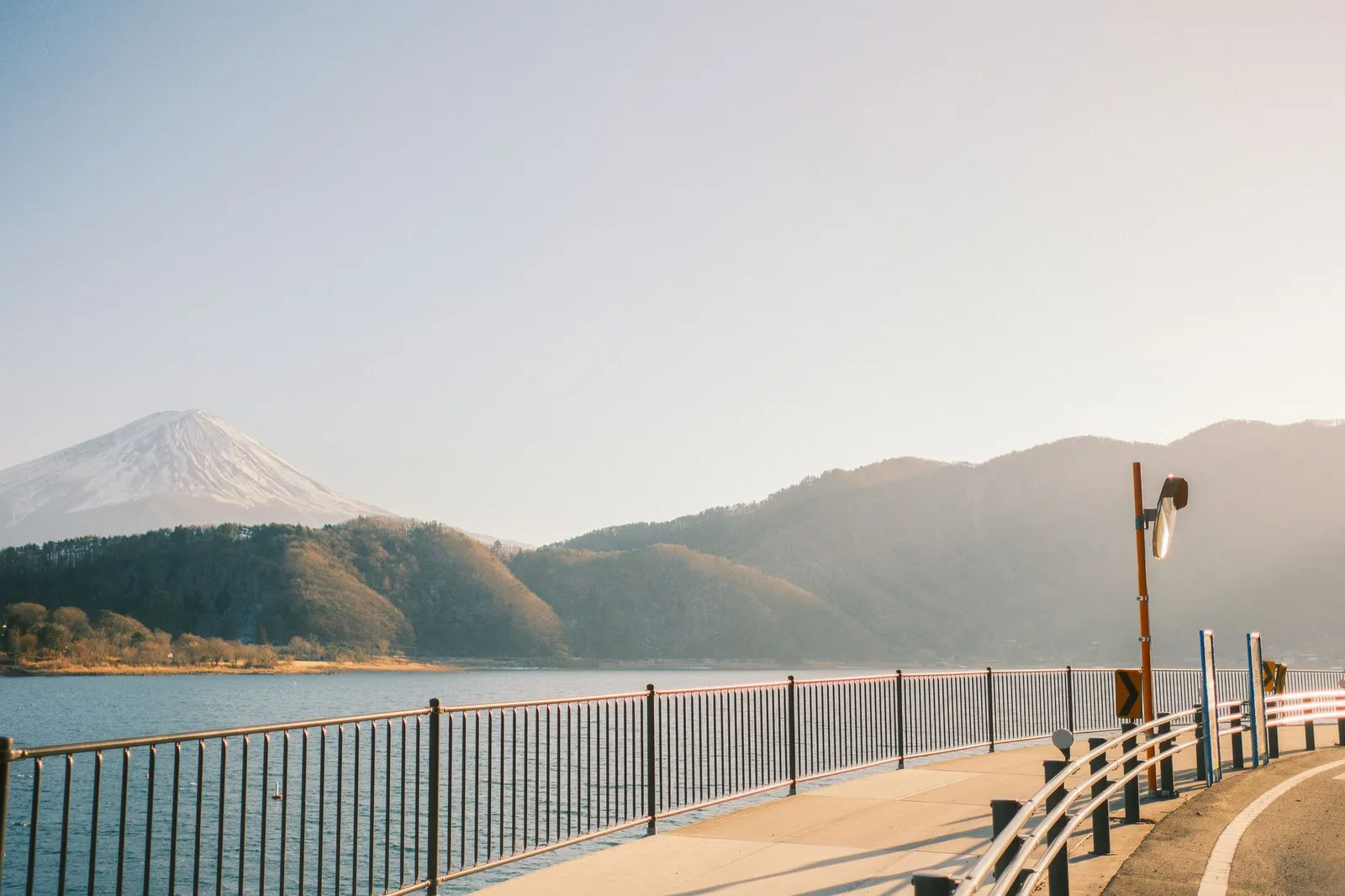
On the fourth floor of Busta Shinjuku, the first bus to Kawaguchiko leaves at 06:45. A seat on it costs ¥2,000 if you paid online the night before. An hour and three quarters later, from the other side of Shinjuku Station, the same lake is the destination of an English-language coach tour that costs ¥15,000, and of a hired car with a driver that costs ¥79,400 before the tolls.
All three put you in front of the same mountain, if the mountain turns up. The price gap is not about the view. It buys you a guide, lunch, a seat you never have to find, and someone else to worry about the 5th Station road being shut by snow.
Sometimes that is worth paying for. Often it is not, and the difference usually comes down to how many of you there are, what month it is, and whether you can read a bus timetable in a hurry.
In This Article
- The short answer, in yen
- Doing it yourself: the highway bus
- Doing it yourself: the train
- Getting around the lakes for ¥1,500
- Chureito Pagoda by train
- The 5th Station: the part that changes with the season
- What the tours actually cost and include
- Japanese domestic coach tours
- English-language coach tours
- Budget bus tours on the booking sites
- Small-group and private tours
- Adding Hakone: one day or two?
- When the tour is worth it, and when it is not
- Will you actually see Fuji?
- A DIY day that works, priced
The short answer, in yen
For one or two people with a free day and a smartphone, the highway bus and the lakeside sightseeing bus beat every tour on price by a wide margin, and they reach the same viewpoints. For a group of four, a private car split four ways costs about what an English coach tour does per head, and you choose the stops. The Japanese-language coach tour is the quiet bargain of the lot, as long as you do not need the commentary in English.
| Option | Price per person | Time | Catch |
|---|---|---|---|
| Highway bus + sightseeing bus, DIY | ¥6,120 | Your own pace, 06:45 first bus | You plan it; Chureito adds a train ride |
| Same, plus 5th Station bus | ¥9,520 | Long day | 5th Station bus stops when the road snows up |
| Fuji Excursion train both ways, DIY | ¥10,520 | About 2 hours each way | Only four or five trains a day |
| Budget bus tour (booking site) | ¥7,800 | Ends about 18:00 in Ginza | No lunch, no 5th Station, short stops |
| Hato Bus, Japanese commentary | ¥9,600 | 08:20 from Tokyo Station | Japanese only; 2026 runs end 28 November |
| Hato Bus, English commentary | ¥15,000 | 08:00 Tokyo, 08:30 Shinjuku | Weekdays only; needs 10 people to run |
| Private taxi, Nihon Kotsu | ¥19,850 (4 sharing ¥79,400) | 10 to 11 hours | Tolls, parking, lunch extra |
| Fuji + Hakone bus tour (booking site) | ¥7,600 | Long, rushed day | 30 minutes at Lake Ashi |
| Hakone Freepass, Hakone alone, DIY | ¥7,100 (¥9,500 with Romancecar) | A full day | No Fuji lakes the same day |
Fares here are the ones in force in November 2026. Tour prices move with the season and the date, so treat the tour rows as the listed price for late-2026 dates, not a promise.
Doing it yourself: the highway bus
The cheapest seat to the lakes is on the Chuo Highway Bus from Busta Shinjuku, run jointly by Keio and Fujikyu. The Shinjuku to Kawaguchiko fare is ¥2,200 one way for an adult, or ¥2,000 if you book and pay online. Children are half price. Fujikyu puts the trip at about 1 hour 45 minutes, traffic permitting, and the early timetable bears it out: the 06:45 is due at Kawaguchiko Station at 08:30.
Seats are reserved, and booking opens on the same date one month ahead. That matters more than it sounds. On busy weekends the morning buses fill days out, and a walk-up at 07:30 can mean standing at the counter watching three full departures leave.
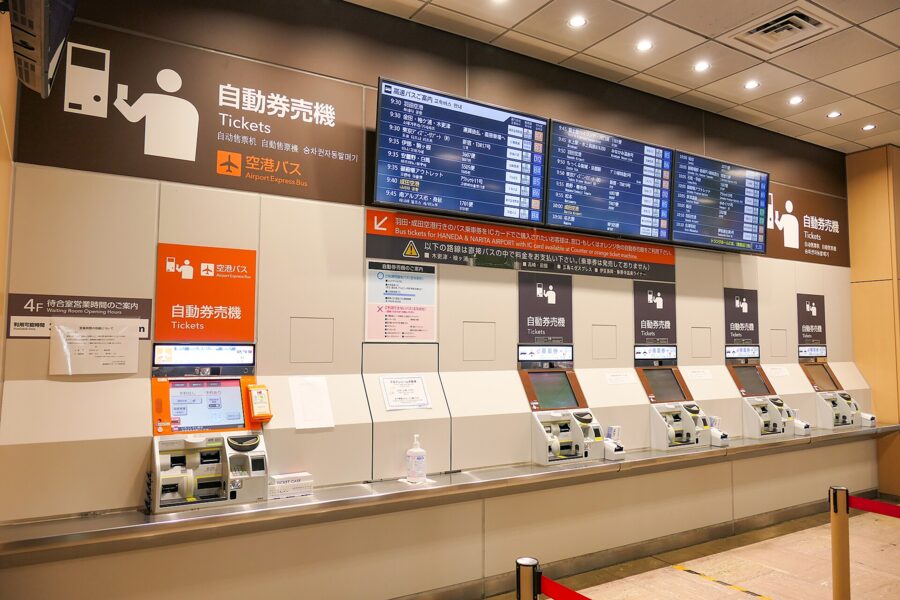
Through the morning the buses leave Busta Shinjuku about every 10 minutes. Book the return when you book the outward seat. The late-afternoon buses back to Shinjuku are the ones every day-tripper wants, and a full bus at 17:00 leaves you choosing between a later one and the train.
From Tokyo Station there is a second route, from the Yaesu South Exit, at ¥2,300 to Kawaguchiko Station and about 130 minutes. If your hotel is in Ginza or Nihonbashi, that ¥100 extra saves you the trip across town to Shinjuku. Fujikyu also runs a summer-only direct bus from Shinjuku up to the Fuji Subaru Line 5th Station, ¥4,800 one way (¥4,500 online), about 2 hours 30 minutes.
Doing it yourself: the train
The train is the comfortable option and not the cheap one. The limited express Fuji Excursion runs from Shinjuku straight through to Kawaguchiko without a change. Fujikyu prices the through trip at ¥4,200 one way: ¥2,580 for the fare and ¥1,620 for the express ticket.
There are only four regular trains a day each way. The first leaves Shinjuku at 07:30 and reaches Kawaguchiko at 09:28. Coming back, the regular trains leave Kawaguchiko at 14:08, 14:58, 16:48 and 17:41, the last one reaching Shinjuku around 19:40. Between late October and February an extra train or two is added; check which days before you plan around it.
You can skip the express ticket and ride ordinary trains on the same ¥2,580 fare: the JR Chuo Line to Otsuki, then the Fujikyu line up to Kawaguchiko. It works, but with a change and a slow climb it is longer than the bus and still dearer. I would only do it with a Japan Rail Pass or a JR regional pass already in hand, and only after checking how much of the route the pass actually covers.
The train has one real advantage over the bus: no traffic. On a holiday weekend the Chuo Expressway can add an hour to the bus back into Tokyo, and the 17:41 train does not care.
Getting around the lakes for ¥1,500
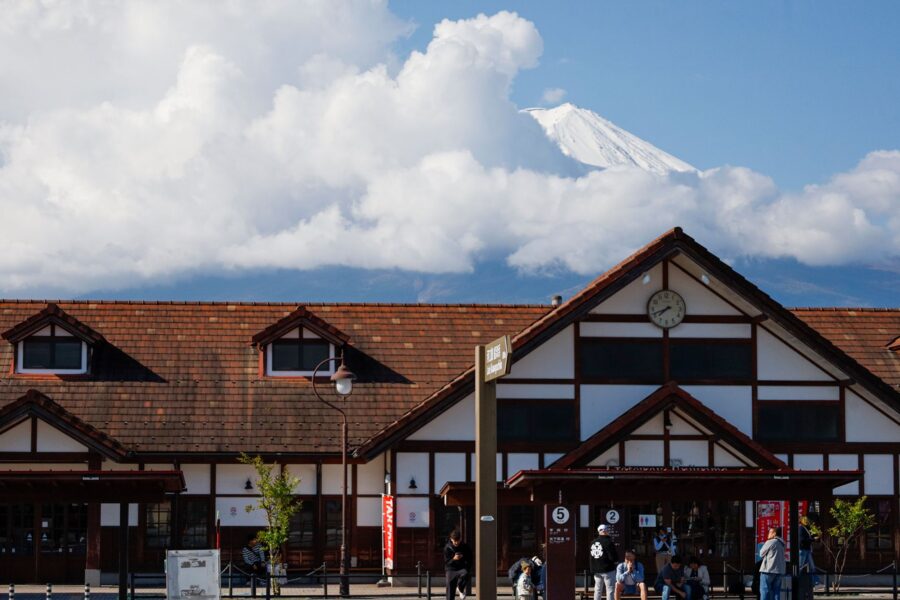
Once you are at Kawaguchiko Station, the Kawaguchiko, Saiko and Narusawa sightseeing buses do the job a tour coach does. There are three colour-coded lines: the Red Line round the north shore of Lake Kawaguchi to Oishi Park, the Green Line to Saiko and the lava caves, and the Blue Line out to Lake Shoji and Lake Motosu.
A single ride starts at ¥180, but the common pass is the obvious buy: ¥1,500 for one day or ¥2,000 for two, children half. You can buy it at the station counter, online, or on board for the one-day version. The Red Line leaves the station every 15 minutes from 09:00 and takes 27 minutes to reach the Kawaguchiko Natural Living Center at Oishi Park, the flower gardens with the lake-and-mountain view that the coach tours stop at.
If you are staying a night, look at the two-day Mt Fuji and Fuji Five Lakes Passport instead. At ¥3,300 it covers all the local buses in the Five Lakes area, the Fujikyu-run Fujiyoshida, Oshino and Yamanakako loop bus, and the Fujikyu train between Kawaguchiko and Shimoyoshida. The ¥4,700 version adds the whole Fujikyu line. It does not cover the 5th Station bus or any highway bus, so for a day trip the ¥1,500 pass is still the better deal.
Chureito Pagoda by train
The five-storey pagoda with Fuji behind it stands in Arakurayama Sengen Park above Shimoyoshida Station. The sightseeing buses do not go there. Take the Fujikyu train from Kawaguchiko: the Fujikyu fare table puts Kawaguchiko to Shimoyoshida at ¥310 each way. From the station it is a walk up through the shrine and then a long flight of steps; Nihon Kotsu, which sends its taxi tours here, counts 398 of them.
The park itself is free. So are Oishi Park and the lakeside paths. On a DIY day almost all of your spending is on getting from one viewpoint to the next.
The 5th Station: the part that changes with the season
The Fuji Subaru Line climbs from the lakes to the 5th Station at about 2,300 metres, where the Yoshida Trail to the summit begins. A Fujikyu bus runs up from Kawaguchiko Station and Fujisan Station. The 5th Station return ticket sold as a mobile ticket in 2026 cost ¥3,400 for an adult and ¥1,700 for a child, valid from 1 July to 30 November.
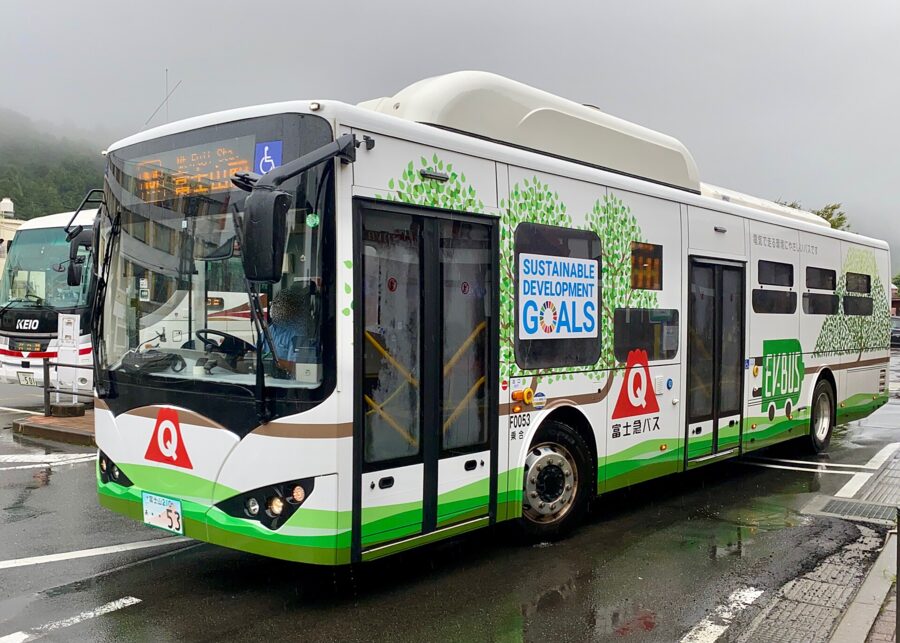
This is the line that decides more winter plans than anything else. Before the end of November 2026 the seller had already stopped offering that return ticket, giving snow as the reason. When the road is snowed up or iced, the bus cannot reach the 5th Station, and neither can any tour coach or private car. Nihon Kotsu, which sells taxi day trips that include the 5th Station, lists it as open from about mid-April to about mid-December, and even inside that window a cold snap can shut the top of the road for the day.
So the 5th Station adds ¥3,400 to a DIY day in the warm half of the year and nothing at all in winter, because you cannot go. Winter coach tours simply leave it off the route. If standing on the mountain itself is the point of your trip, go between late spring and autumn.
What the tours actually cost and include
Day tours from Tokyo come in four kinds, and the price gap between them is mostly about language, lunch and how many people share the vehicle.
Japanese domestic coach tours
Hato Bus, the yellow buses that have run Tokyo sightseeing tours for decades, sells Fuji day tours aimed at Japanese passengers. Its current Fuji course list shows what that market pays. The scheduled sightseeing course round the foot of Fuji and up the Subaru Line costs ¥9,600, with lunch, leaving Tokyo Station Marunouchi South Exit at 08:20.
For that, you get the Yamanashi Prefectural Fuji World Heritage Centre, the 5th Station, a Japanese lunch at a resort hotel, and Oshino Hakkai on weekday departures. It runs with as few as one passenger booked. The 2026 season ran on Tuesdays, Thursdays, weekends and holidays from late May to 28 November, so look for the 2027 dates in spring.
The winter tours are dearer because they lean on food. A Shinjuku departure running from mid-November to the end of March, with a buffet lunch looking at Fuji, Oshino Hakkai and a herb garden on Lake Kawaguchi, costs ¥12,800 to ¥13,900 depending on the date. Club Tourism and the other big domestic agencies sell similar coaches. Everything is in Japanese: the booking page, the guide and the meeting-point signs.
English-language coach tours
The same company’s English tour shows the language premium plainly. Hato Bus’s English Mt Fuji and Arakura Sengen Shrine tour costs ¥15,000, lunch included, leaving Tokyo Station at 08:00 and Shinjuku at 08:30 on weekdays. It covers the 5th Station, lunch at a Kawaguchiko hotel, Oishi Park and the Chureito Pagoda. It needs ten bookings to run, and the 2026 season ended on 30 November.
That is ¥5,400 more than the Japanese course for a similar day. Part of it is the commentary and part is the Chureito stop, which the Japanese course skips. The Fuji and Hakone coach days sold by the big English-language operators add a boat on Lake Ashi, and some return to Tokyo by shinkansen, so expect to pay more again.
Budget bus tours on the booking sites
The cheapest tours are not run by any household name. They are sold on Klook, KKday, Viator and the rest, and they run a fixed loop of photo stops. A typical one, the Kawaguchiko, Oshino Hakkai and Chureito day tour on KKday, costs ¥7,800. It stops at the lake, Oshino Hakkai, Arakurayama Sengen Park, Oishi Park and the Fuji-view shopping street in Fujiyoshida, and finishes in Ginza around 18:00.
No meals are included, there is no 5th Station, and the bus leaves on time whether you are on it or not. At ¥7,800 against ¥6,120 for the same stops done yourself, the tour costs ¥1,680 more and saves you all the planning. That is a fair trade if you have never used a Japanese bus. It is a poor one if you mind being herded.
Small-group and private tours
Small-group van tours sit between the coach and the private car. One Fuji and Hakone day tour on KKday sells its small-group version, for parties of 4 to 9, at ¥9,600 each, ¥2,000 above the same itinerary in a full-size bus.
Private cars are where Tokyo taxi firms compete with the booking sites. Nihon Kotsu, Tokyo’s largest taxi company, sells a Mt Fuji day trip by taxi from ¥79,400 per car, tax included, for 10 to 11 hours: about 90 minutes each way and seven hours on the ground. That covers pickup in the 23 wards, Musashino or Mitaka, and nothing else. Expressway tolls, parking, admissions and meals are on you, and an English-speaking driver is quoted separately.
The booking-site charter cars are cheaper. That same KKday listing offers a private car for the day at ¥67,680, with ten hours of service, hotel pickup in Tokyo, and ¥5,000 for each extra hour. Read the listing for what it leaves out before you assume tolls are covered, and do not expect a licensed guide: on these plans the driver is the guide, if anyone is.
For a different kind of trip altogether, one-way rides from Tokyo to a hotel at the lakes, there is a separate guide to the one-way private transfer to Fuji.
Adding Hakone: one day or two?
Hakone sits on the other side of Fuji from the Five Lakes, and the two are usually sold together as one long coach day. The combination tours on the booking sites are cheaper than you would expect. The Fuji and Hakone two-lakes tour on KKday costs ¥7,600 with a Hakone Ropeway ticket included. It covers Oshino Hakkai, Lake Yamanaka, Hakone Shrine, about 30 minutes at Lake Ashi and the ropeway to Owakudani.
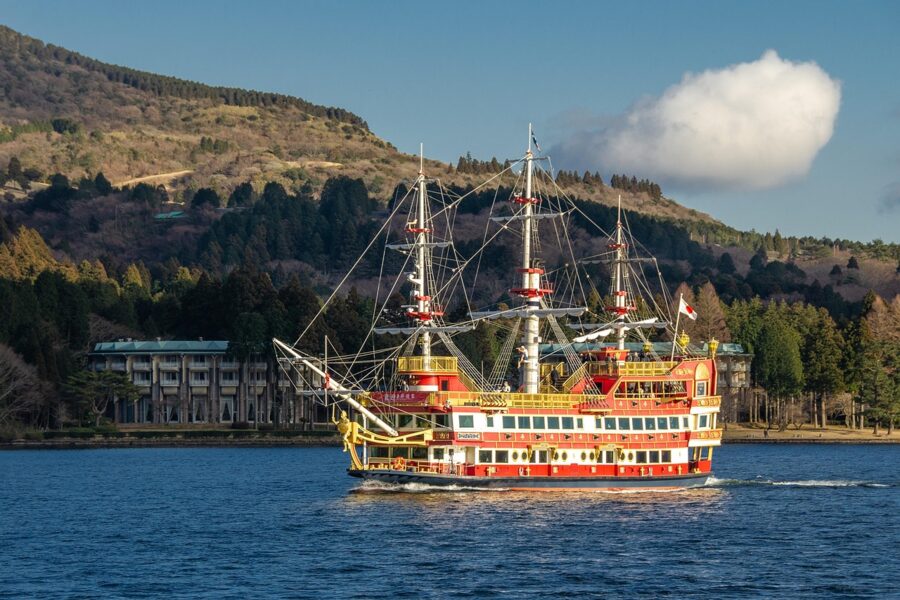
Thirty minutes at Lake Ashi is the giveaway. The tour sees Hakone through the windows of a coach, and the operator says so: its own notes warn that stays at each stop are short and the day involves a lot of driving. The pirate-ship cruise across the lake costs extra.
Compare that with doing Hakone on its own. Odakyu’s Hakone Freepass costs ¥7,100 from Shinjuku. It covers the return train fare from Shinjuku, the Hakone Tozan Railway, the cable car, the ropeway, the Lake Ashi cruise, and the local buses, for two days. Add the Romancecar limited express at ¥1,200 each way and the total is ¥9,500, which is Odakyu’s own figure.
So ¥7,600 buys a rushed glimpse of both places in one day, and ¥9,500 buys a proper day in Hakone with the boat included. My answer is to split them.
Do the Fuji lakes one day and Hakone another, or stay a night at Kawaguchiko and cross over the next morning. If you only have one day and must see both, take the combination tour. The obvious public link between the two areas is a bus through Gotemba, and the Kawaguchiko to Gotemba Premium Outlets leg alone is about 70 minutes and from ¥2,300, before you have reached Hakone.
The private-car version makes more sense for Hakone combinations than for Fuji alone. Ten hours with a driver lets you spend real time at Lake Ashi and still see Fuji from Lake Yamanaka, and four people sharing the ¥67,680 car pay ¥16,920 each before tolls.
When the tour is worth it, and when it is not
The tour wins in four situations.
- Four people who want the 5th Station. A shared private car at ¥16,920 to ¥19,850 each, plus tolls, costs about the same as the English coach and lets you go where the clouds are not.
- Families with small children or anyone who hates transfers. The DIY day has four or five changes of bus and train; the coach has none.
- A first trip to Japan with no data plan. Booking a reserved highway bus seat a week ahead and finding the right stop on the way back is the hard part of DIY.
- Both Fuji and Hakone in one day. Nothing public does it faster.
It loses everywhere else. One or two people with a phone and a free morning pay ¥6,120 for the same lakes the ¥7,800 budget tour visits, stay as long as they like at Chureito, and come back on the train if the expressway is jammed. Against the ¥15,000 English tour the saving is ¥8,880 per person, which is a good dinner in Shinjuku for two.
The early start is not a reason to take a tour either. The 06:45 bus from Shinjuku leaves more than an hour before any of these tours, and it is at the lake by 08:30.
If what you really want is someone to show you Tokyo rather than drive you out of it, the one-day Tokyo bus tour and the broader guide to the cheapest tours in Tokyo are the better reads. For other trips out of the city, see the cheapest day trips from Tokyo.
Will you actually see Fuji?
This is the question every price above depends on, and the answer is seasonal. The Japan Meteorological Agency’s climate normals for Kawaguchiko show the pattern plainly. January averages 212 hours of sunshine and December 200; June averages 123 and September the same.
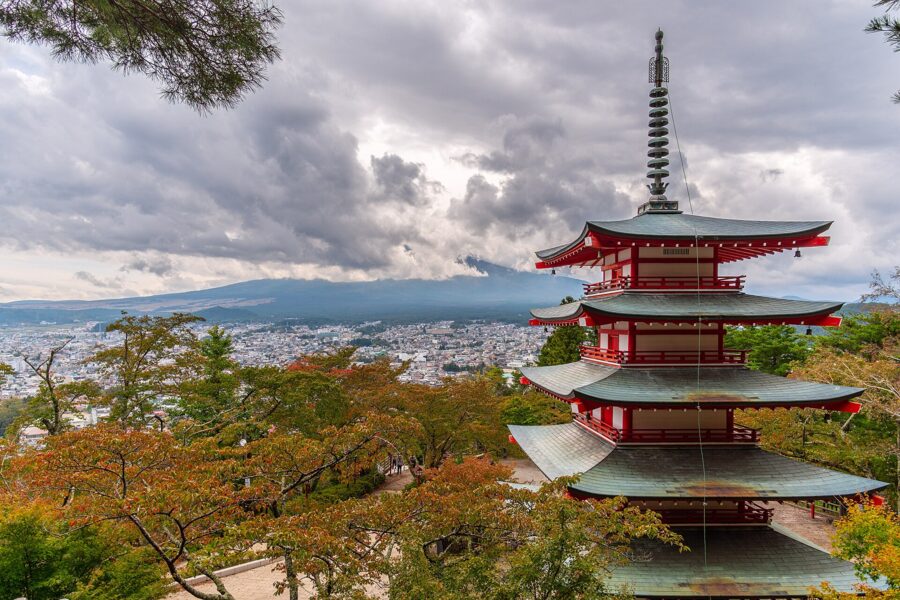
The same records give average cloud cover, on a scale of 0 to 10, of 3.9 in January against 8.5 in June. Put simply, December to February is when Fuji is most often out, and the rainy season in June and the typhoon months that follow are when it most often hides. Spring and autumn sit in between, with the cherry blossom and the red maples to make up for a cloudy summit.
Tours run in cloud. The budget tours decide on cancellation only for bad weather, at 18:00 the evening before, and a grey sky is not bad weather. A coach follows its published route and cannot chase a gap in the cloud. Nihon Kotsu says its drivers settle the course with you as the day goes, which is the real advantage of a private car when the forecast is mixed.
On a DIY day you get that flexibility for free. If the summit is hidden in the morning, spend it at Oshino Hakkai or round the lake, and save the Chureito steps for later in case the cloud lifts.
A DIY day that works, priced
Here is the day I would book for two people on a clear winter weekday, using only the fares above.
- 06:45 highway bus, Busta Shinjuku to Kawaguchiko Station, booked and paid online: ¥2,000.
- Sightseeing bus one-day pass, bought at the station: ¥1,500. Red Line to Oishi Park while the light is low, then round the north shore.
- Fujikyu train Kawaguchiko to Shimoyoshida and back for the Chureito Pagoda: ¥620.
- Afternoon highway bus back to Shinjuku, booked when you book the morning one: ¥2,000.
That is ¥6,120 each. In summer or early autumn, add the ¥3,400 5th Station return for ¥9,520, and leave the Chureito for another trip if the day gets tight. Swap both buses for the Fuji Excursion and the total rises to ¥10,520, still well under the English coach, with the guarantee of no traffic on the way home.
The 06:45 seat is ¥2,000 and the mountain does not know how you paid. Spend the ¥8,880 you saved on the night in Shinjuku.