Buy a shinkansen ticket from Tokyo to GALA Yuzawa and back, add a gondola-and-lift day ticket at the resort’s own web price, and you have spent ¥21,100. JR East’s travel arm sells the same two trains and the same lift ticket as one booking for ¥16,100. Nothing is missing from the cheaper version except ¥5,000.
That gap runs through every ski day out of Tokyo. The nearest slopes, on the flanks of Mt Fuji and in the snow country on the far side of the Gunma mountains, can all be reached before 10:30, and most have a bundled way in that beats paying for each piece separately. The catch is that the bundles are sold by Japanese railways, bus companies and coach-tour firms, mostly on Japanese-language pages, and each has rules that decide whether it suits you.
Where the bundles stop is the lesson. A group class costs a few thousand yen if you can follow an instructor in Japanese. A private lesson in English can cost ten times as much, and for a first-timer that is the figure to plan around.
In This Article
- Three slopes, three bills
- GALA Yuzawa: the train stops at the gondola
- What the train costs on its own
- The JR SKISKI package
- Fujiten: the Fuji view, two buses away
- Snow Town Yeti: one coach from Shinjuku
- Japanese coach tours: the cheapest seat to the snow
- Rental: what the counter charges
- Lessons: group, private and the full day
- Fujiten: cheap if you speak Japanese
- Yeti: the beginner add-on
- GALA Yuzawa: English, at English prices
- A full-day snowboard lesson
- The private day from Tokyo
- Season dates for 2026–27, and what to skip
Three slopes, three bills
The three resorts most people mean by “skiing near Tokyo” are Fujiten and Snow Town Yeti on Mt Fuji, and GALA Yuzawa in Niigata, the one with its own shinkansen station. All prices below are adult, one day, tax included, as published for the 2026–27 season in late November 2026. Transport is from Shinjuku or Tokyo Station and back; rental is extra in every row.
| Resort | DIY day: transport and lift | Bundled price | Time each way | The catch |
|---|---|---|---|---|
| GALA Yuzawa | ¥21,100 (¥13,600 in unreserved shinkansen fares, ¥7,500 web lift ticket) | ¥16,100, JR SKISKI train and lift package (early January date) | From 71 minutes | Package price changes by date; South Area closed all season |
| Fujiten | ¥14,200 weekdays, ¥15,200 weekends (highway bus, shuttle, lift) | No package confirmed for 2026–27 | About 3 hours | Shuttle runs only 25 December to 28 February, two buses each way |
| Snow Town Yeti | About ¥11,400 weekdays, ¥12,400 weekends (two buses each way, lift) | ¥12,000, Snow Liner coach from Shinjuku with lift ticket | About 2 hours 30 minutes | Coach runs on set dates only and needs 20 passengers |
The cheapest simple day is the Yeti coach. The most snow for the time spent travelling is at GALA, and there you should never pay for the train and the lift separately.
GALA Yuzawa: the train stops at the gondola
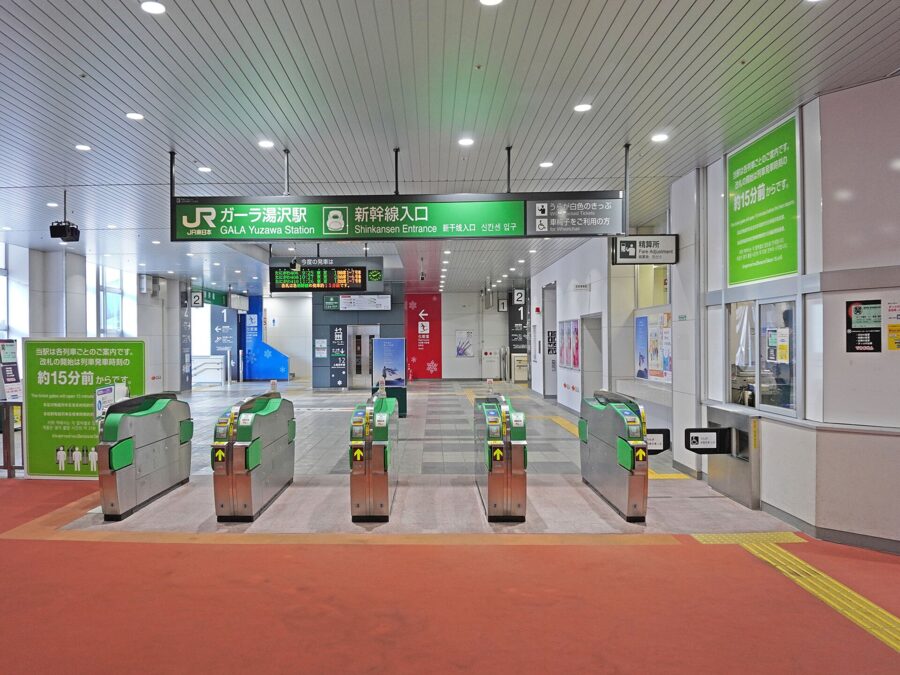
GALA Yuzawa Station is a winter-only stop at the end of a short branch beyond Echigo-Yuzawa, and the ski centre is joined to it. The lift-ticket counter, the rental desks and the gondola are all a short walk from the platform. The fastest train from Tokyo takes 71 minutes, and if your train ends at Echigo-Yuzawa a free shuttle bus covers the last ten minutes.
What the train costs on its own
The unreserved fare from Tokyo to GALA Yuzawa, as listed in JR East’s Touch de Go Shinkansen fare table, is ¥6,800, or ¥6,370 if you stop at Echigo-Yuzawa and take the shuttle. Return, that is ¥13,600 to the gondola door. A reserved seat costs more.
The lift ticket is where GALA rewards planning. GALA’s gondola-and-lift day ticket is ¥8,000 at the window and ¥7,500 bought online, and children of preschool age ride free, up to two per paying adult. A four-hour ticket costs ¥7,500 at the window, the same as a full day bought online, so skip it.
Then there is the early ticket. GALA sold its 2026–27 early-bird day ticket for ¥4,800 against the ¥8,000 window price, on sale online from 15 October until 23:00 on 30 November, with no cap on numbers. Bought in time, it brings the DIY day to ¥18,400, still above the package, and it is the ticket to buy if a JR rail pass already covers your train.
The JR SKISKI package
JR East’s own JR SKISKI day packages to GALA bundle a return shinkansen from Tokyo with a lift ticket. For a Tuesday in early January, priced in late November, the “One Day GALA” with a full-day gondola and lift ticket was ¥16,100, and the four-hour version ¥15,400. Tuesday and Wednesday departures booked 25 days ahead dropped to ¥15,600.
The price moves with the date, so check yours, but for that January Tuesday the package undercut the DIY total by ¥5,000. You exchange the itinerary’s QR code at the lift counter and use a separate lane for package holders. On eight Friday and Saturday evenings in January and February GALA opens for night skiing from 18:00 to 20:00, and the same site sells a day-plus-night package for ¥18,100.
Two things to know before you book. GALA’s South Area, the ungroomed and powder side of the mountain, is closed for the whole 2026–27 season, which leaves the Central and North areas. And the bath at the station, SPA Gala no Yu, costs ¥1,500 for adults, with lockers in the ski centre at ¥1,000 for the day.
Fujiten: the Fuji view, two buses away
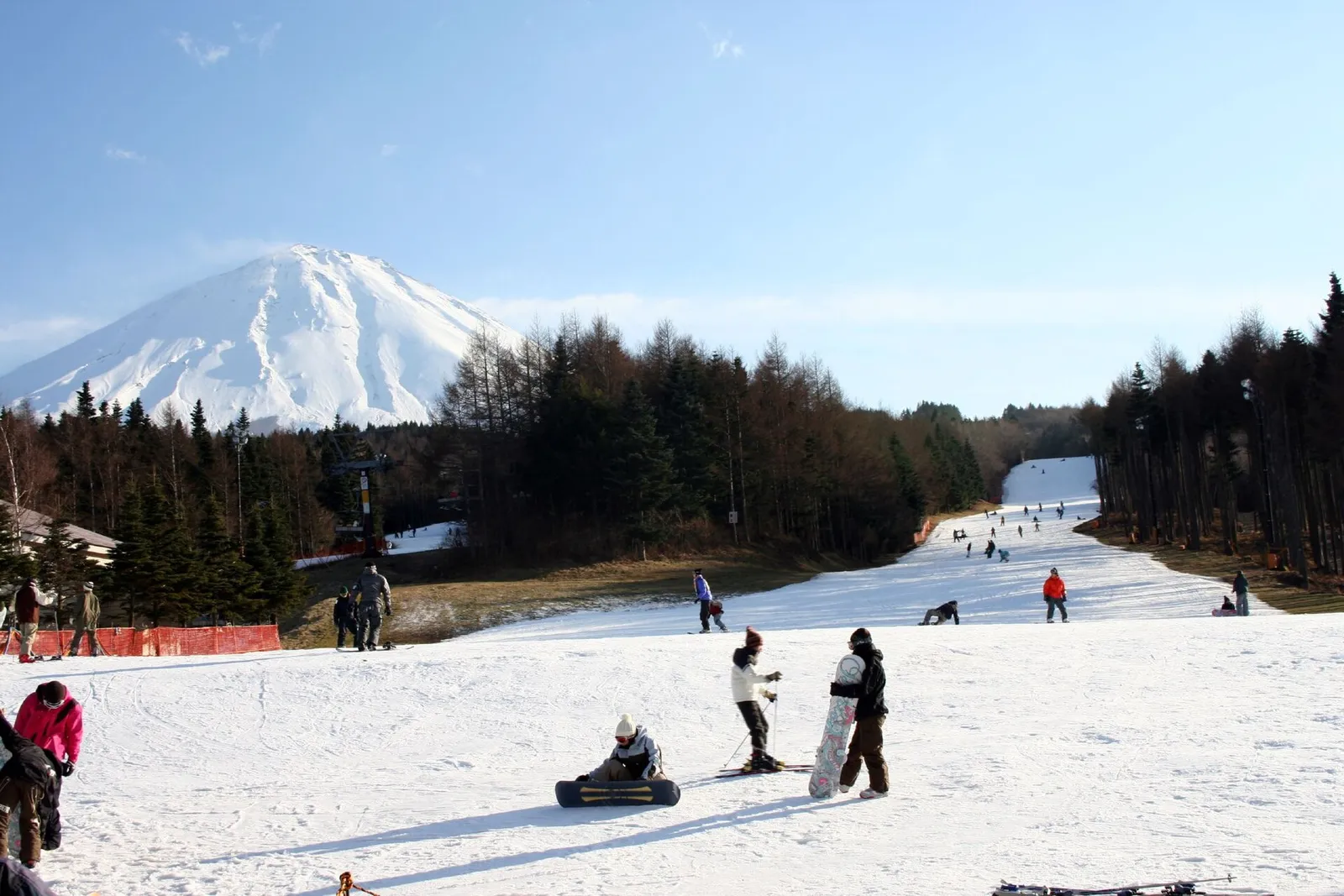
Fujiten sits on the north side of Mt Fuji above Narusawa village, with the summit straight above the runs. It is the bigger of the two Fuji resorts, with seven courses and a snow park, and the one to pick if the point of the day is skiing with Fuji in view: the view comes with the lift ticket.
Getting there without a car takes two buses. The first is the highway bus from Busta Shinjuku to Kawaguchiko Station, ¥2,000 booked online and ¥2,200 at the counter, which the Tokyo to Mt Fuji fares guide compares with the trains. The second is the Fujiten shuttle bus from Kawaguchiko, ¥4,400 return, booked in advance from 1 December and paid by card.
The shuttle is the weak link. It runs only from 25 December 2026 to 28 February 2027, leaves from a desk in the Fuji Kanko Kaihatsu Building opposite Kawaguchiko Station at 09:50 and 11:15, and comes back from Fujiten at 15:45 and 16:45. The ride takes about 30 minutes, and the shuttle does not wait for a late highway bus, so take one from Shinjuku timetabled to reach Kawaguchiko by 09:00 and you will be on the snow at about 10:20.
Fujiten’s lift prices for 2026–27 are ¥5,800 for a weekday day ticket, ¥6,800 at weekends, on holidays and over the New Year (26 December to 3 January), and ¥7,300 on seven peak dates: 9 and 10 January and 11, 13, 20, 21 and 23 February. Add it up and a weekday costs ¥14,200 in buses and lift, a weekend ¥15,200. Night skiing runs on weekends and holidays from 26 December to 7 March, but the last shuttle leaves at 16:45, so it is for drivers only.
If you only want to look at the mountain, not ski on it, a Mt Fuji day trip by bus or tour costs less and covers more of the lakes.
Snow Town Yeti: one coach from Shinjuku
Yeti, now signed as Snow Park Yeti, is on the Shizuoka side of Fuji above Susono, and it is the smaller, gentler resort: four slopes lettered A to D, a sledging slope and Fuji behind them. It opened on 13 October, again the first resort in Japan to open, and plans to close on 28 March 2027.
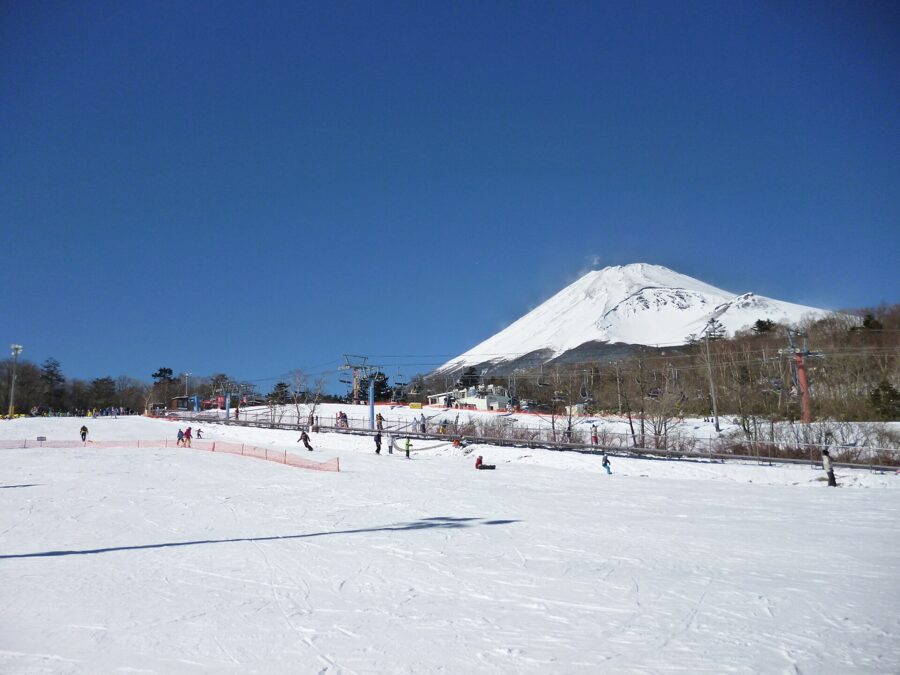
Yeti’s day ticket is ¥4,300 on weekdays and ¥5,300 at weekends, on holidays and from 28 December to 4 January, the cheapest of the three. Children from age three to the end of primary school, and over-60s with proof of age, pay ¥1,000 less.
The deal here is the Yeti Snow Liner coach, sold by Fujikyu Travel. The Shinjuku departure leaves the West Exit stop outside Kogakuin University at 07:30 (meet at 07:20), reaches Yeti at about 10:00, leaves again at 15:30 and is back in Shinjuku at about 17:20. The ¥12,000 adult fare includes the return coach and the lift ticket; secondary-school pupils pay ¥500 less and children from three to the end of primary school ¥1,000 less.
Doing it yourself barely beats it. The Odakyu highway bus from Busta Shinjuku to Gotemba Station is ¥2,000 each way, about 1 hour 45 minutes, and from Gotemba you still need Fujikyu’s local bus up the mountain, ¥1,570 each way last winter. With the lift ticket that is about ¥11,400 on a weekday and ¥12,400 at the weekend, within a few hundred yen of the coach, with a change at Gotemba on both legs.
The coach has conditions. It runs only on set dates between 1 December 2026 and 14 March 2027, it needs 20 passengers or it is cancelled about five days ahead, and seats can be booked until noon the day before if any are left. Rental and lessons can be added when you book; the prices are in the sections below.
Japanese coach tours: the cheapest seat to the snow
The cheapest ski days from Tokyo are the morning coach tours sold by Japanese tour companies. You meet in Shinjuku at about 07:00, get around six hours on the snow and are back in the city in the evening, with the lift ticket in the price. It is the same coach-or-train sum as on other day trips from Tokyo, and here the coach wins by about ¥10,000 against the JR package.
Orion Tour, one of the big operators, is running a Black Friday sale on its December coach days, with bookings open until 23:59 on 6 December. Shinjuku to Kawaba in Gunma, lift ticket included, starts at ¥5,800 for departures from 5 December, and the cheapest day on the sale list starts at ¥5,500. Fujiten and Yeti are not on it.
The booking pages are in Japanese, the coach leaves at the stated minute whether you are there or not, and the operator picks your seat. For a confident skier who just wants a cheap day of turns, nothing else on this list comes close.
Rental: what the counter charges
Rental is the line that turns a cheap day into an ordinary one. Every resort here rents skis, boards, boots and wear. Fujiten and Yeti rent no gloves, goggles or hats, and GALA sells gloves rather than renting them, so bring those from home.
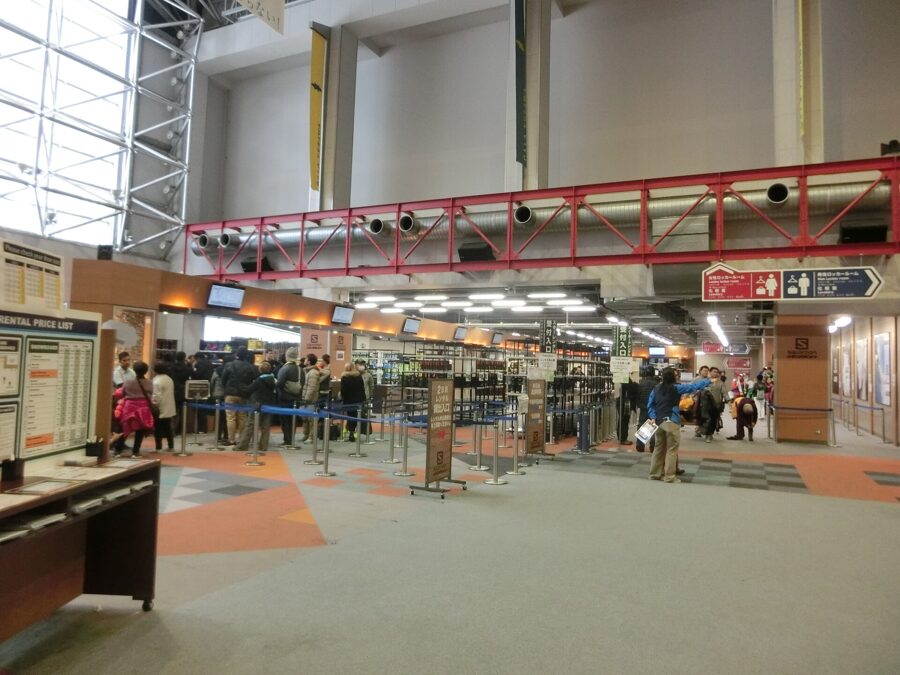
- GALA Yuzawa: GALA’s rental prices are ¥6,500 for a ski set (skis, boots, poles) or a snowboard and boots, ¥5,500 for a jacket and trousers, ¥1,800 for goggles and ¥2,300 for a helmet. Gloves are sold, not rented, at ¥1,500. Switching between skis and a board costs ¥1,000.
- Fujiten: Fujiten’s rental counter charges ¥5,500 for a full-day ski or snowboard set and ¥5,000 for wear. A half-day set is ¥4,500.
- Snow Town Yeti: added to a Snow Liner booking, a ski or snowboard set is ¥3,500 and wear ¥4,600, the cheapest set on this list.
For one person, a GALA day with a rental set and wear comes to ¥33,100 bought piece by piece, or ¥28,100 with the JR package. Bring your own jacket and trousers and the wear line alone saves ¥5,000 to ¥5,500.
Lessons: group, private and the full day
Lesson prices split three ways: cheap group classes taught in Japanese, private lessons in Japanese at a fair price, and private lessons in English at several times that. Which one you can use decides the budget more than anything above.
Fujiten: cheap if you speak Japanese
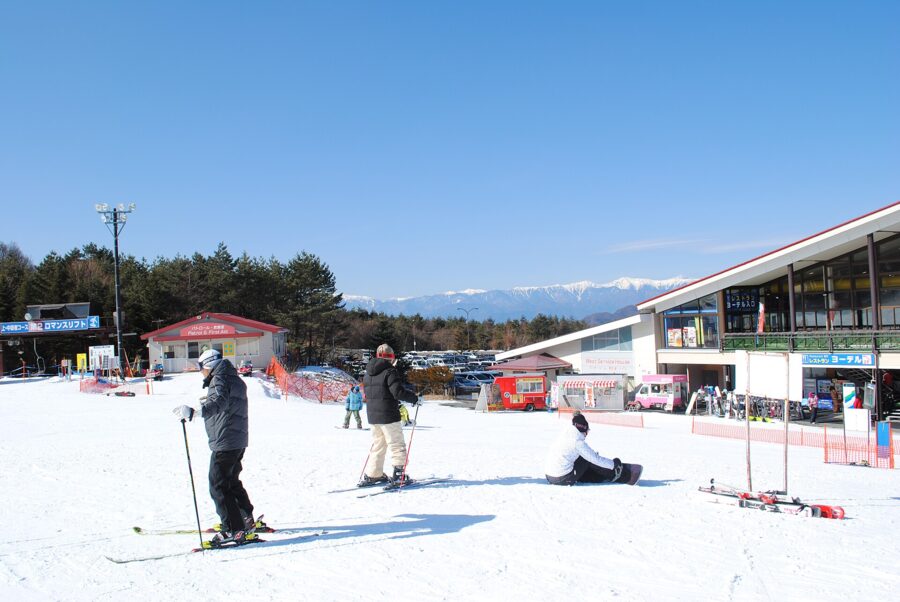
Fujiten’s ski school runs group ski classes for adults at ¥4,000 for a two-hour session and ¥6,000 for both sessions in a day, and snowboard classes at ¥5,000 and ¥7,000. The lift ticket is extra, and the school states plainly that group classes are only for people who can hold a conversation in Japanese.
A private lesson is the way round that. One instructor for up to two people costs ¥18,000 for two hours or ¥32,000 for a full day, which here means four hours of teaching, 10:15–12:15 and 13:30–15:30. Each extra person adds ¥6,000 or ¥10,000.
The school has only a few English-speaking instructors and takes English as a request, not a promise, so ask when you book and accept simple English if that is what is offered. Group classes run from 25 December to 22 March; outside that, private lessons only.
Yeti: the beginner add-on
Snow Liner passengers can add a beginner ski or snowboard class for ¥4,300 when they book, from 12 December. It starts at 11:00 on weekdays and is for complete first-timers aged five and over. Register at the school counter as soon as you arrive, before you change.
GALA Yuzawa: English, at English prices
GALA lists five schools on its school page, and three of them teach in English. Two of those price private lessons per lesson, not per person, which is the only way they make sense.
SORA International’s lesson prices run from ¥50,000 for two hours and ¥65,000 for three to ¥95,000 for a five-hour day, each for up to four people, ski or snowboard. Its group class for complete beginners is ¥20,000 a head for two and a half hours, ages 11 and up, booked only at its counter in the ski centre for the 09:30 and 13:30 starts. Yuzawa WOW Ski School charges ¥9,500 a person for a two-hour first try and ¥40,000 for a three-hour private lesson for one to four people.
A full-day snowboard lesson
Six hours with one instructor is the fastest way off the beginner slope, and at GALA it is a straight choice between two prices. Yuzawa WOW’s six-hour lesson costs ¥75,000 for one to four people, with two more allowed for ¥10,000. SORA’s six-hour premium private costs ¥120,000 for up to four and adds an hour for lunch, with the instructor sorting your rental, lift ticket and locker at the start.
Split four ways, the WOW day is ¥18,750 each, about the price of the JR train-and-lift package. On your own it is ¥75,000, and Fujiten’s four-hour private at ¥32,000 is the better buy if you can manage the lesson in simple English or some Japanese.
The private day from Tokyo
The packaged version, a driver collecting you in Tokyo, a private ski or snowboard lesson and the drive back, is sold through the big booking platforms as an 11-hour day with optional Mt Fuji sightseeing or outlet shopping. The listing is priced in dollars for the group, gear is not included, and a tip of 5–20% is suggested on top.
Built yourself on a weekday for two people, the same day is ¥16,800 in buses and shuttle, ¥11,600 in lift tickets and ¥32,000 for Fujiten’s four-hour private lesson: ¥60,400, or ¥71,400 with two rental sets. The car buys you a door-to-door ride and a free choice of timing. It does not buy a better view of Fuji, which comes with the lift ticket.
Season dates for 2026–27, and what to skip
- Snow Town Yeti: open since 13 October 2026, planned to close 28 March 2027. Snow Liner coaches on set dates from 1 December to 14 March.
- Fujiten: mid-December 2026 to early April 2027. Shuttle from Kawaguchiko 25 December to 28 February only; group lessons 25 December to 22 March.
- GALA Yuzawa: skiing from 19 December 2026 to 5 May 2027. From 12 to 18 December only the gondola runs, for sightseeing, and nobody may ski whatever the snow. From 6 April only the Central Area is open.
- Karuizawa Prince Hotel Ski Resort: 31 October 2026 to 31 March 2027, near Karuizawa Station, ¥5,600 each way from Tokyo by unreserved shinkansen. Children of primary-school age and under ride its lifts free all season, which makes it the family pick.
Skip GALA’s December sightseeing week unless you only want the gondola ride, and skip the South Area entirely, because it is shut. Skip Fujiten by public transport outside the shuttle window. And skip Fujiten’s seven ¥7,300 peak days in January and February if your dates are flexible: the same snow is ¥1,500 cheaper on a weekday.
Fares and prices here are the ones published in November 2026; package prices in particular change with the date you pick. The ¥5,000 between JR’s package and the same trip bought in pieces is the easiest saving in Tokyo skiing, and it covers most of a rental set.