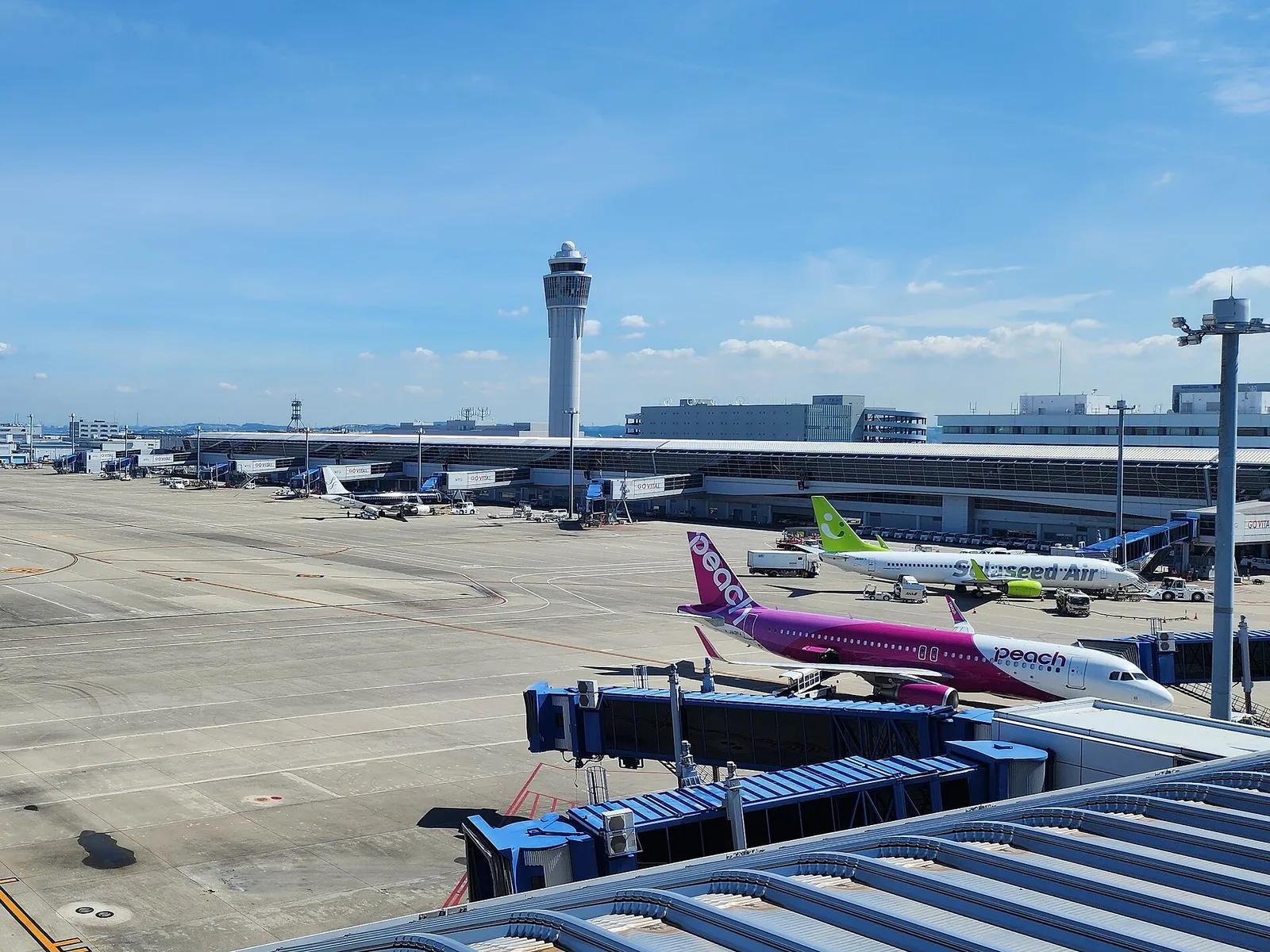
Step out of international arrivals at Chubu Centrair, turn towards the trains, and the airport offers you three ways to pay for the same thing. A vending machine by the gate sells two weeks of phone data on a SIM card for ¥7,920. A counter a few steps further rents you a pocket router for ¥860 a day, which over fourteen days comes to ¥12,040 before you add any damage cover.
Or you could have spent ¥2,700 at home the night before and walked past both of them with the phone already working.
That spread, from ¥2,700 to more than ¥12,000 for the same fortnight, comes down to two questions you can answer before you pack: does your phone take an eSIM and is it unlocked, and how many people need to be online at once. Get those right and the airport counters become a backup plan rather than the first stop.
In This Article
What a 7-day and a 14-day trip costs
Every price below is the operator’s own, tax included, for a trip where you collect on the day you land and leave on the last day. Fares and plans here are the ones in force in November 2026; data plans change more often than train fares, so check the linked page before you pay.
| Option | 7 days | 14 days | The catch |
|---|---|---|---|
| Ubigi eSIM, 10GB for 30 days | ¥2,700 | ¥2,700 | 10GB has to last the whole trip; data only |
| NINJA SHOGUN SIM card (SoftBank), 15GB for 60 days | ¥3,740 | ¥3,740 | A physical card, so your home SIM comes out; staff setup costs ¥1,100 extra |
| Sakura Mobile eSIM, 3GB a day (docomo) | ¥4,620 | ¥6,930 | Slows to 256kbps after 3GB in a day; the clock starts when you install it |
| NINJA TRAVEL eSIM, unlimited | ¥5,368 | ¥9,130 | The QR code can take up to 24 hours to arrive, so order before you fly |
| Sakura Mobile eSIM, unlimited (au) | ¥5,775 | ¥9,240 | Pays off only if you burn through more than 3GB a day |
| AnyFone prepaid SIM, Centrair vending machine | ¥7,150 | ¥7,920 | “Unlimited” with a 50GB fair-use ceiling; not sold online |
| NINJA WiFi pocket router, 3GB a day (SoftBank 4G) | ¥5,390 | ¥10,780 | 3GB a day shared by everyone on it, then 128kbps; ¥40,000 if lost without cover |
| AnyFone pocket router, unlimited (KDDI 5G) | ¥6,020 | ¥12,040 | Plus ¥220 a day for damage cover; up to 10 devices |
| Sakura Mobile voice and data eSIM, 3GB a day | ¥10,340 | ¥14,575 | A real Japanese number, but a passport check at a counter Centrair does not have |
| Free public Wi-Fi | free | free | Works only where there is a hotspot, which is never the bus stop |
Before any of this, check your own phone plan. If it already includes Japan at no extra charge, stop reading and keep your money. If it sells a daily roaming pass, multiply it by the days you will be here and set the total against ¥2,700; that one sum settles it.
eSIMs: the cheap end, if your phone allows it
An eSIM is a SIM profile you download instead of a card you insert. You buy it online, scan a QR code, and the phone keeps your home number on its physical SIM for bank text messages while the eSIM carries the data. Nothing to collect, nothing to return, nothing to lose.
The cheapest priced in yen is Ubigi’s 10GB plan for Japan at ¥2,700, valid for 30 days. It lists the KDDI, NTT Docomo and SoftBank networks, starts its clock when the phone first connects in Japan rather than when you buy it, and allows tethering. Ten gigabytes is plenty for maps, messaging, train apps and the odd photo upload over two weeks if you leave video for the hotel Wi-Fi.
If 10GB makes you nervous, the next step up is a daily allowance rather than a pool. Sakura Mobile’s travel eSIMs come in two flavours: 3GB a day on docomo for ¥4,620 (7 days) or ¥6,930 (14 days), and unlimited on au for ¥5,775 or ¥9,240. Over the 3GB, the daily plan drops to 256kbps until midnight Japan time. One quirk worth knowing: the 3GB plan starts counting the day you install it, so install it on arrival day, not a week before; the unlimited plan only starts once you land.
NINJA WiFi’s own eSIM sells a 7-day unlimited plan for ¥5,368 and a 14-day one for ¥9,130. It is cheaper than Sakura’s unlimited for a week and slightly cheaper over two, but the QR code can take up to 24 hours after the order is confirmed, which rules it out as a fix at the baggage carousel.
My view: for one person with an unlocked phone, the ¥2,700 pool is the answer for most trips of up to a month. Pay for Sakura’s daily plan only if you know you stream on trains, and skip “unlimited” unless you tether a laptop for work. The gap between ¥2,700 and ¥9,240 over fourteen days is a decent dinner in Nagoya for two.
There is also a Japanese eSIM you can pick up in a convenience store. IIJ’s Japan Travel SIM comes in seven sizes from 3GB to 55GB, each valid 30 days, on docomo’s network, and the eSIM version is sold through gift-card racks, MINISTOP’s Loppi terminals and multi-copy machines. IIJ announced on 24 November 2026 that eSIMs activated from 1 December 2026 get 5G; ones activated before that date stay on 4G. IIJ leaves the price to each shop, so there is no single figure for it.
Physical SIM cards: airports and electronics shops
A physical SIM is for the phone that is unlocked but has no eSIM, or for anyone who would rather hold something. The catch is the same everywhere: you pop out your home SIM, so your home number goes quiet unless the phone takes two cards.
At Centrair the quickest is the AnyFone JAPAN vending machine on the second floor of Terminal 1, facing the international arrivals gate. It runs 24 hours and takes cash, cards and e-money. AnyFone’s price list for its airport shops and machines puts its unlimited SIM at ¥7,150 for 7 days and ¥7,920 for 14, each with a 50GB fair-use ceiling, and a 10GB card for 10 days at ¥5,720. You are paying roughly three times the eSIM price for the convenience of not having planned ahead.
NINJA WiFi’s SHOGUN SIM for Japan only is the cheapest card with a published yen price: 15GB on SoftBank 5G for ¥3,740, valid 60 days, or 30GB for ¥5,082. If you would rather staff swap the card and set up the phone at the airport counter, that is ¥1,100 per device.
In the city, Bic Camera, Kojima and Sofmap have sold IIJ’s Japan Travel SIM Unlimited for BIC SIM since 17 June 2026: 10, 15 or 31 days on au’s 5G and 4G, data only. The plan rules cap tethering at 9GB, 14GB and 30GB for the three lengths, after which shared data drops to 128kbps. Like the convenience-store version, the shop sets the price.
SoftBank’s Prepaid SIM for Travel is sold at SoftBank shops, electronics stores and SoftBank’s airport rental counters, again at a retailer-set price. It asks more of you than the others: an unlocked phone with a camera, a photo of your original passport uploaded during sign-up, and an age of 18 or over.
Pocket Wi-Fi: when a box beats a SIM
A pocket router is a small battery-powered hotspot that turns a Japanese data line into Wi-Fi for every phone, tablet and laptop near it. It wins in two situations. Your phone is locked to your home carrier, so no Japanese SIM or eSIM will work in it. Or there are three or four of you and someone in the group is a heavy user.
The prices at NINJA WiFi run from ¥440 a day for 1GB a day to ¥770 a day for 3GB a day and ¥1,980 a day for no daily cap, all on SoftBank 4G; a docomo 5G router is ¥2,200 a day. Insurance is ¥220, ¥330 or ¥440 a day depending on the level; without it a lost router costs ¥40,000. The rental period runs from the day you collect through the day you return, both counted, so a 7-day trip pays for seven days.
AnyFone’s 5G router undercuts NINJA’s no-cap router by a long way: ¥860 a day on KDDI with no data ceiling, up to 10 devices, and ¥220 a day for damage cover. Web orders close at 13:00 Japan time the day before pick-up.
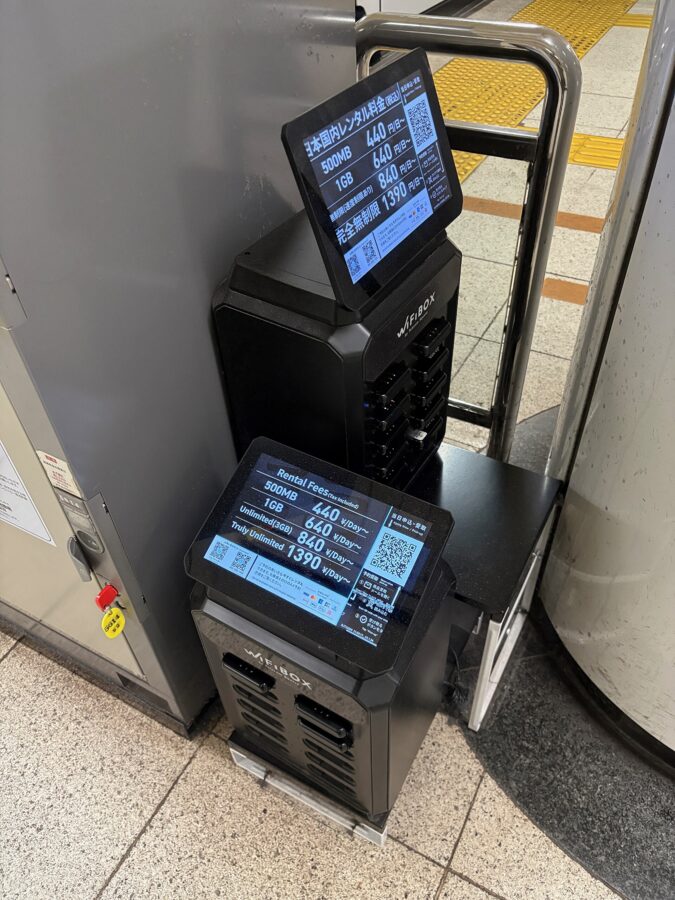
Now the group sum. Four people for 14 days on one AnyFone router with cover pay ¥12,040 plus ¥3,080, so ¥15,120, or ¥3,780 each. Four Ubigi eSIMs cost ¥10,800, or ¥2,700 each, and nobody has to stay within Wi-Fi range of whoever carries the box. Four NINJA unlimited eSIMs would be ¥36,520, so for a heavy-using group the router wins easily.
The router’s hidden costs are not in yen. Someone has to charge it every night, the whole group goes offline when that person wanders off to the toilets, and you have to hand it back before your flight. If everyone’s phone takes an eSIM and nobody streams, skip the box.
If no airport counter suits your flight, NINJA will deliver to your hotel for ¥550 and take it back by courier for another ¥550 (up to four devices each way).
Collecting at Chubu Centrair Terminal 1
Centrair’s own list of Wi-Fi and SIM services is short, and most of it sits on the second floor between the arrivals gate and the Meitetsu station. That suits you, because it is the way to the train anyway.
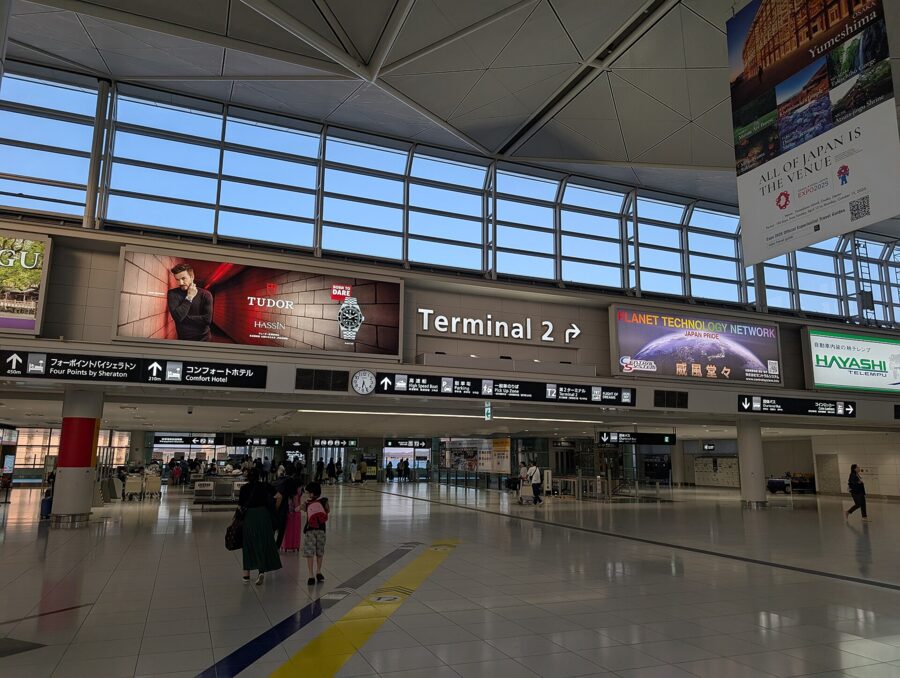
- Global WiFi and NINJA WiFi counter, Access Plaza 2F, 06:30–22:00. NINJA’s Centrair page confirms pick-up and return here, plus a return box; anything dropped in the box between 22:01 and 06:29 counts as returned the previous day, so an early flight does not cost you an extra day.
- NINJA Smart Pickup lockers, same counter area, for routers ordered by 15:00 Japan time two days ahead. The lockers open in two windows, 05:00–10:00 and 11:00–19:00.
- SoftBank Global Rental counter, Terminal 1 arrivals lobby 2F, 07:30–21:00. It also hands out and takes back AnyFone rentals, and AnyFone’s Centrair page lists a 24-hour return box and a 24-hour machine outside that sells eSIMs and lends routers.
- SIM vending machines, Terminal 1 2F: AnyFone JAPAN and JOURNEY SIM, both for use in Japan, both 24 hours.
- Japan Wireless has no counter here. It posts your router to the post office on Terminal 1’s first floor, near the Lawson, open 09:00–17:00 on weekdays only. Land on a Saturday or after 17:00 and you leave empty-handed.
Two things the counters cannot do here. Sakura Mobile’s voice eSIM needs a passport check at Narita, Haneda, Kansai, Fukuoka or its Shinjuku office, so Nagoya arrivals cannot get a Japanese number from it on the day. NINJA’s rental phone for domestic calls, ¥550 a day, can be collected at Centrair Terminal 1, but only by the person who booked it, with a passport for each phone.
Narita, Haneda and Kansai
The big three airports have more choice, and longer hours, than Centrair. What matters is which floor you come out on, whether the counter is open when your flight lands, and collecting before you head for the train or bus out of Narita or Haneda.
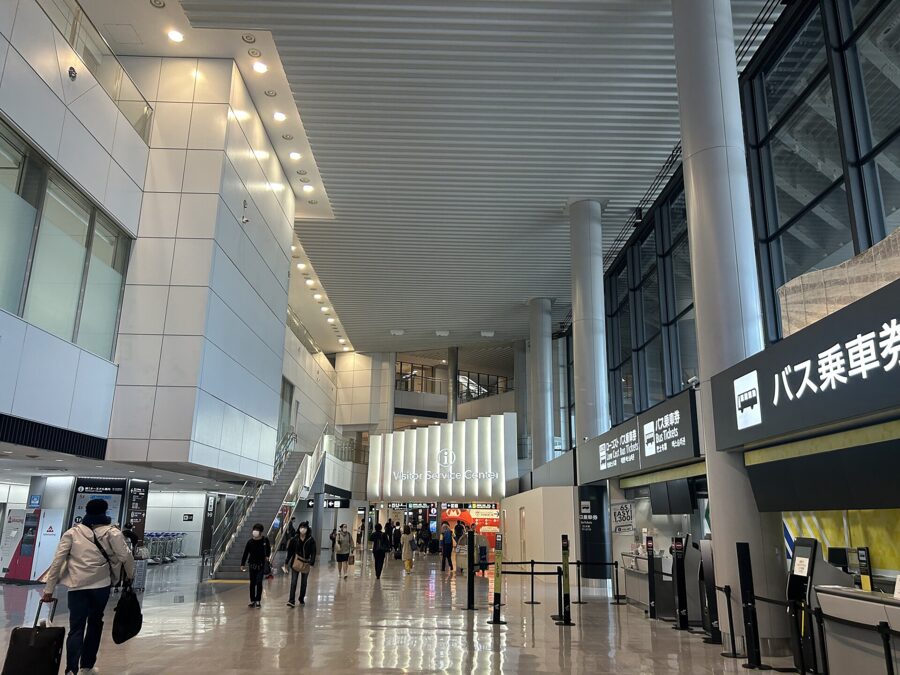
Narita. At Terminal 1, NINJA’s pick-up is the JAL ABC counter in the South Wing arrivals lobby on 1F, 06:30–21:30, and returns go to J WiFi & Mobile in the central building on 1F, 07:00–21:00, with a return box outside those hours. Narita’s own directory also lists AnyFone and SoftBank Global Rental counters in the Terminal 1 central building (both 07:00–21:00) and SIM vending machines in both wings. All of it is before security, so sort it out on arrival, not at the gate.
Haneda. Most international flights use Terminal 3, where the Global WiFi and NINJA WiFi counter on 2F is open 06:30–23:45 and the JAL ABC return box on the same floor covers the hours in between. Haneda’s list adds an AnyFone counter in the 2F arrivals lobby (06:00–23:00) and Telecom Square’s Mobile Center, 06:30–23:00, with a 24-hour unmanned rental machine in front of it.
Kansai. At Terminal 1, NINJA’s counter is in the 1F international arrivals lobby, 06:00–23:00, with a return box. Kansai’s directory lists a Sakura Mobile counter (06:00–23:00), which is where Osaka arrivals can do the passport check for a voice eSIM, plus Global WiFi SIM vending machines and Telecom Square’s WiFiBOX machines, some of them 24 hours.
Will your phone take it?
Two checks, both before you buy anything. First, does the phone support eSIM? Most recent iPhones and Pixels do, and Sakura and Ubigi both publish device lists.
Second, is it unlocked? A phone bought outright usually is; a phone on a contract often is not, and only your carrier can tell you or unlock it. If the answer is no, no SIM or eSIM here will work and the pocket router is your only paid option.
AnyFone’s SIM help notes add a third check for physical cards: the phone has to be SIM-free and handle LTE on the 2,100MHz band. Sakura’s compatibility cover deals with an eSIM that will not work in your phone by swapping it for a pocket router or refunding the price less ¥550.
Every option in the table is data only except Sakura’s voice plan. That is fine for WhatsApp, LINE calls and maps, and it means restaurants that only take bookings by phone are out of reach. Keep your home SIM active in the second slot if your bank sends codes by text, and ask your carrier what it charges for texts received abroad.
Free Wi-Fi that actually works
Free Wi-Fi in Japan is patchy outside stations and big shops, and it will not help you find a bus stop in the rain. Where it is good, it is very good, and it can stretch a 10GB eSIM a long way.
The one app worth installing is Japan Wi-Fi auto-connect, run by NTT Broadband Platform. Register once and it logs you into supported free networks at airports, on trains, in convenience stores and cafes without the usual email form each time. It is free.
If you are based in Nagoya, the useful network is JR Central’s. Its free Wi-Fi covers every car on the Tokaido Shinkansen, every Tokaido Shinkansen station, some conventional-line stations, and the Hida and Nanki limited expresses. Don’t plan around convenience stores: 7-Eleven switched off its own 7SPOT network in March 2022.
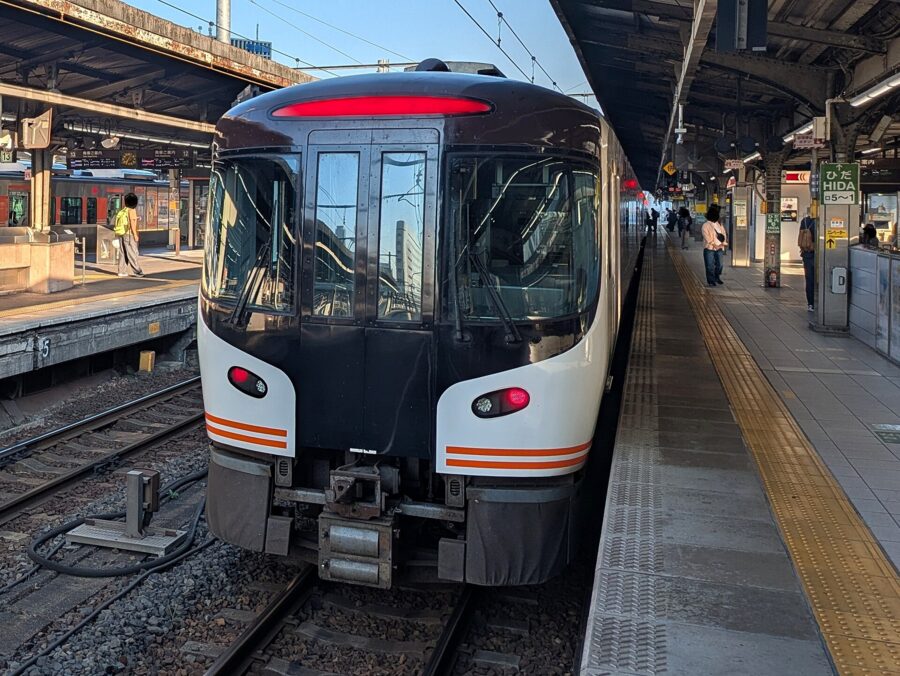
That brings it back to the arrivals floor at Centrair. ¥7,920 at the machine, ¥12,040 at the counter, or ¥2,700 the night before and a train ticket bought with the change.